NC public records · free · no signup
North Carolina Homeowner Resources
Practical reference pages for NC homeowners — same public-records-first approach as our contractor directory. We don’t hand out our own verifications. We point you at the state’s record so you can verify anything yourself.
On this page
Look It Up — NC Public Records
The state already keeps the receipt. These are the live government lookups our own verification pipeline runs — go straight to the source.
NC Building Permit Lookup
Every permit-issuing authority across all 100 NC counties, grouped by metro.
Find your permit search → License recordNC Contractor License Verification
Confirm a contractor holds a current, active NC general contractor license.
portal.nclbgc.org → Business recordNC Secretary of State — Business Filings
Look up an NC business's formation, standing, and registered agent.
sosnc.gov → Insurance recordNC Industrial Commission — Workers' Comp
Check whether a contractor carries an active NC workers' comp policy.
ccms.ic.nc.gov → Safety recordOSHA Enforcement Data
Search OSHA inspections and serious or willful violations by company name.
enforcedata.dol.gov → Our directoryNC Grading + Hauling Directory
License-active grading and hauling contractors, organized by NC city.
Browse contractors →Calculators
Free NC project estimators — sanity-check a quote or rough out a budget before you call anyone. Built on NC Piedmont defaults; use the output as a check, not a contract number.

French Drain Cost Calculator — NC Pricing
Enter your French drain specs and get a cost range for NC projects. NC Piedmont clay defaults. Use the output to sanity-check any quote you've received.

Gravel Yard-to-Ton Converter — Did You Get What You Ordered?
Convert cubic yards to tons for any NC gravel type. Verify your delivery ticket against what you ordered. ABC, #57, #67, and CABC conversion factors included.

Stormwater Runoff Calculator — How Much Water Hits Your NC Property?
Calculate stormwater runoff for your NC property. Size drainage and understand ordinance thresholds.

Yard Drainage Slope Calculator: Does Your NC Yard Meet the 2% Minimum?
Enter two elevation points and get the fall percentage instantly. Checks your yard against the 2% drainage minimum and the NC 6-inch-in-10-foot foundation rule.
NC Soil, Clay & Climate
Why North Carolina ground behaves the way it does — red clay, freeze-thaw, coastal sand, and the regional climate that drives every drainage and grading decision. Useful to homeowners diagnosing a wet yard and to crews scoping a site.

NC Climate and Drainage: What Weather Does to NC Earthwork
How NC's climate zones affect grading and drainage. Freeze-thaw in mountains, hurricane rainfall, clay shrinkage — what each means for your project.

NC Coastal Plain Drainage: Why Sandy Soil Doesn't Mean Easy Drainage
NC Coastal Plain drainage is different from the Piedmont: sandy soils percolate faster, but flat topography and high water tables create their own drainage failures.

NC Freeze-Thaw Cycles: What They Do to Driveways, Drains, and Foundations
Freeze-thaw damage in NC: driveways, drains, and foundations. What to spec for winter resilience.

NC Piedmont Red Clay: The Soil Science Base for Every NC Grading and Drainage Decision
NC Piedmont red clay: soil science base for grading and drainage decisions.

NC Red Clay's Dual Nature: Why the Same Soil Is Slippery Wet and Concrete Dry — and What It Does to Your Driveway and Drains
NC Piedmont red clay swells when wet and shrinks when dry -- creating seasonal movement that cracks driveways, shifts drain pipes, and heaves foundations over time.

NC Soil Guide: Which Zone Your Property Is In, and Why It Determines Every Drainage Decision
NC soil zones determine drainage methodology. Piedmont red clay, Coastal Plain sand, and WNC mountain rock each require different approaches. Find your zone first.

Soil Permeability in NC: How Hydraulic Conductivity Determines Which Drainage System Your Yard Actually Needs
Soil permeability in NC: how hydraulic conductivity determines your drainage.

The "Clay Stops the Water" Debate: What NC Soil Science Actually Says About French Drain Fabric in Clay Soil
Does clay stop water? The drainage debate explained with NC soil science.

Western NC Mountain Drainage: Shallow Soil, Rock Runoff, and What Hurricane Helene Exposed
Western NC mountain drainage: shallow soil over rock, surface runoff dominance, Helene debris-flow context, and what all this means for grading and driveway repair.

Why Do NC Drainage Methods Differ From the National Playbook? Clay Soil, Climate, and Topography
Why NC drainage differs: clay, climate, and topography make national methods fail.
Equipment, Operators & Technique
The machines, operator training, and field technique behind good grading and drainage work — so contractors can point clients here, and homeowners know what competent work looks like.

Box Blade for Driveway and Yard Grading: What It Does and When It's Wrong
What a box blade does, how it grades NC clay driveways and yards, when it's wrong for the job.

Dump Trucks in NC Hauling: What Each Class Carries and How to Verify Delivery
Tandem vs tri-axle dump trucks: capacity by axle count, NCDOT weight limits, how to verify NC delivery loads.

Excavators in NC Residential Grading: When the Boom Makes the Difference
When to use an excavator vs skid steer for NC grading and drainage jobs.

Float the Bucket and Heel Grading: Operator Vocabulary Defined
What 'float the bucket' and 'heel grading' mean when NC grading contractors use them -- defined for homeowners, with the question to ask to verify operator competence.

Floating the Bucket: What It Is, Why It Matters in NC Clay
What 'floating the bucket' means on a skid steer and why it matters for NC clay finish grading.

Heel Grading: Using the Skid Steer Bucket Heel for Fine Finishing
Heel grading on a skid steer: technique for fine finishing in NC clay.

Machine Control (GPS Grading) in NC: What It Is and When to Ask for It
What machine control (GPS grading) means on NC job sites and when grade accuracy improves with technology.

Mini Skid Steer Rental for NC Homeowners: Realistic Scope in Piedmont Clay
Renting a mini skid steer in NC: what size, attachments, what red clay does to timelines, when to hire instead.

NC Equipment Operator Training: Training Programs, OSHA Requirements, and Crew Verification
Where to get skid steer training in NC, what OSHA requires, and what homeowners should verify about contractor crew qualifications.

NC Grading and Drainage Equipment: What Each Machine Does and When It Shows Up
What NC contractors use: skid steer vs CTL, excavators, dump trucks, machine control for precision grade.

Proof Roll: What It Is, How It Works, and What It Tells You About Your Subgrade
What proof-rolling is, how it reveals unstable NC clay subgrade before paving, and why you should ask for it before your driveway or pad gravel goes down.

Skid Steer vs. CTL: Which Tracked Machine for NC Clay Conditions?
Skid steer vs CTL for NC grading: traction, ground pressure, clay performance, which to ask for.
Permits, Regulations & Drainage Methods
NC land-disturbance permits and regulations, drainage methods and materials, and field-tested method breakdowns — the practical playbook for getting the work done right and legal.
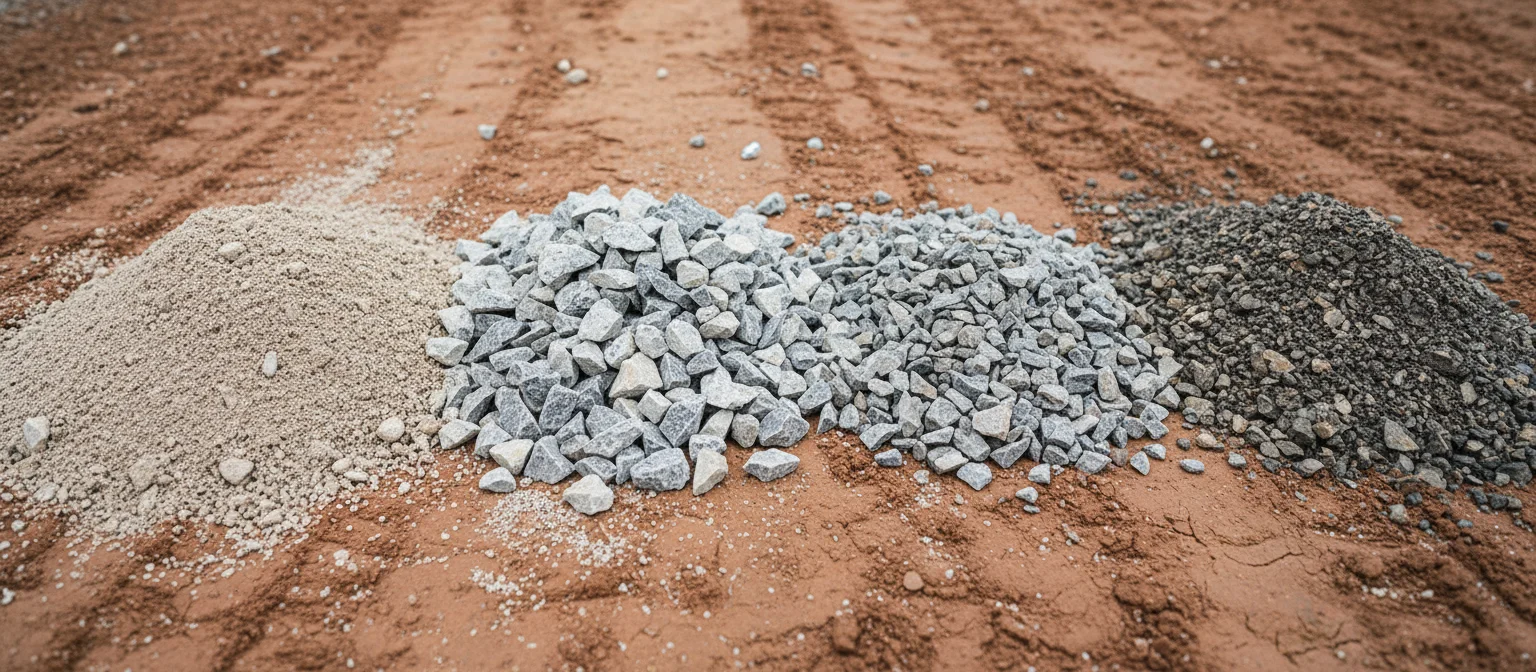
ABC vs. #67 vs. CABC: The NC Aggregate Reference Every Homeowner Needs
ABC, #57, #67, and CABC on NC quotes -- gradations, correct uses, the fines-in-ABC problem in wet clay, and how to read an aggregate spec.

Apple Drains FL (Chuck): NC Homeowner's Guide to What Translates and What Doesn't
Chuck's Apple Drains Florida method reviewed for NC homeowners: what of his no-fabric doctrine translates to NC clay, what doesn't, and the NC homeowner takeaway.

Crown and Water Bars: How NC Rural Driveways Shed Water Without Washing Out
What driveway crown and water bars are, how they prevent washout on rural NC driveways, and why NC clay erosion makes proper crown and bar placement non-negotiable.

DIY Grading and Drainage in NC: The Honest Scope Envelope
What NC homeowners can realistically do themselves in Piedmont red clay -- and what to hire out. Scope check before renting equipment or buying materials.

Dr. Drainz NC: The Closest to Right of the Major Drainage Channels — and What's Still Missing for NC Piedmont Clay
Dr. Drainz NC reviewed: closest to NC-right of the major drainage YouTubers, but what's missing for Piedmont clay homeowners and the NC homeowner takeaway.

Drainage Arcs and Swales in NC: How They Work and What Clay Does to Them
What drainage swales and arcs are, how to route them across an NC site, NC clay erosion at swale bottoms, and when rip-rap vs. vegetation is the right protection.

French Drain Man (Robert Sherwood, Michigan): Why Michigan Loam Is Not NC Clay — and What of His Method Still Applies
French Drain Man (Robert Sherwood, Michigan) reviewed for NC homeowners: what of his raked-wall technique translates to NC clay, what doesn't, and the NC takeaway.
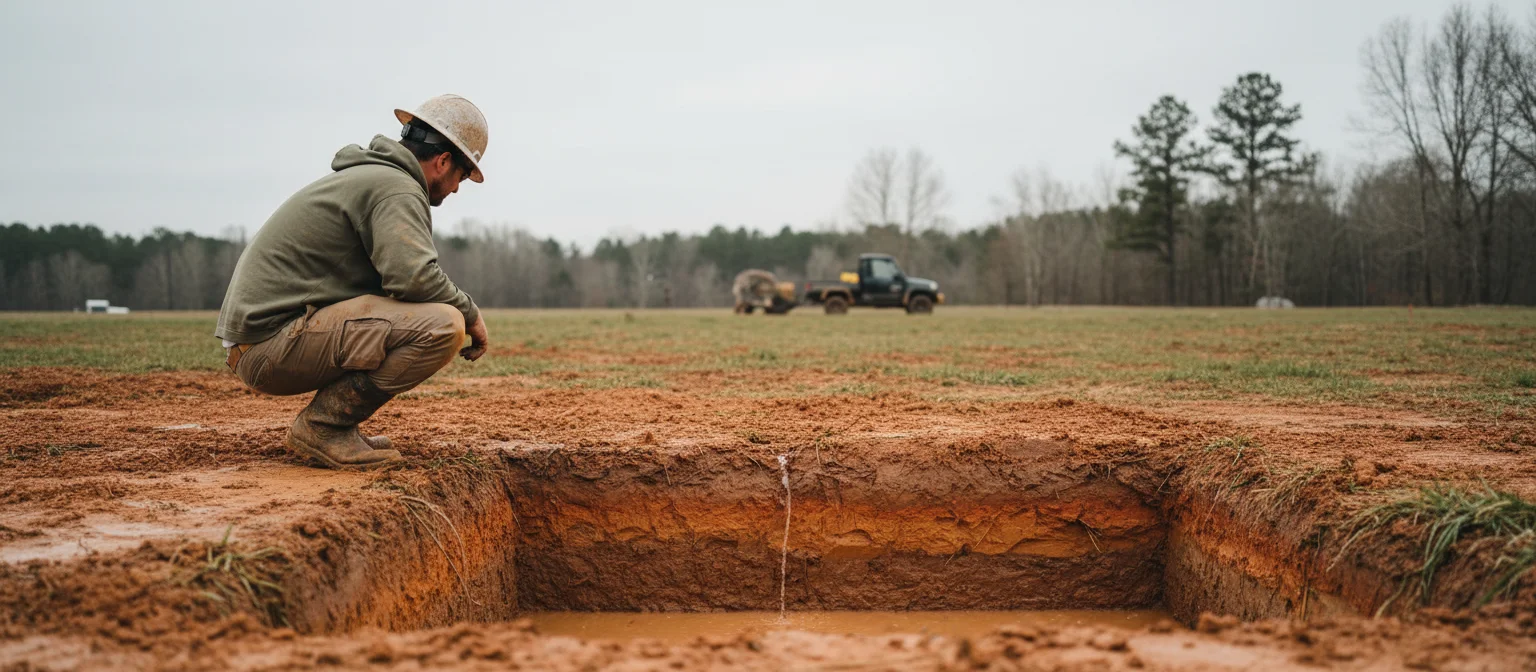
French Drain Methodology Wars: Four YouTube Experts, One NC Clay Problem, and What Actually Matters for Your Yard
French drain experts disagree on method. Why NC clay changes the answer.

Gate City Foundation and Drainage (Shawn): NC Operator, Guilford County — What He Gets Right and the NC Homeowner Takeaway
Shawn at Gate City Foundation and Drainage works in Guilford County, NC. What he gets right about NC clay drainage, and the NC homeowner takeaway for Piedmont projects.

Grading Permit Requirements in Wake, Mecklenburg, Durham, and Guilford Counties
Compare grading permit requirements across Wake, Mecklenburg, Durham, and Guilford counties—acreage thresholds, who applies, and what missing permits cost.

Hurricane Helene WNC: Earthwork Damage Assessment and Recovery Playbook
Hurricane Helene WNC damage: assess driveway/grading damage, vet contractors.

NC Earthwork Regulations: What Homeowners and Operators Need to Know Before Breaking Ground
NC grading and hauling regulations in plain English: state E&S permits, NCDOT driveway rules, county permit matrix, and NCDEQ AccessDEQ. Know before you dig.

NC Erosion & Sediment Control Act: What the Law Actually Requires for Grading and Land-Clearing Projects
NC's Sedimentation Pollution Control Act translated: who it applies to, the 1-acre threshold, DEMLR enforcement, and what contractors must do before breaking ground.

NC Grading, Drainage, and Hauling Glossary: Operator Terms Defined
NC grading and drainage glossary: 40+ contractor terms defined.

NC Land Disturbance Permit Thresholds: State Minimum, County Rules, and What Applies to Your Project
NC land disturbance thresholds: state 1-acre minimum vs county rules.

NC Stormwater Ordinances: When Your Project Needs More Than an E&S Permit
NC stormwater ordinances: when a project triggers review, state vs county.

NCDOT Regulations That Affect Your NC Grading, Driveway, and Hauling Project
NCDOT rules that affect NC grading, driveway, and hauling projects: driveway encroachment permits, culvert requirements, weight limits, and right-of-way work explained.

WNC Post-Helene Contractor Backlog: Realistic Wait Times and How to Get in Queue
How long WNC earthwork repair takes post-Helene, how to find contractors actively taking work, and how to vet.
Done researching? Find a verified NC contractor.
Every contractor in our directory is license-active and deep-links to the same public records above. Browse by city, or tell us about your project and we’ll line up quotes.
Why Public Records First
Most contractor directories sell “verified” badges. We don’t. Every credential signal on this site links straight to the state record, not to anything we control. That’s the only verification posture that survives the question “why should I trust you?” — you don’t have to. The state already keeps the receipt.
These resources are free, anonymous, no signup required. They’re the same lookups our verification pipeline runs against every contractor in the directory. We just packaged them so any homeowner can run them too.