Two things Asheville homeowners ask first
Why does grading cost more in Asheville than in the Piedmont?
Slope. The same square footage on a mountain lot needs cut and fill instead of shaping, engineered retention instead of a graded bank, and drainage behind anything that holds soil back. Access costs too — a lot a Piedmont crew reaches in a truck may need tracked equipment and a longer haul here. It isn't a premium for the postcode; it's a different job.
When does Buncombe County require a grading permit?
At one acre of disturbance in general — but a quarter-acre (10,890 sq ft) trigger applies in some circumstances, which catches jobs a homeowner would consider small. There's also a hard incentive not to jump the gun: starting work before plan approval doubles the plan-review fee. Confirm your trigger before anyone breaks ground.
Two things make hiring a grading contractor different in Asheville, and neither is about price lists.
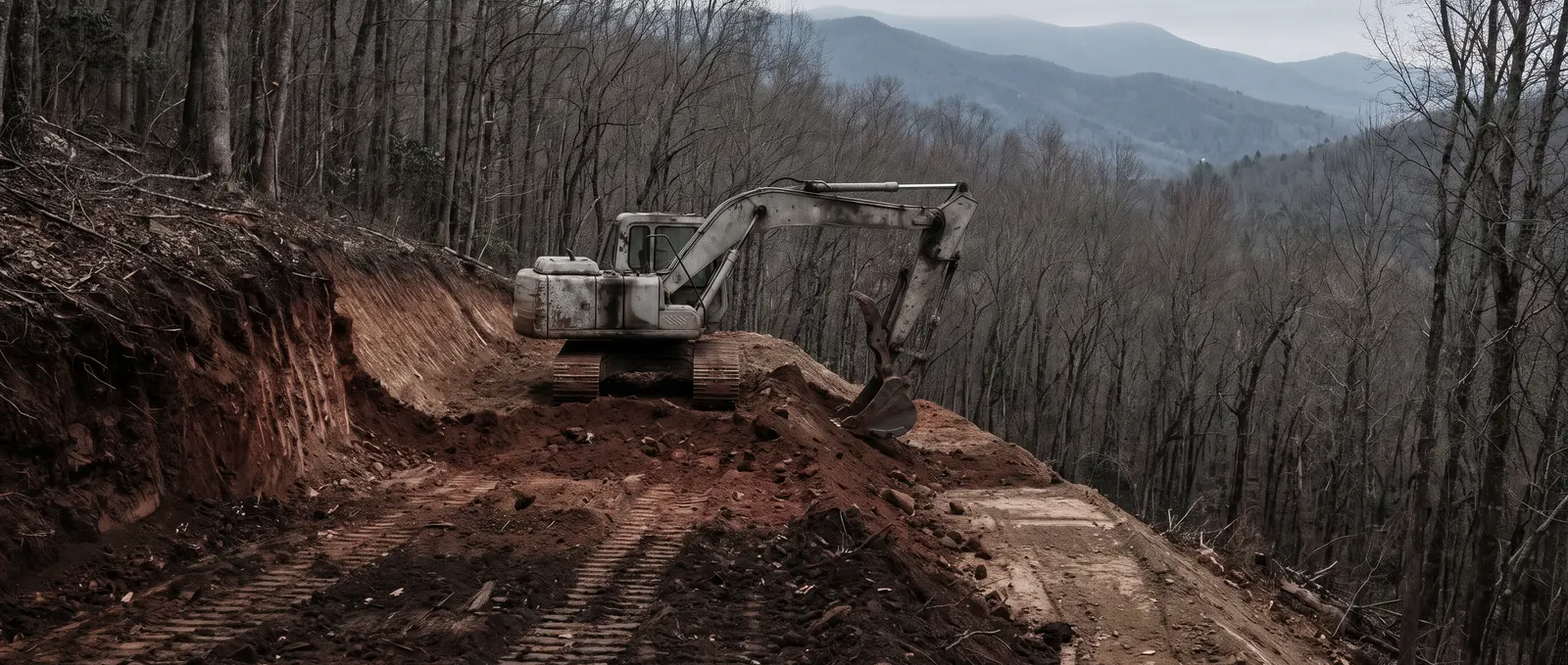
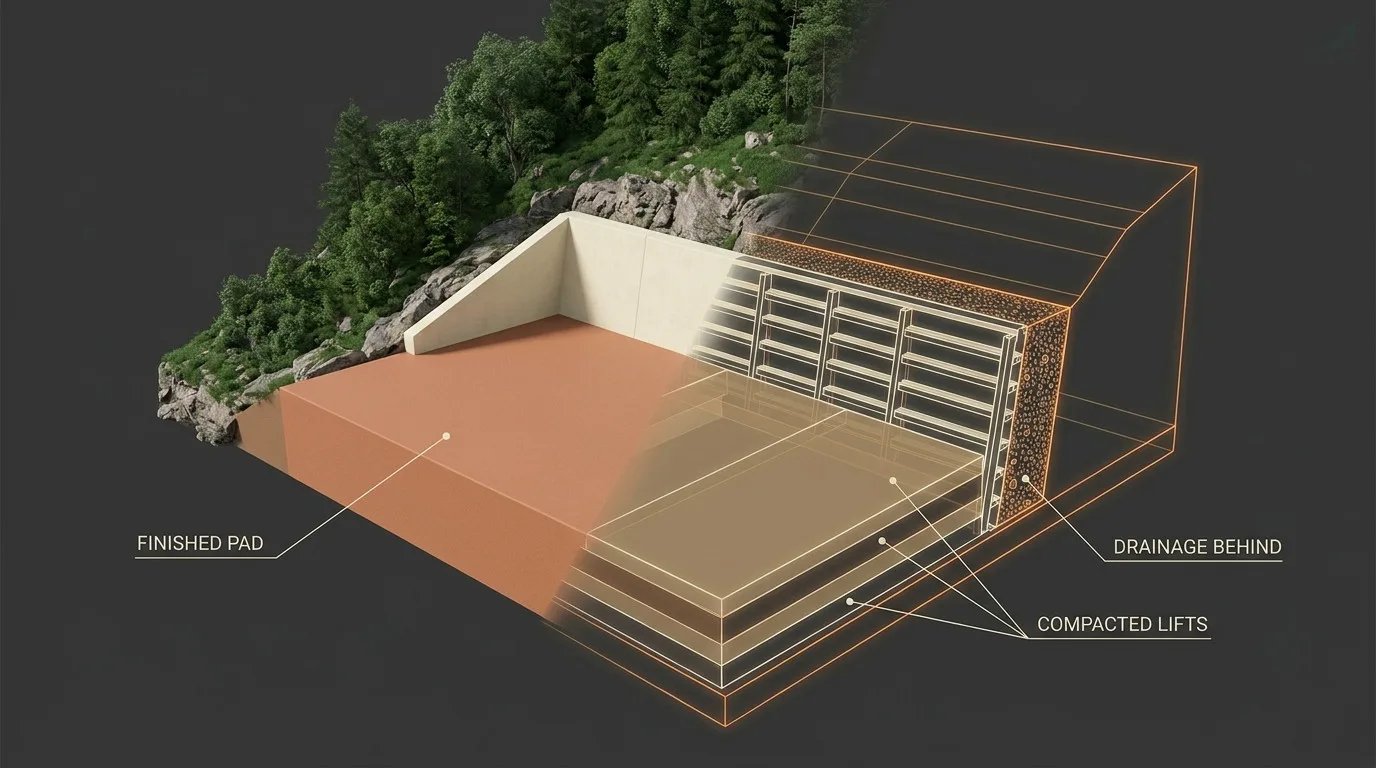
The first is physical: slope changes what the job is. A level pad on a mountain lot isn’t found, it’s engineered — material cut from uphill, placed and compacted downhill, held with a structure that needs drainage behind it. Quotes that look wildly different from one another usually differ on whether that engineering is included.
The second is market: the post-Helene surge is still working through Western North Carolina. Demand pulled in operators from outside the region, some excellent and some transient. Verification matters more here than it did three years ago.
This page is about vetting: what an Asheville grading contractor actually does, what separates a real quote from a cheap one, and the local rules worth knowing before you sign.
For the storm-repair side specifically, see driveway washout repair in Asheville. For permit thresholds and fees in full, see the Buncombe County page.
What a grading contractor does on a mountain lot
Four scopes, and they price very differently.
| Common Asheville grading scopes | What it involves | What drives the cost |
|---|---|---|
| Building-pad cut and fill | Cutting into the uphill side, placing and compacting the material downhill, retaining the fill face | Slope angle, how much material moves, and whether the retention needs engineering |
| Driveway grading and drainage | Establishing grade, crowning the surface, cutting cross-drains so water leaves before it runs the whole length | Length, steepness, and the number of drainage crossings |
| Yard and slope stabilisation | Reshaping ground that is moving or eroding, and establishing cover that holds | Whether the slope needs structure or only vegetation and time |
| Storm damage repair | Rebuilding what a flood event removed — often driveway, culvert, and bank together | Access, how much fill has to be imported, and whether the original failure cause gets fixed |
Building-pad cut and fill
- What it involves
- Cutting into the uphill side, placing and compacting the material downhill, retaining the fill face
- What drives the cost
- Slope angle, how much material moves, and whether the retention needs engineering
Driveway grading and drainage
- What it involves
- Establishing grade, crowning the surface, cutting cross-drains so water leaves before it runs the whole length
- What drives the cost
- Length, steepness, and the number of drainage crossings
Yard and slope stabilisation
- What it involves
- Reshaping ground that is moving or eroding, and establishing cover that holds
- What drives the cost
- Whether the slope needs structure or only vegetation and time
Storm damage repair
- What it involves
- Rebuilding what a flood event removed — often driveway, culvert, and bank together
- What drives the cost
- Access, how much fill has to be imported, and whether the original failure cause gets fixed
The scope that most often gets under-quoted is the first one, because the retention and the drainage behind it are invisible in a finished photograph. A pad quote that doesn’t mention how the fill is held is not a complete quote.
Slope is the cost multiplier
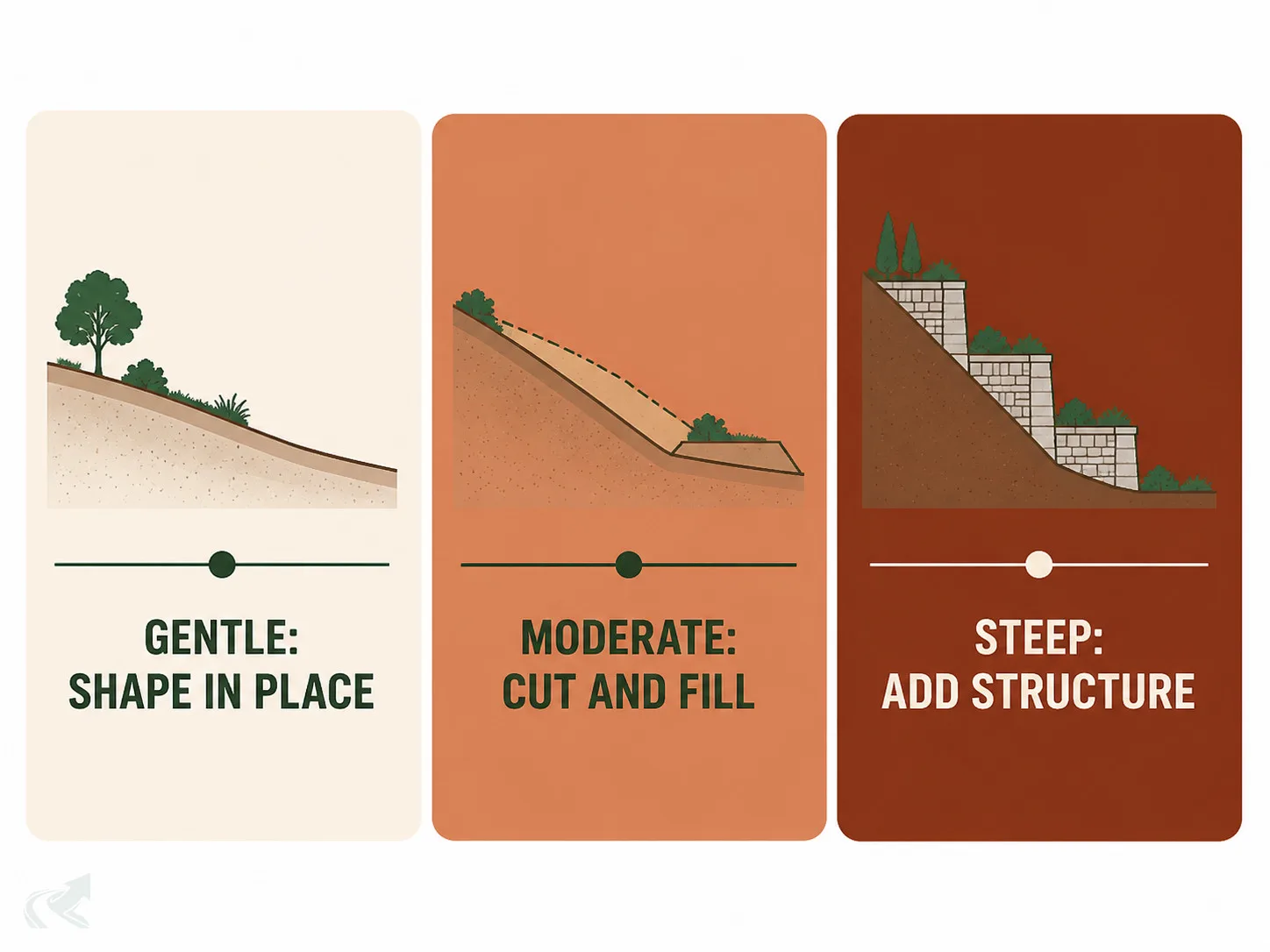
The same job costs more as the ground steepens, and the reasons compound.
Gentle ground lets a crew shape material in place. As slope increases, three things change at once:
Material has to move rather than be shaped. Cut and fill instead of grading. More machine hours, more compaction in lifts.
Structure gets involved. Past a certain angle the fill face needs holding — a wall, terracing, or engineered reinforcement, each with drainage behind it. This is where a mountain quote genuinely departs from a Piedmont one.
Access narrows. Steeper, tighter sites mean smaller or tracked equipment, more trips, and sometimes staging material further away.
The practical read for a homeowner: when quotes vary by a lot, they are usually not quoting the same job. Ask each contractor what they assumed about retention, and the range often explains itself.
The Buncombe rules worth knowing before you sign
A trigger that catches small jobs, and a fee that punishes starting early.
Two things matter to a homeowner at hiring time:
The trigger isn’t only an acre. Buncombe’s general threshold is one acre of disturbance (43,560 sq ft), but a quarter-acre trigger (10,890 sq ft) applies in some circumstances — small enough to catch a job a homeowner would never think of as large.
Starting before approval doubles the plan-review fee. That’s a deliberate deterrent, and it’s the clearest reason not to let a contractor “get started while the paperwork catches up.” A contractor who suggests that is telling you something about how they work.
There’s also a 21-day ground-cover deadline after disturbance stops, and a state fee of $119 per disturbed acre effective 1 July 2025 for projects over an acre.
Full thresholds, fees, deadlines, and contacts are on the Buncombe County page. Confirm current figures with the county before relying on them.
Vetting in a post-Helene market
The surge brought capacity. It also brought people who won’t be here next year.
Storm recovery pulled operators into WNC from well outside the region. Many did good work. Some were transient, and a few were neither licensed nor insured for what they took on.
Three checks, in order of how much they protect you:
Licence. Verify it against the NC Licensing Board record directly, not a photo of a card. How to check an NC contractor licence walks the lookup. The licence threshold is $40,000 — above that, a general contractor licence is required.
Insurance, in writing, from the insurer. A certificate emailed by the contractor is a starting point; a certificate sent by the agent naming you is the real thing.
Local track record. Ask for two Buncombe-area jobs from the last year and permission to look at them. An operator who works here regularly will have them nearby.
Warning signs specific to a surge market are collected at contractor red flags — the pressure to sign quickly and the discount for paying cash are the two that show up most.

What to ask before you sign
- “What are you assuming about retention?” — the single question that explains price gaps on pad work
- “Where does the water go when you’re done?” — drainage behind structure is the part that fails silently
- “Who pulls the permit, and are we approved before you start?” — the doubled-fee rule makes this concrete
- “Can I see the licence number and a current certificate of insurance from your agent?”
What this page does not cover
Storm-damage driveway repair has its own page: driveway washout repair in Asheville. Permit thresholds, fees, and process detail are on the Buncombe County page. Regional context — why mountain earthwork differs at all — is at earthwork in Western NC.
From our directory
Verified grading contractors near Asheville
Every listing is cross-checked against the NC Licensing Board public record before it appears. Pick your city:
Or browse the full NC contractor directory.