
If you are clearing 3 acres in Guilford County and want to burn the pile on your own land, NC law does allow it — under conditions. The rules are not complicated, but skipping the burn permit step is the most common mistake contractors see. This page lays out all three disposal options, what each one costs in time and money, and what material goes where.
For NC land clearing and debris disposal together, the contractor handling the clearing job often includes debris disposal in the scope. Get that spelled out in the itemized quote before work begins.
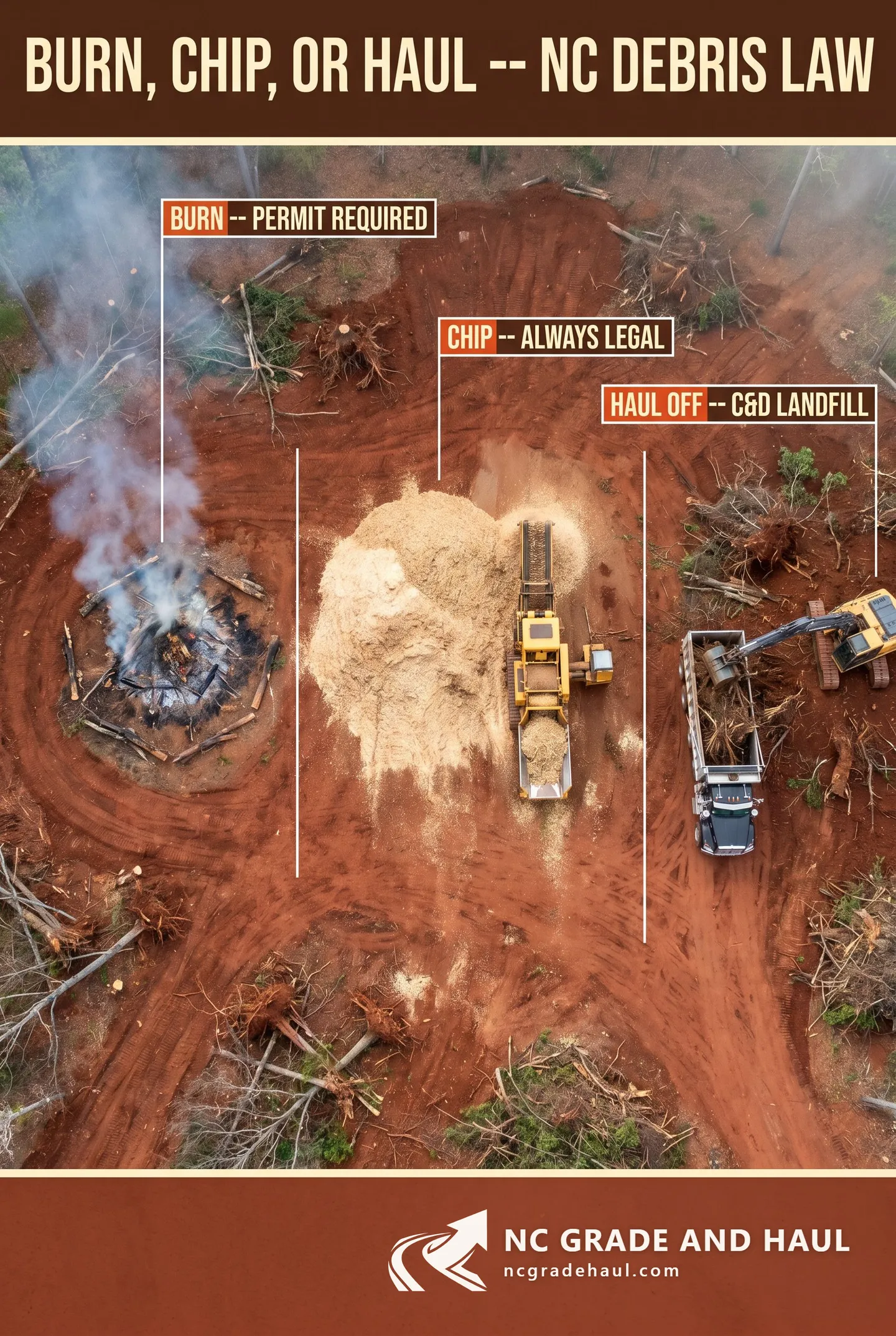
Open Burning — What NC Law Actually Allows
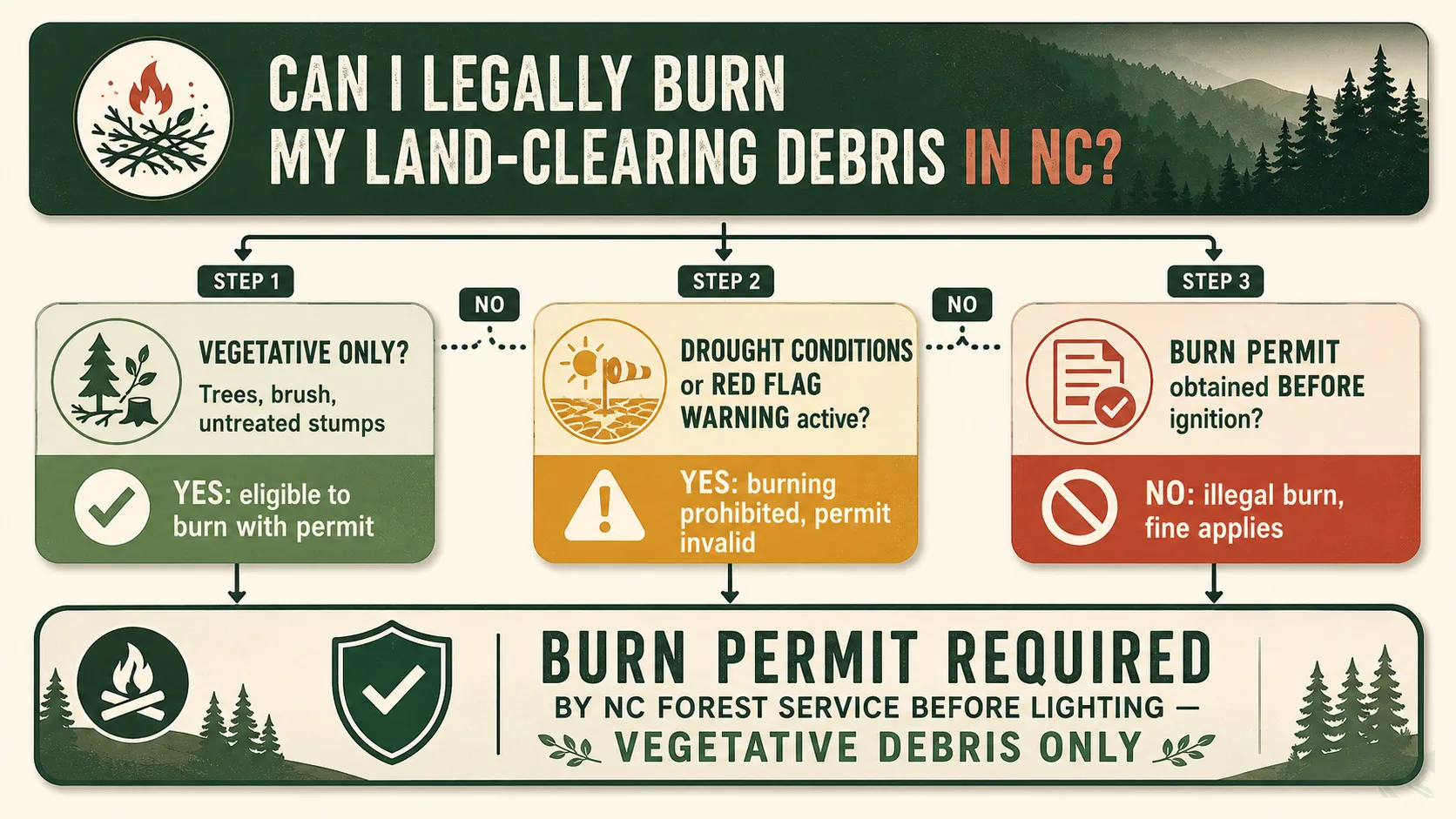
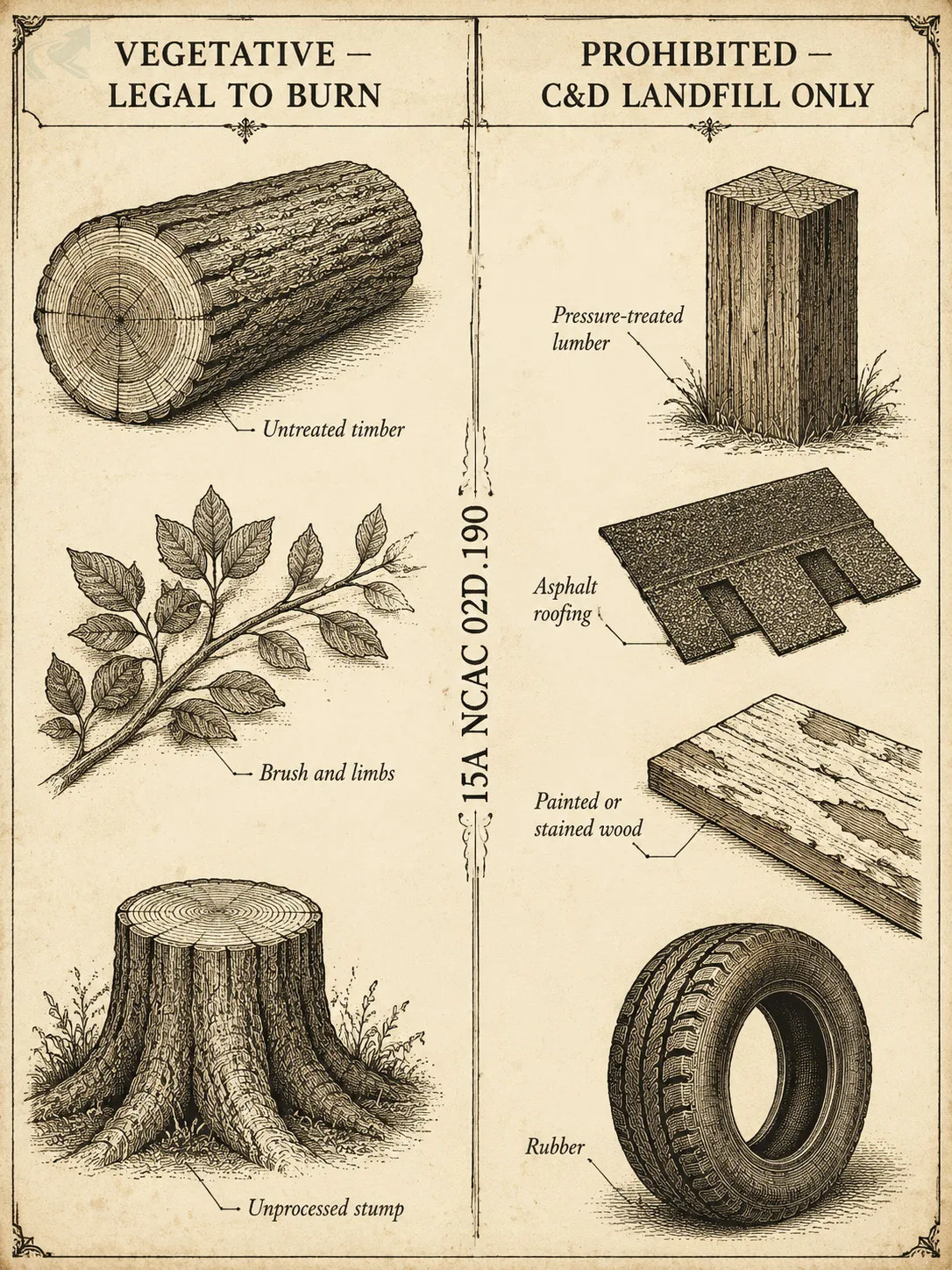
NC allows open burning of vegetative land-clearing debris — trees, brush, unprocessed wood — under permit, with conditions. You cannot burn treated lumber, roofing, painted wood, or plastics.
North Carolina regulates open burning under 15A NCAC 02D .1900. The rule permits burning of vegetative land-clearing debris when local conditions allow. “Vegetative” is the key word. Raw trees, brush, limbs, and untreated stumps qualify. Construction scraps, roofing materials, and any lumber that has been treated, painted, or stained do not.
The administers the open burning rules statewide. For large clearing burns — generally fires expected to produce visible emissions beyond the property or within 300 feet of an occupied structure — additional notification to NCDEQ may be required. The DAQ website publishes current notification thresholds and county-level burn restriction status.
Seasonal restrictions apply across North Carolina. During declared drought conditions and when the NC Forest Service issues Red Flag Warnings (high wind, low humidity), open burning is prohibited regardless of whether you hold a valid burn permit. Fires lit during a burn ban carry fines.
Most rural counties permit open burning for land-clearing debris, but the permit is required before ignition — not after. The permit typically specifies pile size limits, setback distances from structures and property lines, and time-of-day restrictions. Check with the NC Forest Service office for your county before lighting.
Chipping and Mulching On-Site
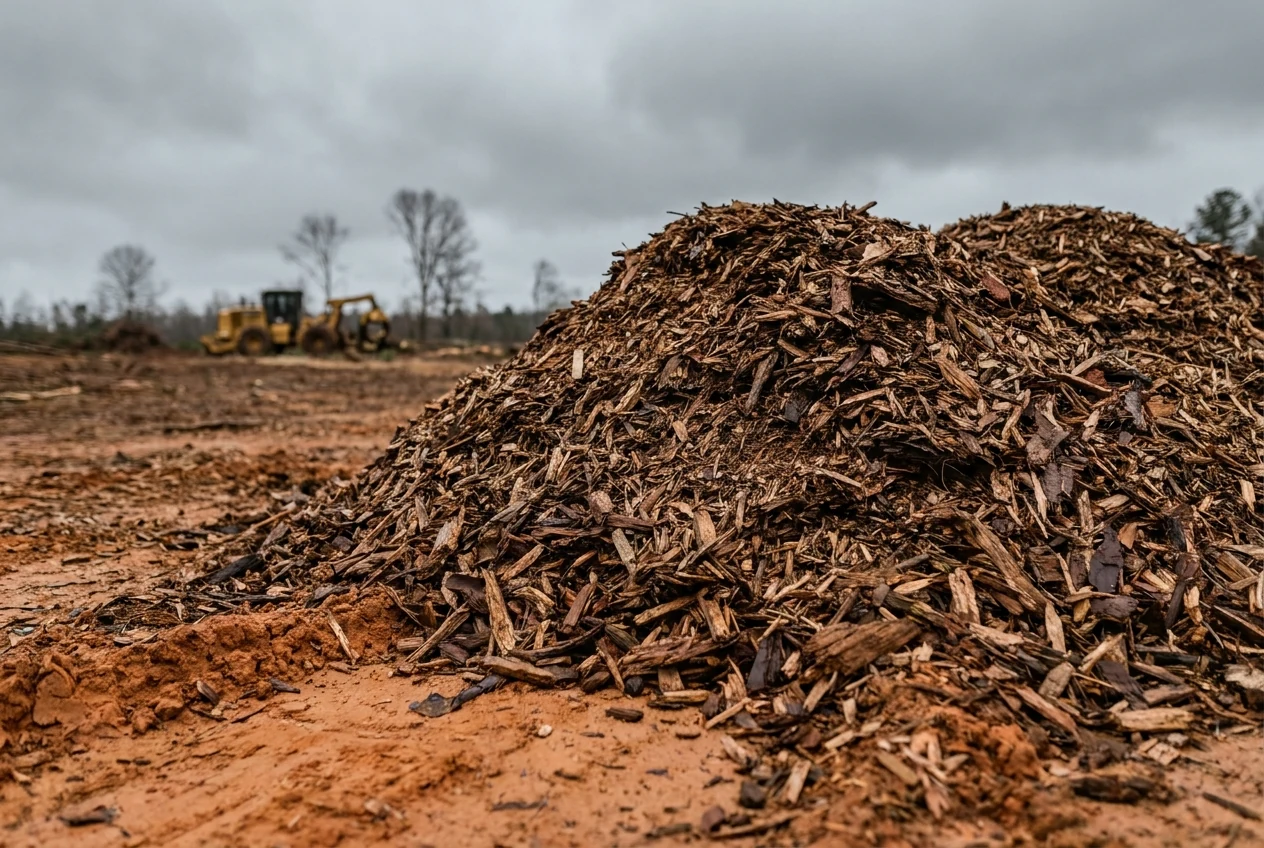
Chipping or mulching clearing debris on-site is always legal and can add value — wood chip mulch is a useful erosion control material and soil amendment.
A tub grinder or commercial chipper turns a debris pile into a material you can use. The product — coarse wood chip mulch — works as an erosion blanket on freshly graded slopes, pathway surface material, or a compost input over a season. Clean wood chips from pine and hardwood are both usable.
On-site chipping is worth considering when the clearing volume is large and burn permits are complicated or prohibited in your area. It also avoids haul-off tip fees. The cost equation is chipper rental or a contractor day-rate versus the burn permit process, monitoring time, and cleanup.
For large rural clearings where the mulch has on-site value — a new driveway surround, a food plot prep, or a future garden bed area — chipping often pencils out. For smaller lots or urban-adjacent clearing where hauling the chips off afterward would cost as much as a haul-off in the first place, run the numbers before committing.
Haul-Off to C&D Landfill or Chipping Facility
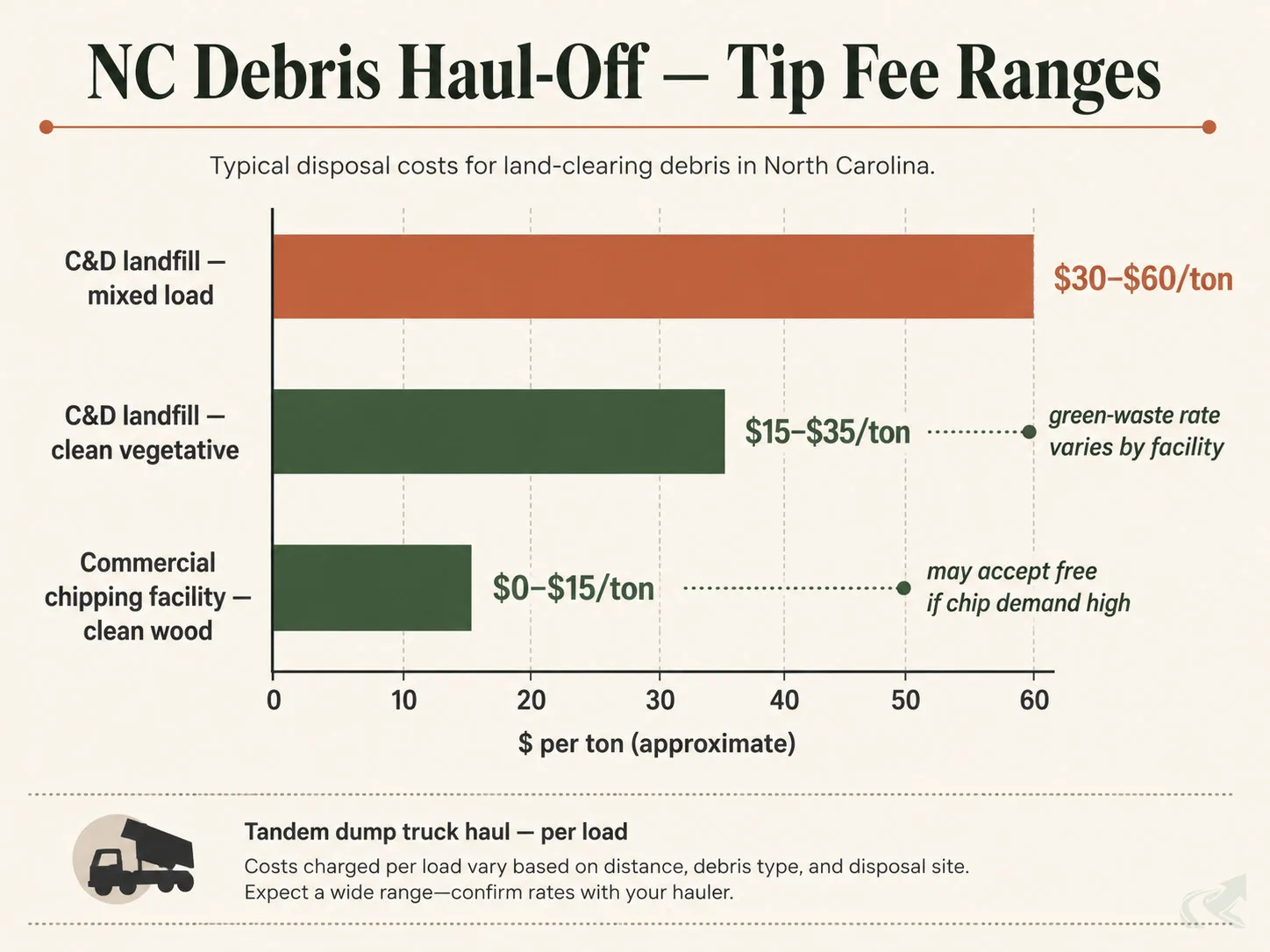
Clearing debris can be hauled to a C&D landfill or a commercial chipping facility. Tip fees typically apply, though some facilities accept clean wood debris for free or at reduced cost.
A Construction and Demolition (C&D) landfill accepts the full range of clearing debris — vegetative material, stumps, and mixed loads including treated wood or construction scraps. Tip fees vary by county and facility but typically run $30—$60 per ton for mixed loads. Clean vegetative debris is often priced separately and may qualify for a green-waste rate.
Commercial chipping or grinding facilities operate across North Carolina and focus on clean wood waste: trees, brush, and untreated stumps. Some accept residential volumes; others work with contractors on bulk truckloads. Clean material often gets a lower tip fee, and some facilities take it at no charge when they have sufficient demand for the finished chip product.
Call ahead before hauling. Most facilities are specific about what they will and will not accept, minimum load weights, and operating hours. A mixed load with roofing or treated wood buried in the vegetative pile will be charged at the mixed-debris rate — or refused.
For hauling land-clearing debris off a NC site, the size of the load determines the rig. Tandem dump trucks handle most residential clearing volumes; large commercial clearing may need roll-off containers staged on-site.
What You Cannot Burn or Chip for On-Site Disposal
Treated lumber, painted wood, roofing materials, rubber, plastics, insulation, and any material containing chemicals must go to a C&D landfill — not burned or chipped for on-site use.
This is where clearing jobs on properties with existing outbuildings, old barns, or demolition debris mixed into the brush pile require extra care. NC open burning rules are explicit: non-vegetative material cannot be burned. That includes pressure-treated fence posts, creosote-treated timber, painted barn siding, asphalt shingles, metal roofing, rubber, and plastic of any kind.
Burning these materials releases toxic compounds and triggers air quality violations. The fine structure under 15A NCAC 02D .1900 applies per incident. A burn pile containing treated wood that produces a neighbor complaint is not a situation the permit resolves.
The practical fix: separate vegetative from construction debris before the burn or chip pile goes together. Stage them as two distinct piles from the first cut. That keeps the vegetative pile clean and eligible for on-site burning or chipping, and the construction debris goes straight to a C&D haul-off.
County Burn Permit Process
Most NC counties issue burn permits through the NC Forest Service or the county emergency management office. The permit is required before burning begins and typically specifies conditions and pile size limits.
The NC Forest Service administers burn permits for unincorporated areas across most of North Carolina. The permit process is county-level: your local NC Forest Service district office covers several adjacent counties and issues permits for agricultural and land-clearing burns.
How to get one in North Carolina:
- Online: The NC Forest Service offers online burn permit applications through their official portal at ncforestservice.gov. Availability varies by county during active burn seasons.
- Phone: Call your local NC Forest Service district office directly. The permit is typically issued same-day for routine residential or agricultural clearing burns when conditions allow.
- County emergency management: Some NC counties route residential burn permits through the county emergency management or fire marshal’s office rather than NC Forest Service. If your county does not show up in the NC Forest Service portal, contact the county office.
The permit specifies pile size limits, required setback distances from structures and property lines, time-of-day restrictions (most county permits restrict burning to daylight hours), and requires extinguishing the fire completely before leaving the site unattended.
For county permits for NC land-clearing debris disposal, the NCGH county permits reference page covers the permit process across Triangle and Triad counties in more detail.
Debris disposal options for NC land-clearing projects
| Option | Legal? | Typical Cost | Best For |
|---|---|---|---|
| Burn (vegetative only, with permit) | Yes -- conditions apply | Burn permit fee (varies by county; often $0--$25) | Large rural clearing, low haul-off budget |
| Chip or mulch on-site | Always legal | Chipper rental or contractor day-rate | When mulch has on-site value; avoiding tip fees |
| Haul to C&D landfill | Always legal | Tip fees $30--$60/ton for mixed loads | Mixed debris, treated wood, construction material |
| Haul to chipping facility | Always legal | May be free for clean wood; varies by facility | Clean vegetative material in volume |
Burn (vegetative only, with permit)
- Legal?
- Yes -- conditions apply
- Typical Cost
- Burn permit fee (varies by county; often $0--$25)
- Best For
- Large rural clearing, low haul-off budget
Chip or mulch on-site
- Legal?
- Always legal
- Typical Cost
- Chipper rental or contractor day-rate
- Best For
- When mulch has on-site value; avoiding tip fees
Haul to C&D landfill
- Legal?
- Always legal
- Typical Cost
- Tip fees $30--$60/ton for mixed loads
- Best For
- Mixed debris, treated wood, construction material
Haul to chipping facility
- Legal?
- Always legal
- Typical Cost
- May be free for clean wood; varies by facility
- Best For
- Clean vegetative material in volume
Pre-Clearing Debris Disposal Checklist
Before the first cut, answer these four questions:
- Is on-site burning possible? Do you have a county burn permit? Are current conditions clear of drought restrictions or Red Flag Warnings?
- Is there on-site use for chipped or mulched material? A food plot, new garden beds, driveway surround, or erosion-prone slope that could benefit from wood chip coverage.
- Are there non-vegetative materials on the site? Treated wood, fence posts, outbuilding debris, roofing — these need a separate haul-off plan and cannot go in the burn or chip pile.
- What is the haul-off cost if burning is not an option? Get a haul-off estimate in the itemized quote before the job starts, not after the debris is piled.
Find a Contractor Who Handles Debris Disposal in the Quote
Most NC grading contractors include debris disposal in their clearing scope — but the disposal method and any haul-off tip fees need to be itemized separately. A quote that says “clearing and debris removal” with a single line-item is not specific enough to know whether tip fees are built in or passed through.
Ask for the debris plan before signing: burn on-site, chip on-site, or haul-off. If haul-off, ask for the facility name and the tip-fee rate per ton. That tells you the quote is built on actual numbers, not an estimate that adjusts when the truck scale prints the receipt.
Hire a grading operator in North Carolina through the NCGH directory. Every contractor in the directory has been cross-checked against the NC Licensing Board, OSHA records, and workers’ compensation coverage. You can see the verification sources directly — not a platform badge.
For questions about NC regulations for land-clearing debris, the NCGH regulations reference page covers the applicable state rules in plain English.