
Vanessa Quinn ordered topsoil for a raised garden bed in Guilford County. Plants went in. Four weeks later, nothing was growing — stunted seedlings, standing water after every rain, hard crust between waterings. She called the contractor and described what was delivered. Orange-red. Dense. Heavy.
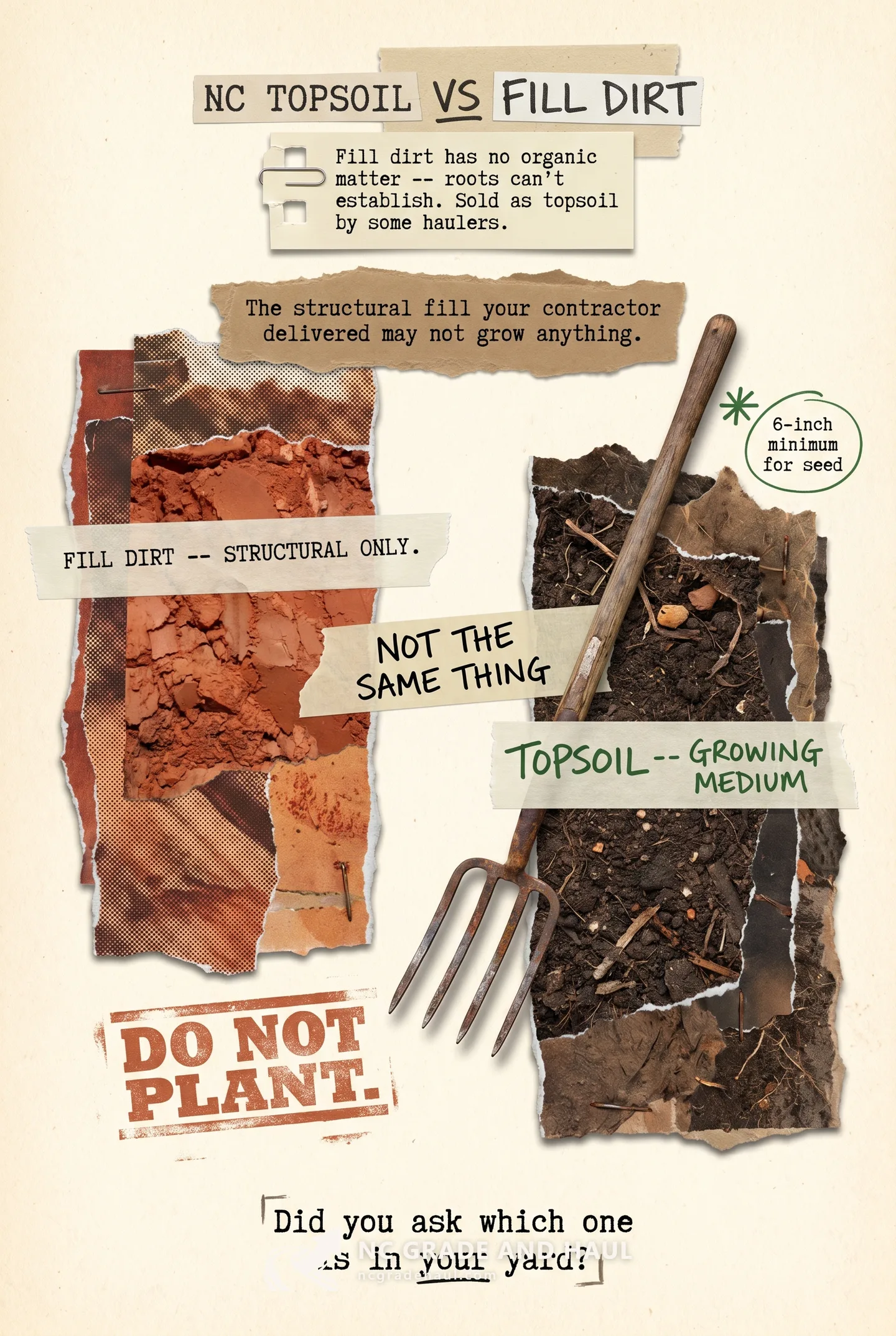
That’s not topsoil. That’s fill dirt. And it’s a distinction that determines whether your project works.
What Topsoil Actually Is
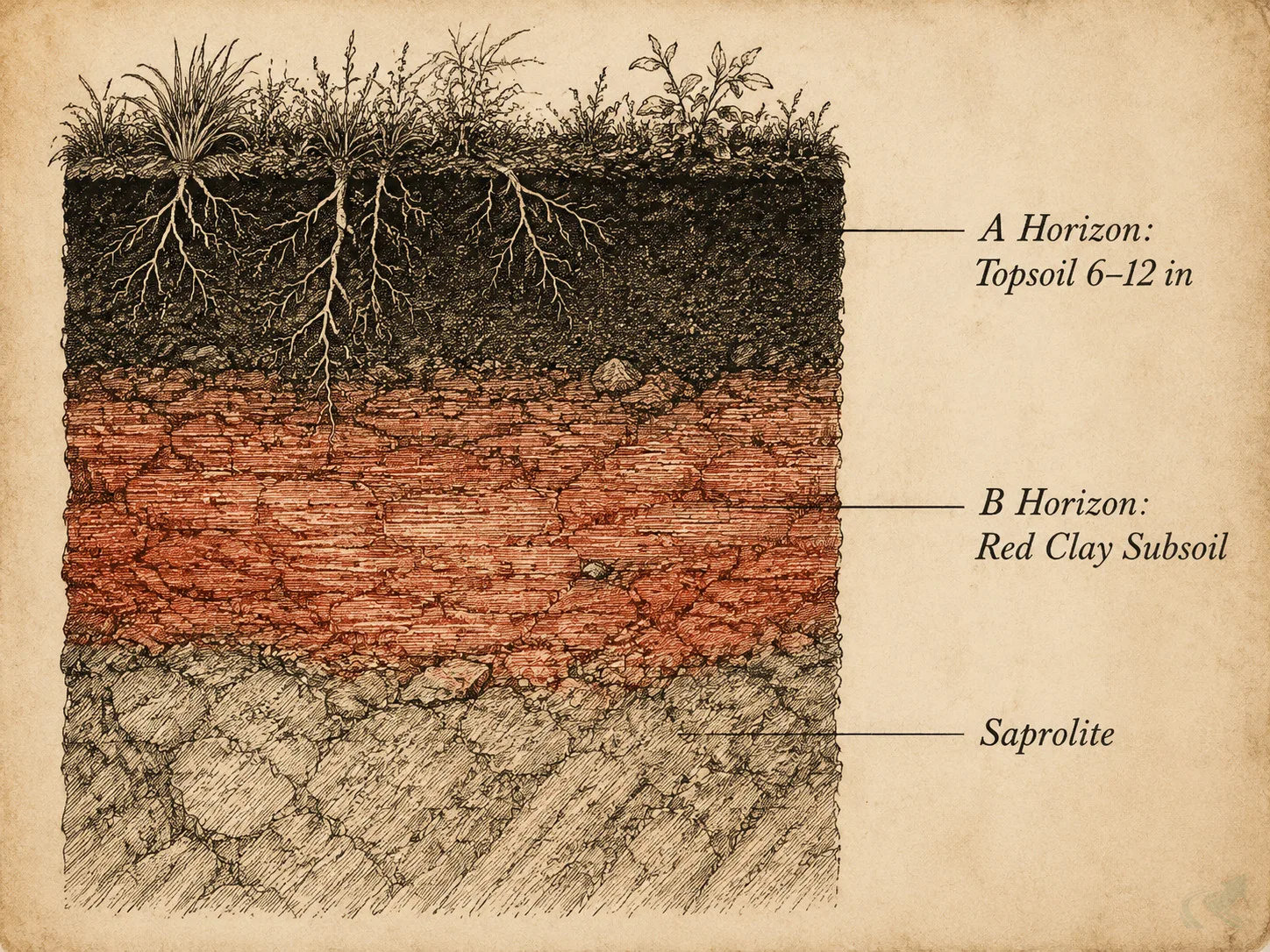
Topsoil is the uppermost layer of native soil — the top 6 to 12 inches — where organic matter accumulates and biology lives.
The soil science term is the A horizon. In North Carolina, native topsoil in undisturbed areas is dark brown to black. That color comes from decomposed plant material, fungal networks, earthworm activity, and years of organic cycling. It’s what makes soil alive.
That biology is exactly what plants need. Roots grow through it easily. Water drains at the right rate — slow enough to absorb, fast enough not to pool. Nutrients cycle through microbial activity rather than sitting locked in mineral form.
The problem in North Carolina: development strips topsoil off sites during grading. A cleared residential lot often has zero native topsoil remaining. What looks like “dirt” on the surface is subsoil — the layer that was always beneath the topsoil horizon, now exposed.
What Fill Dirt Actually Is
Fill dirt is subsoil or processed material sourced below the topsoil horizon — dense, low in organic content, and designed for structural applications, not plant growth.
In North Carolina, the most common fill material is Piedmont red clay — the orange-red subsoil visible at every construction site across the Triad, Triangle, and Charlotte metro areas. It compacts well under load. It holds grade. It doesn’t settle the way topsoil would under the weight of a driveway or building pad.
Those same properties make it wrong for planting. Red clay drains poorly. It forms a hard crust when dry. Plant roots struggle to penetrate compacted clay, and the low organic content means microbes can’t cycle nutrients. Even drought-tolerant plants often fail in raw fill.
Fill dirt is the right material for raising grade, building structural pads, filling low spots before a concrete pour, and supporting driveways. It’s the wrong material for anything plants need to grow in.
The NC Context — What Gets Called “Topsoil” Here
In North Carolina, “topsoil” is a marketing term as often as it is a material description. Orange-red material scraped off a grading site gets called topsoil regularly — it isn’t.
Here’s why the confusion happens. When a contractor grades a site, they skim off whatever is on top of the ground. In a previously undisturbed area — a pasture, an old woodlot — the top few inches might genuinely be organic-rich topsoil. But in an area that was graded 10 years ago and has been sitting since, the surface layer is subsoil that revegetated. Scraping it off gives you red clay with a thin mat of grass roots. That’s fill, not topsoil.
A second version of the problem is blended material. Screened fill mixed with compost or organic amendments gets marketed as “topsoil” or “garden blend.” Some blends are legitimate growing media. Others are mostly clay with cosmetic organic content added. You can usually tell by the color — real topsoil-grade blend is dark throughout the load, not just in streaks.
The field test before the truck leaves:
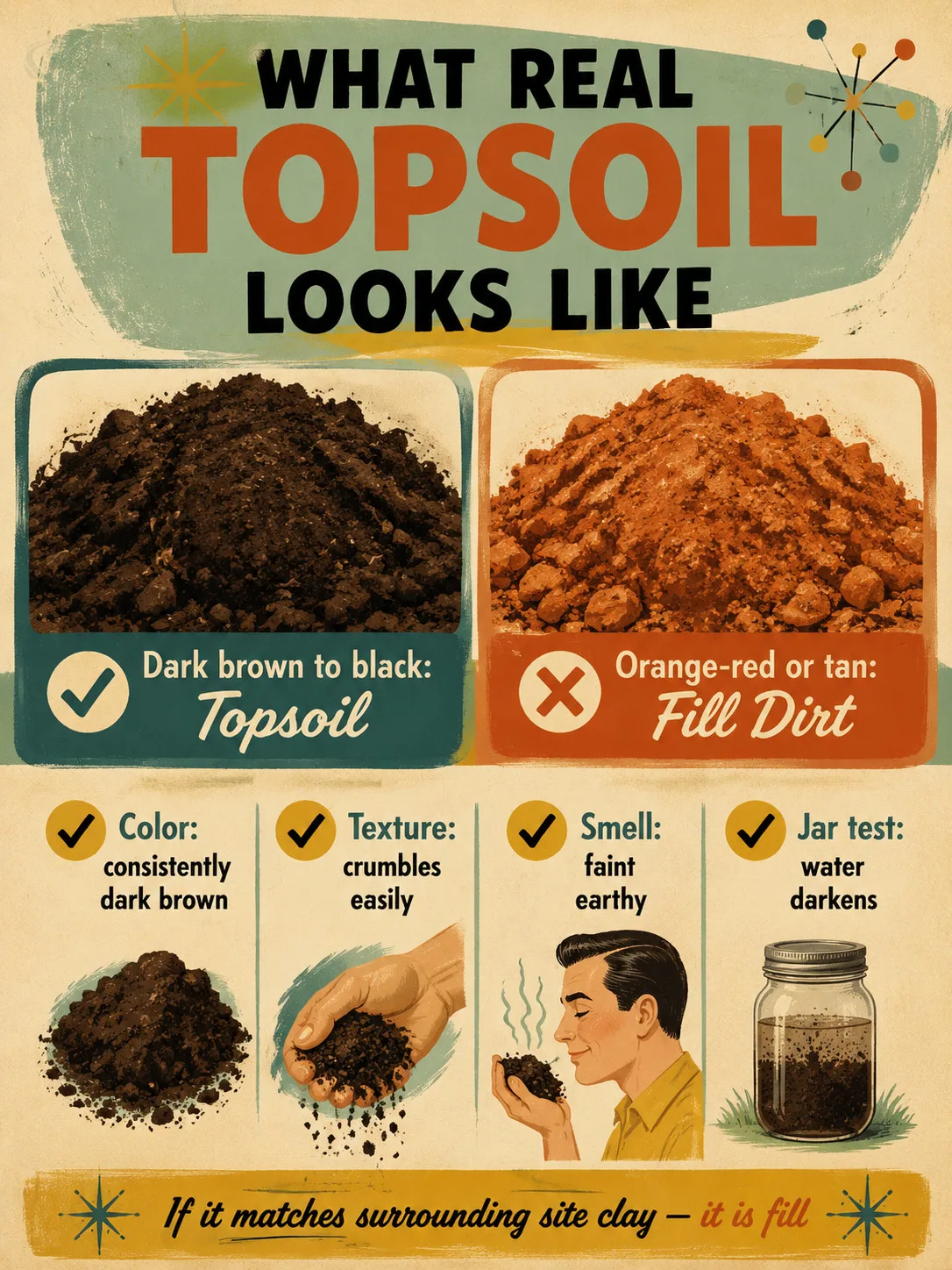
- Color check: real topsoil is consistently dark brown to black. Orange, red, tan, or grey material is fill.
- Texture: topsoil is loose and crumbles easily. Fill clay feels dense and plasticky when moist, forms hard chunks when dry.
- Smell: healthy topsoil has a faint earthy smell from microbial activity. Fill has no smell or a faint mineral smell.
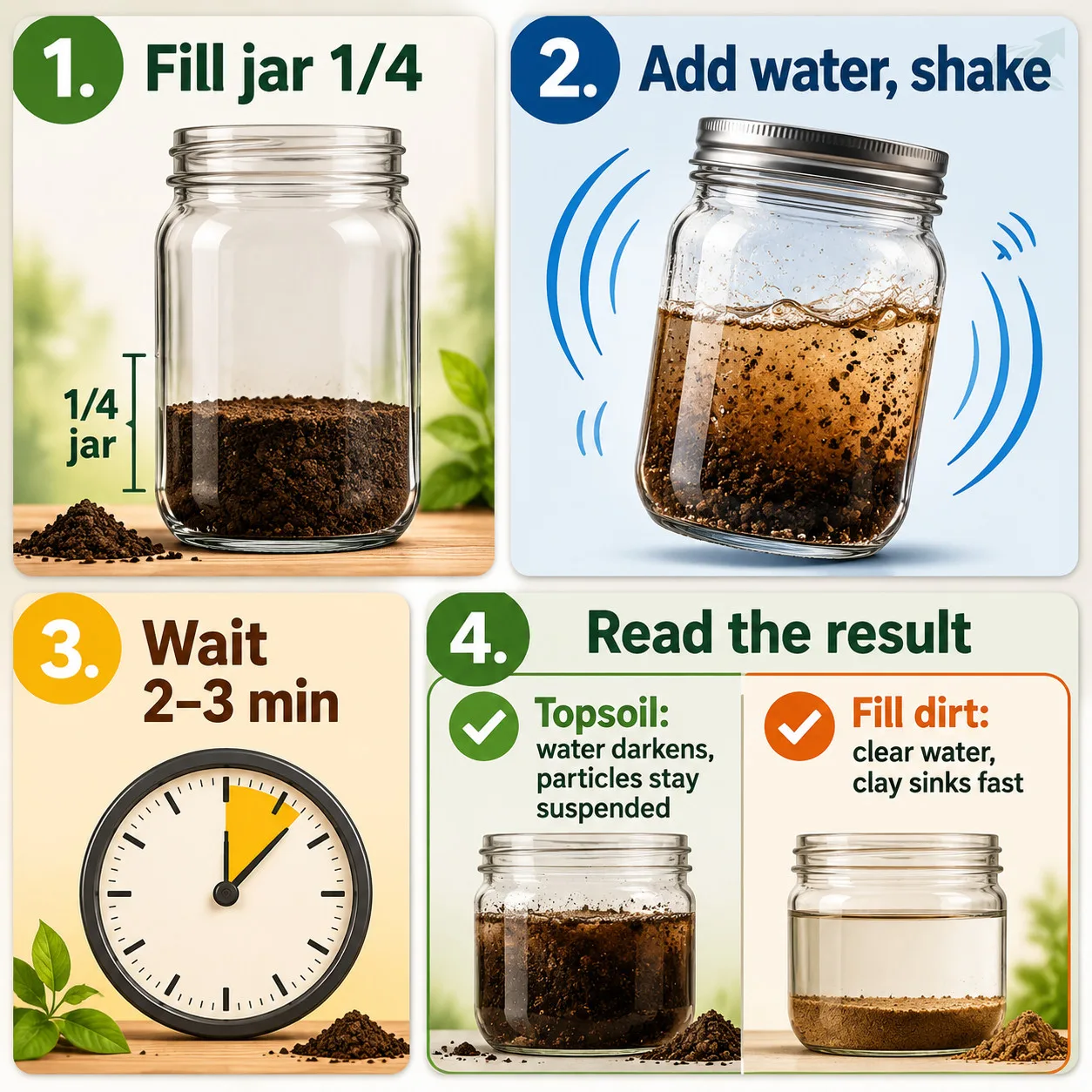
- Jar test: fill a clear jar 1/4 full of material, add water to the top, shake, and let settle. Dense clay particles sink within 1 to 2 minutes. Organic matter and lighter particles stay suspended longer and darken the water noticeably. If everything settles fast and the water stays relatively clear, it’s heavy-clay fill.
If what arrived is the same color as the surrounding site — it’s fill.
Which One Does Your Application Need?
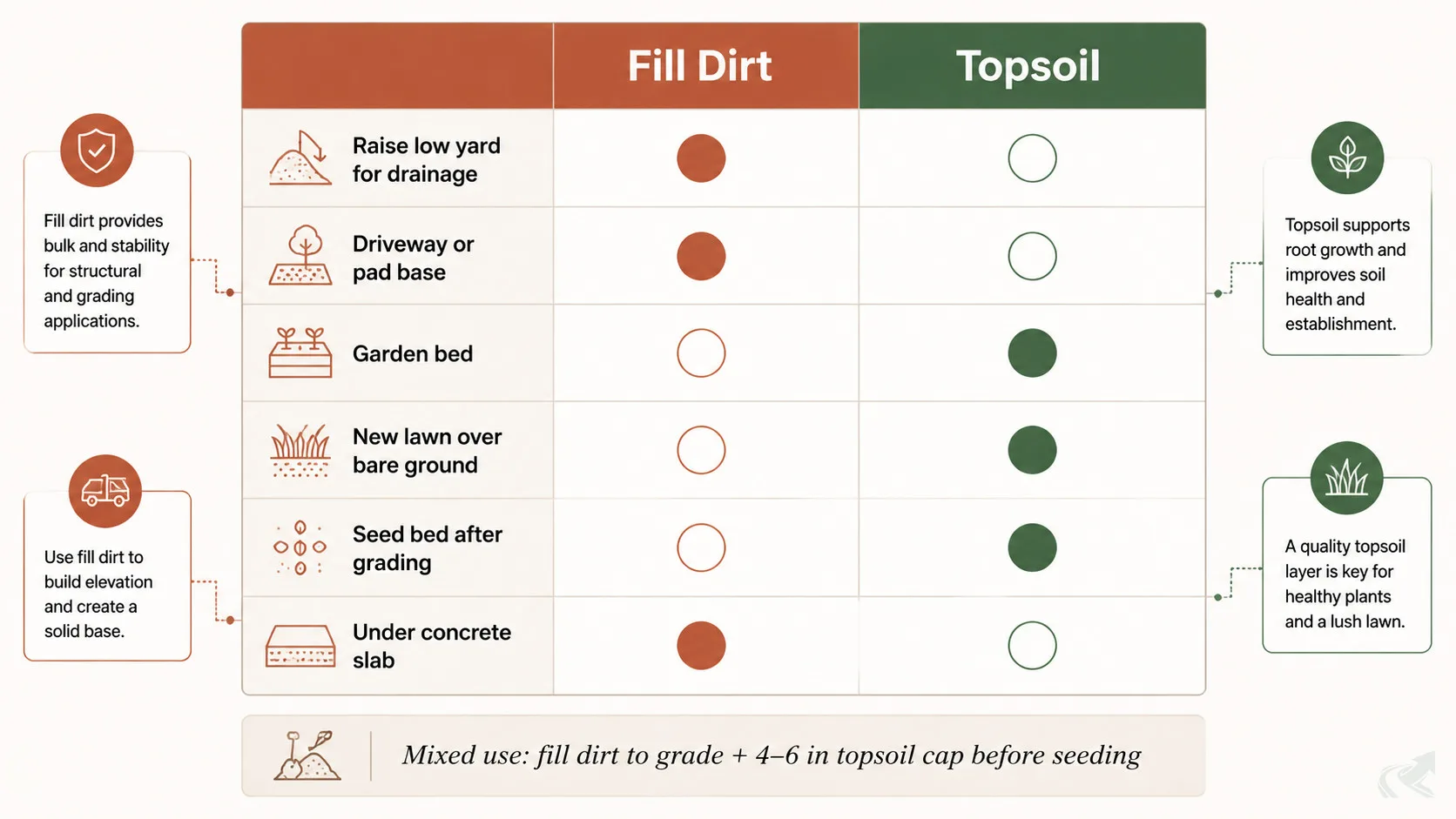
The decision comes down to one question: is the goal structural stability, or plant growth?
| Application | Material needed |
|---|---|
| Raise a low yard area for drainage | Fill dirt to grade, then 4 to 6 inches of topsoil cap if grass is going in |
| Fill a low spot before driveway or pad | Fill dirt only — topsoil under a structural surface will settle |
| Build up a garden bed | Topsoil or topsoil-based blend — fill dirt will fail the plants |
| Establish a new lawn over bare ground | Topsoil or topsoil blend — grass roots need organic soil to establish |
| Seed bed preparation after grading | Topsoil or compost amendment over the fill grade |
| Under a concrete slab or pad | Fill dirt — topsoil compresses under structural load |
The mixed-use scenario is the most common: a homeowner wants to raise a low area in the yard AND grow grass over it. The correct approach is fill dirt to bring the grade up, then a 4 to 6 inch topsoil or quality blend cap on top before seeding. Bringing in topsoil alone for a significant grade change is the wrong call — it won’t compact structurally and will settle unevenly.
For more on NC fill dirt types including topsoil and fill, the parent hub covers the full material range and how haulers price by yard.
How to Verify Before the Truck Leaves
You have about a 10-minute window on delivery to check the load before the driver dumps. Use it.
The time to raise a concern is before the material is spread, not after. Once fill is spread across a garden bed, correcting it means removing and hauling away all of it. That’s an avoidable cost.
The jar test described above works on delivery. Grab a handful from the truck bed or the top of the load, drop it in a water bottle, shake, and watch. It takes under 3 minutes.
Ask the contractor these questions before the material arrives — not after:
- What is the source of this topsoil? (A quarry blend? A site scraping? Compost mix?)
- What is the approximate organic content?
- Is it screened?
- Is this native topsoil or a blended compost mix?
If the answer is “it came off a site we just graded” — ask what soil type that site had. A site with red Piedmont clay on top gave you fill-grade material regardless of what it’s called.
For the distinction between screened fill vs unscreened and how it relates to topsoil, that spoke covers the screening variable in detail.
Common Mistakes
Three material errors that show up consistently across North Carolina yard and garden projects:
-
Putting fill dirt under a garden. Fill dirt under a raised bed or in-ground garden produces poor drainage, root compaction, and plant failure within one growing season. Red clay doesn’t support microbial cycling. The fix is removing the fill and replacing with proper growing media — often more expensive than the original material cost.
-
Using topsoil as structural fill. Topsoil compresses and settles under structural loads. Topsoil under a driveway, building pad, or concrete slab will shift over time. If you’re raising grade for a driveway or structure, fill dirt is the correct base material.
-
Accepting orange-red material called “NC topsoil.” Real topsoil is dark. If what was delivered matches the color of surrounding site clay, it’s fill material regardless of what the invoice says. Ask before it’s spread.
Find a Verified NC Hauler for the Right Material
If a hauler quoted you “topsoil” and you’re not confident what you’ll actually get, an itemized quote from a verified North Carolina grading and hauling contractor will specify the material source, screening, and organic content.
Find a grading and hauling contractor in North Carolina who delivers in your county. Ask specifically whether what they call topsoil is screened, what site it sourced from, and whether they can describe the color and texture.
For soil amendment and topsoil in yard regrading in North Carolina, that page covers how topsoil and fill interact when correcting drainage problems at the yard level.
For topsoil and fill dirt glossary definitions, the glossary covers the formal soil science terms used across North Carolina Cooperative Extension and NRCS resources.