
Two questions about NC earthwork timing
When is the best time to grade or install drainage in NC?
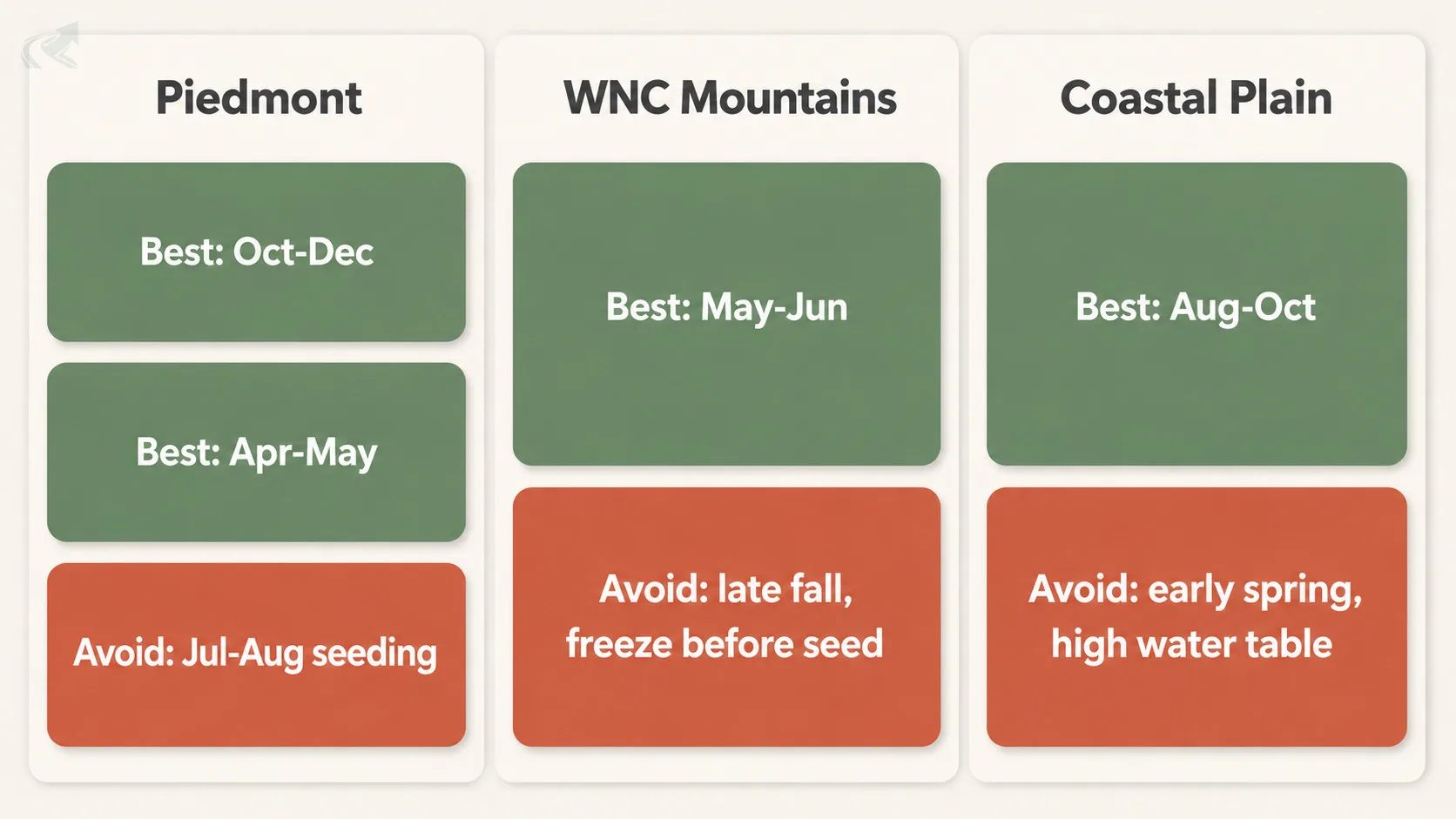
In the Piedmont (Triangle, Triad, Charlotte): mid-fall after leaf-drop and before first freeze, or late spring after clay drains. In WNC: late spring through mid-summer before hurricane season. On the coast: late summer through early fall after peak hurricane season passes.
Does NC clay behave differently in summer vs. winter?
Yes -- red clay shrinks and cracks in dry summers, creating channels for surface water to bypass drainage. It swells when wet, slowing drainage and extending dry-out times. Both conditions affect how and when to grade.
The Problem With “Anytime Is Fine”
Two homeowners, both in North Carolina, both planning a drainage project. One is in Chapel Hill — Piedmont clay, saturated from a wet spring. One is in Asheville — mountain zone, freeze risk hanging into late April.
Both get the same contractor answer: “anytime is fine.”
That answer is wrong for both of them. NC has three climate zones that create meaningfully different earthwork windows. The difference matters for scheduling, for material choices, and for how long a newly graded surface holds before the first weather event tests it.
Read your zone first. Then read the section that applies to you.
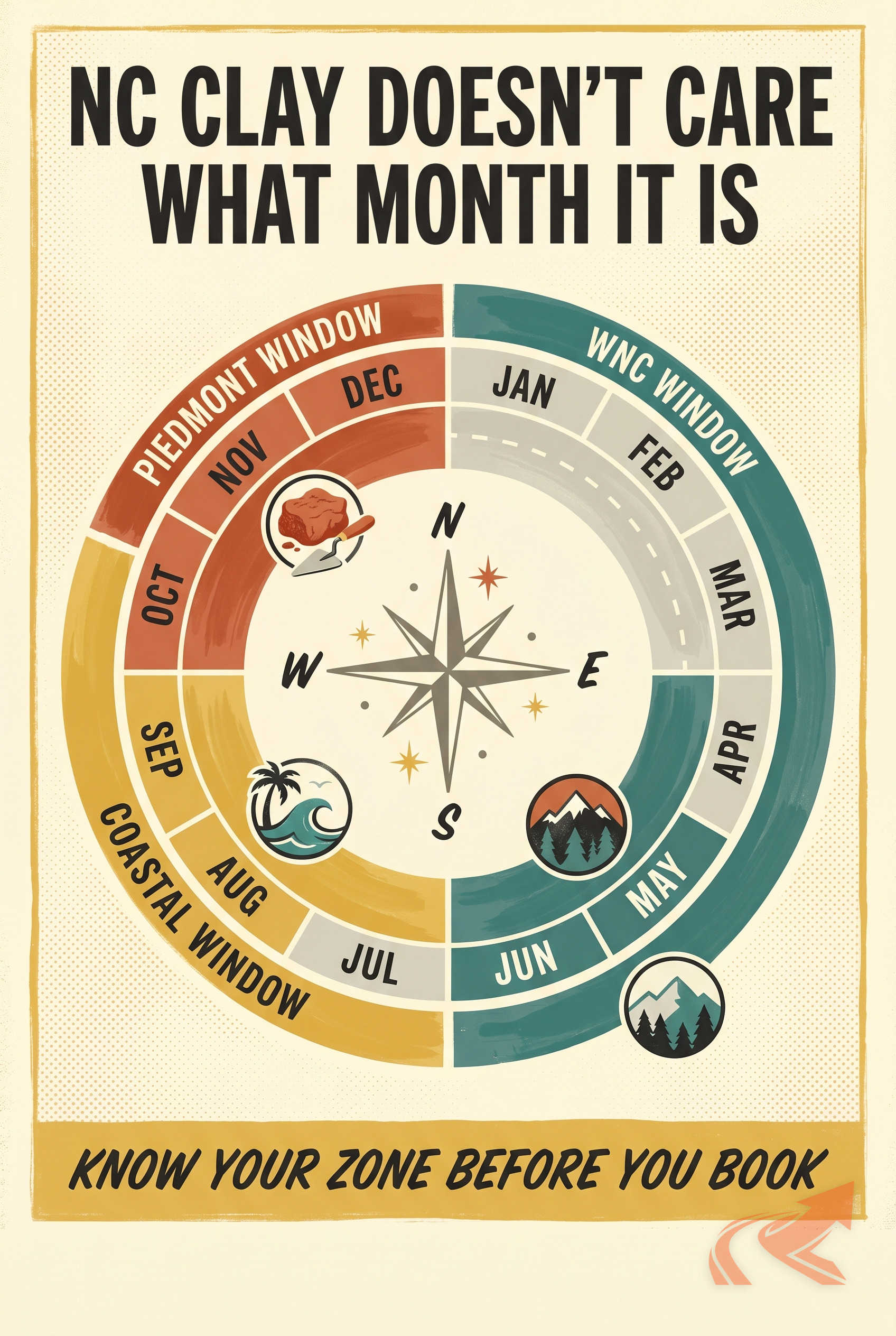
The Three NC Climate Zones — What They Mean for Earthwork
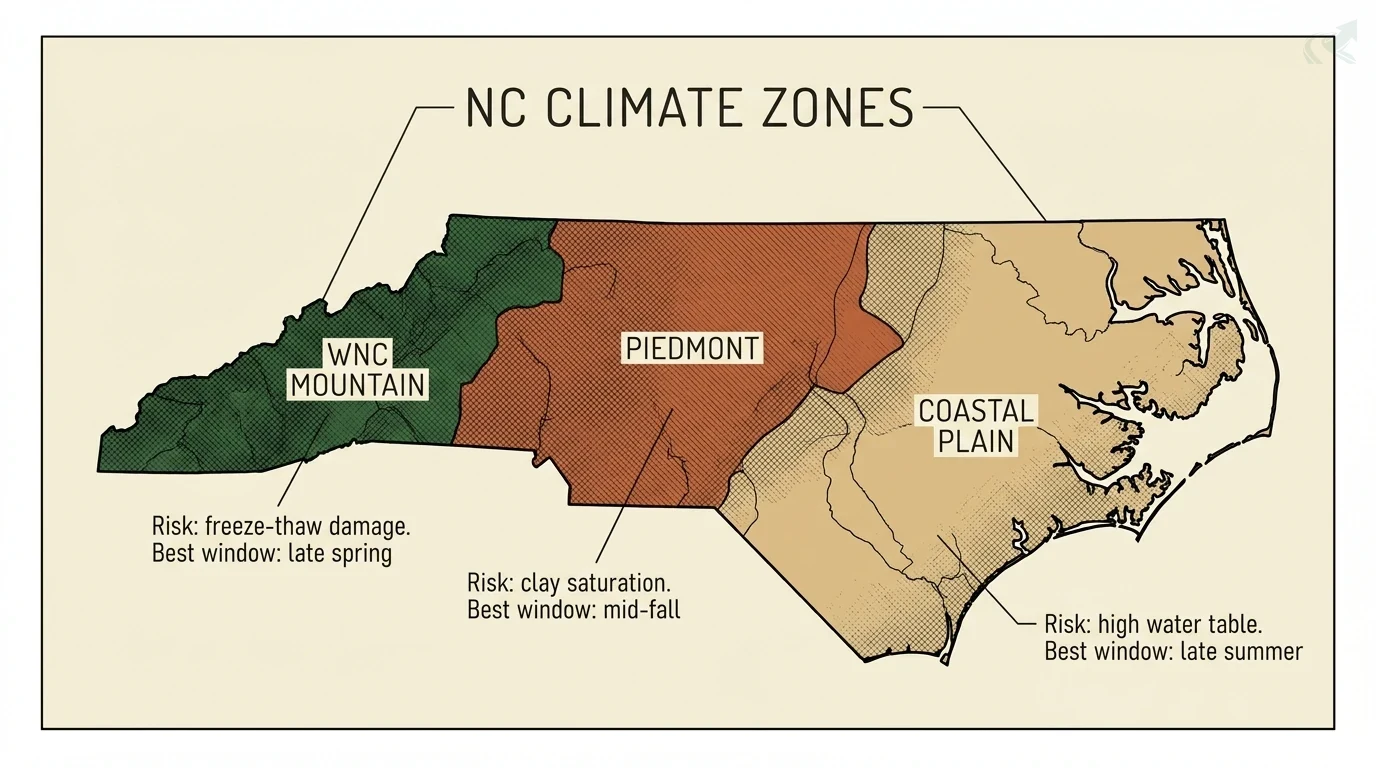
Which zone you’re in determines when your project window is and what your drainage design needs to account for.
| Zone | Geography | Primary risk | Best project window |
|---|---|---|---|
| NC Piedmont | Triangle, Triad, Charlotte metro, Sandhills | Clay saturation in spring; drought-cracking in summer | Mid-fall through early winter; late spring after drainage |
| WNC Mountains | Buncombe, Henderson, Haywood, McDowell, Rutherford | Freeze-thaw pipe and subgrade damage; hurricane surge flooding | Late spring through mid-summer |
| Coastal Plain | New Hanover, Brunswick, Pender, Craven | High water table; hurricane-season storm surge | Late summer through early fall after hurricane season peak |
Diane (Chapel Hill): your zone is Piedmont. Clay saturation and shrink-crack cycles are the main scheduling factors — not freeze-thaw.
Dave (WNC): your zone is mountain. Freeze-thaw damage is real and often doesn’t surface until spring thaw reveals what winter did. Timing a project in the late-spring window matters.
Ray (Guilford County): you straddle Piedmont and upper Piedmont. Your dry-window constraint is late fall — clay has drained, no hard freeze yet, seed can still establish before winter.
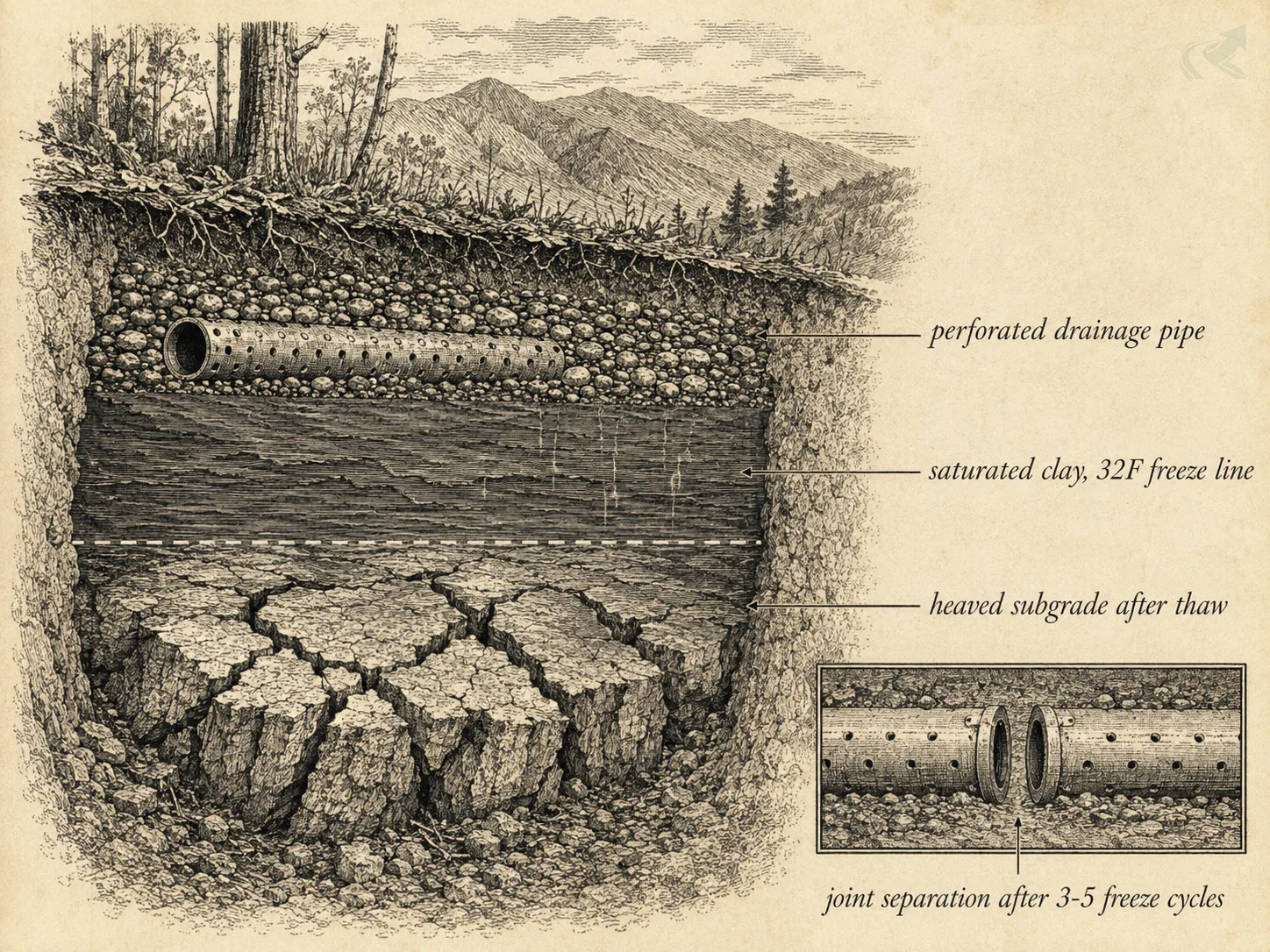
The Freeze-Thaw Cycle in NC — Why It’s Worse Than It Looks
NC’s mountain zone gets enough freeze-thaw cycles per winter to damage drainage pipes and driveway subgrades in ways that don’t appear until spring.
WNC and high-Piedmont areas above roughly 1,500 ft elevation experience repeated freeze-thaw — temperatures cross 32F multiple times per winter, not just during deep cold snaps. Each cycle expands water in the soil and in drainage pipes, then contracts it. Clay amplifies this because it holds water well.
What this does to drainage infrastructure:
- Perforated pipe can heave or crack if bedded in saturated material that freezes
- Driveway subgrades can heave unevenly, creating surface pockets that drain wrong after thaw
- Pipe joints can separate over three to five years of repeated cycling
The counties most exposed: Buncombe, Henderson, Haywood, McDowell, and Rutherford. Projects scheduled in late fall in those counties risk freeze before seed can establish — which means erosion control fails the first significant rain event the following spring.
Shallow rock in WNC counties also limits how deep drainage pipes can be seated — which affects how much buffer exists between the pipe and a frost line. WNC mountain soils and shallow rock covers the terrain constraints in detail.
For the full treatment of freeze-thaw patterns in North Carolina, see the freeze-thaw impact on NC driveways and grading guide.
Hurricane Season — The NC Earthwork Risk Window
Hurricane-season rainfall in NC is not limited to the coast — tropical systems regularly track inland and dump 4 to 8 inches in 48 hours on the Piedmont and mountains.
The official NC hurricane season runs June 1 through November 30. Inland rainfall from tropical systems peaks August through October. Two things this creates for earthwork projects:
-
Fresh grading is vulnerable. A newly graded surface without established vegetation is at high erosion risk during any significant rainfall event. controls (silt fence, seeding) are required; timing seed establishment before hurricane-season peak matters.
-
Post-storm contractor demand surges. Any storm that causes widespread driveway or drainage damage creates a backlog that can push wait times two to four months. This is not hypothetical — it happened across multiple NC metro areas in 2024.
The Helene context: 2024’s Helene was an outlier in intensity, but inland tropical rainfall of three to six inches is not rare in North Carolina during peak season. The WNC mountain zone took the worst of it, but the Piedmont saw significant surge flooding too.
For WNC-specific context from the 2024 season, see the Hurricane Helene WNC earthwork recovery guide.
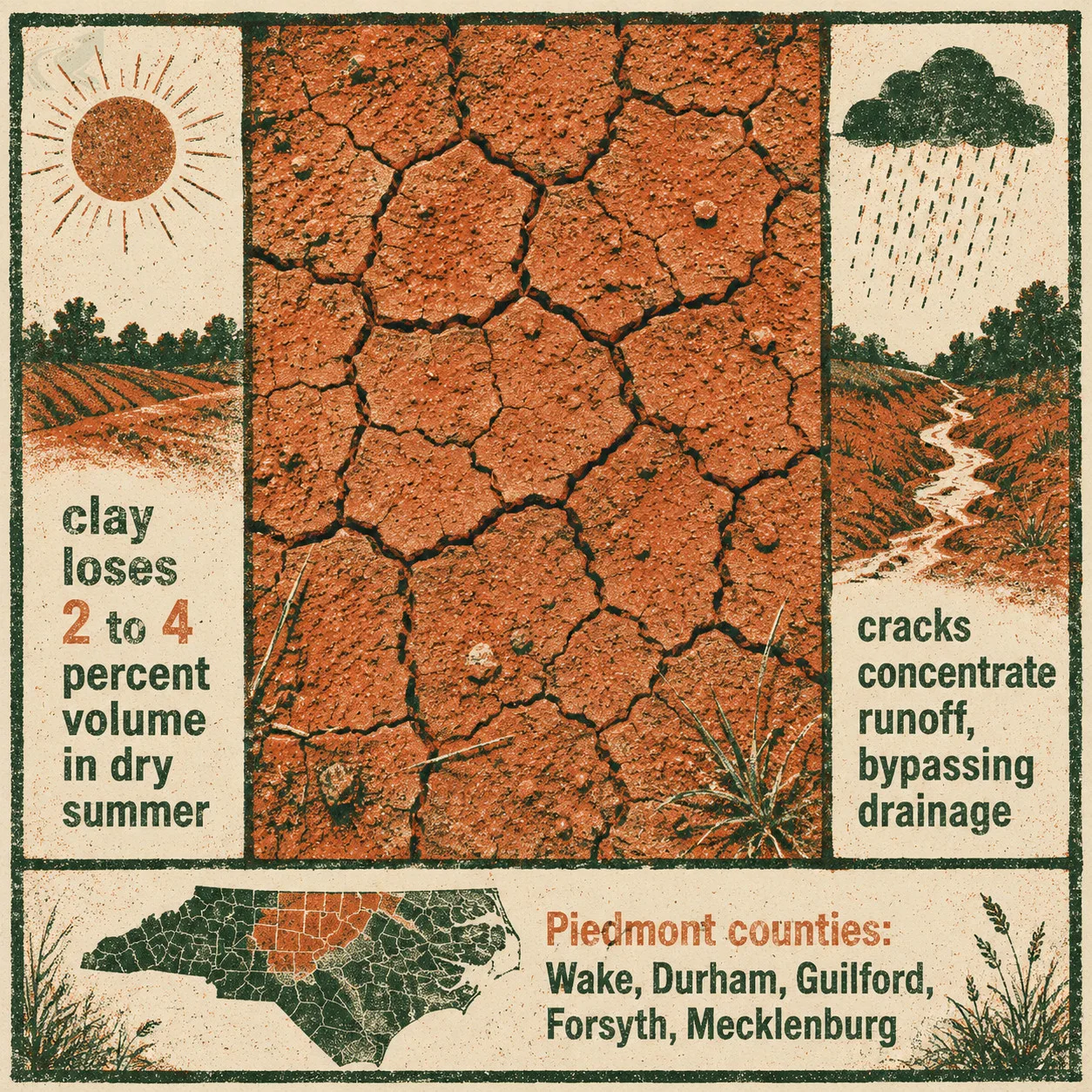
The Summer Clay Shrink-Crack Cycle
NC red clay can lose two to four percent of its volume in a dry summer, opening surface cracks that concentrate runoff and short-circuit drainage designs.
What this looks like: late July, no rain for three weeks, clay surface shows quarter-inch to half-inch surface cracks. When rain finally arrives, water follows the cracks directly down rather than flowing across the surface to a drain. A French drain designed for surface capture may miss this concentrated subsurface flow entirely.
Two practical implications for grading and drainage projects:
-
Sow seed or apply mulch immediately after grading. Bare clay exposed to summer sun is vulnerable to shrink-crack formation faster than seeded ground. Bare soil is the fastest path to surface crack channels that defeat the drainage design you just paid for.
-
Inspect drainage performance in both wet and dry conditions. A drain that works in spring may show a gap in late-summer dry conditions — not because the installation was wrong, but because clay behavior changed. An itemized quote from a contractor who accounts for seasonal soil behavior is worth asking for.
This cycle is most pronounced in the Piedmont counties: Wake, Durham, Guilford, Forsyth, Mecklenburg, and the Sandhills. Coastal Plain soils behave differently — sandy substrate drains faster and doesn’t hold water for the same shrink cycles.
Seasonal Scheduling — When to Book
In the Piedmont, late September through December is the best window — clay has drained, before hard freeze, before spring saturation.
A zone-by-zone breakdown:
-
Piedmont (Triangle, Triad, Charlotte, Guilford, Sandhills): Late fall (October through December) and late spring (April through May) are the two reliable windows. Avoid July through August for new seeding — clay-dry conditions stress establishment. Avoid January through February for pipe work — freeze risk is lower than WNC but real in the upper Piedmont.
-
WNC Mountains (Buncombe, Henderson, Haywood, McDowell, Rutherford): Late spring (May through June) is the primary window. A late-fall project in the mountains risks freeze before seed establishes — and an unseeded graded surface through a WNC winter is a serious erosion event waiting for the spring thaw.
-
Coast (New Hanover, Brunswick, Pender, Craven): Late summer through fall (August through October), after peak hurricane season passes. High water tables in the Coastal Plain mean projects started too early in spring are often competing with saturated subsurface conditions.
For the full booking guide — including current contractor wait times by region and how to get in queue before the window closes — see the seasonal booking guide for NC grading contractors.
NC Disaster Recovery Contractor Backlog
Post-storm contractor backlogs in North Carolina are not a one-season problem — they can persist 12 to 24 months after a major event.
The 2024 hurricane season left earthwork contractors backlogged across multiple NC regions. WNC was the hardest hit, but the Piedmont and Coastal Plain both absorbed significant drainage damage from separate events during the same season.
What a backlog means for scheduling in practice:
- Wait times for new driveway and drainage projects can run two to six months in post-event regions
- Contractors doing active recovery work are not available for routine grading projects during that period
- The best time to schedule is before an event — not after
For current backlog status by region, see the NC disaster recovery contractor backlog page, which updates quarterly alongside the WNC Helene recovery guide.
The right window depends on your zone and your project type. A contractor who doesn’t ask about your project timeline and soil conditions when giving you a quote is pricing blind. Ask for an itemized quote that includes a recommended start window.
Find a grading operator in North Carolina — filter for your county and verify an active license before calling.