You are here: Low severity (clears in 24-48 hrs) | Medium severity (48-72 hrs) | High severity (persistent / foundation risk)
You have one wet corner in the backyard. It fills up after a rain and stays soggy for a day or two. It’s not near the house. The grass around it is patchy and a little yellowish. The rest of the yard drains fine — this spot just doesn’t.
Your neighbor’s yard doesn’t do this. You’re not sure if it’s your lawn, your soil, or your grade.
Before calling anyone, you want to know whether this is something you can handle yourself. The answer, if your situation matches the diagnostic below, is probably yes.
North Carolina Piedmont clay is slow-draining by nature. A 24-48 hour puddle after a hard rain is not automatically a drainage system failure. It may be compaction, low organic matter, or a subtle low spot — all of which respond to hand-tool DIY.
This page walks through the three fixes that work for low-severity situations in NC. It also tells you when to stop DIYing and call a contractor. Read that section even if you’re planning to start with Fix 1.
Is This Actually Low Severity?
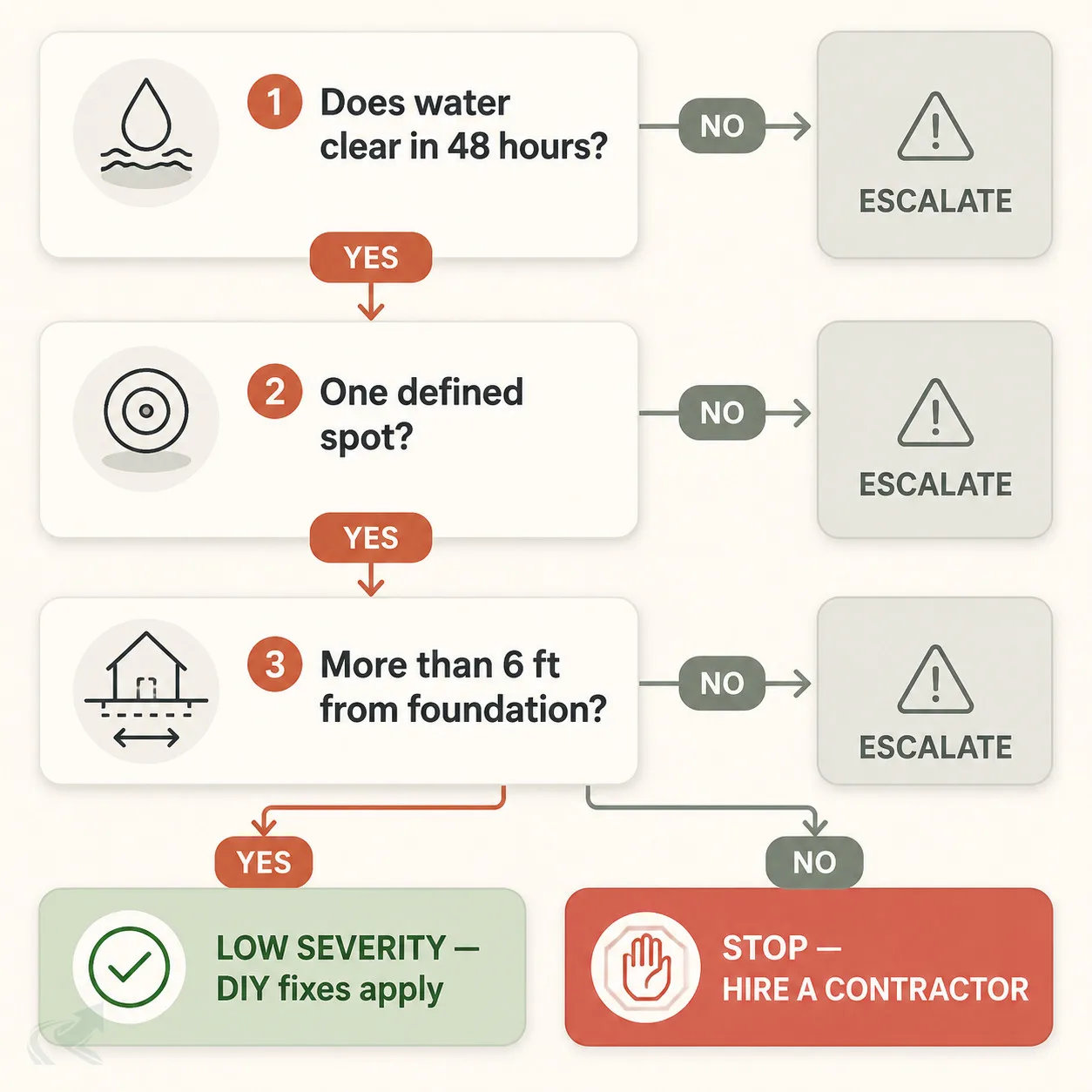
Low severity: water clears in 24-48 hours, appears in one defined spot, and doesn’t recur in new locations.
Use this three-question check before starting any fix:
1. Does the water clear within 48 hours after rain stops? Yes — low severity. No, it sits for 3 days or longer — escalate to persistent wet spots — DIY with rental equipment.
2. Is the wet spot in one defined location? Yes — low severity. Multiple spreading spots or a zone that’s grown over time — escalate to medium.
3. Is the wet spot within 6 feet of the foundation? Any standing water within 6 feet of the house is not low severity regardless of how fast it clears. Foundation proximity changes the risk category. Stop here and hire a licensed NC grading contractor.
The NC clay caveat: dense Piedmont red clay holds water longer than sandy coastal plain soils. A 48-hour puddle in the NC Piedmont after a 2-inch rain is not the same signal it would be in a sandy-soil state. Don’t diagnose on a single storm. Watch the spot across 3-4 rain events before concluding it’s a persistent problem.
If your situation passes all three checks, the fixes below are appropriate starting points.
Fix 1: Aeration
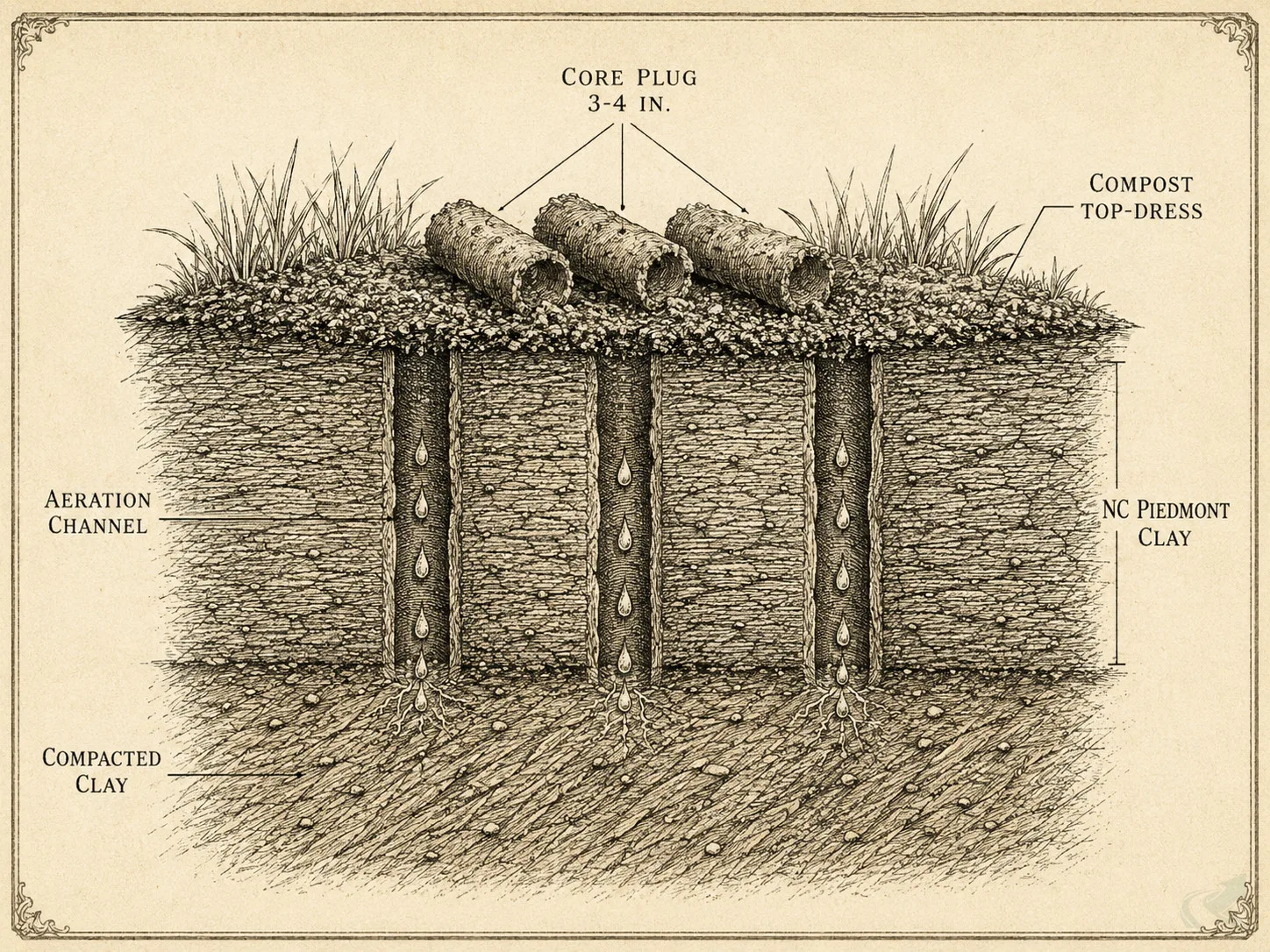
Core aeration breaks up compacted clay and temporarily improves permeability in the wet spot.
Compaction from foot traffic or lawn equipment closes the small pore spaces in clay that water needs to move through. Core aeration pulls plugs from the soil surface — typically 3-4 inches deep — and creates temporary channels.
How to do it:
- Rent a core aerator from a local equipment dealer (or hire a lawn service to aerate the wet zone).
- Aerate the wet spot and 3-4 feet around it.
- Immediately top-dress with coarse sand or compost to keep the cores from collapsing shut.
- Water in lightly and reseed if bare.
When it works: established lawn with a wet spot that appeared after a compaction event — a party, a heavy vehicle driven over the lawn, or years of foot traffic across the same path.
When it won’t work: construction compaction (from grading equipment during a build) is typically deeper than 4 inches. Surface aeration doesn’t reach it. Similarly, if the wet spot has a negative slope directing water toward it, aeration won’t change the grade.
Aeration is a surface fix. Set expectations accordingly. Improvement after one aeration pass is partial — plan to repeat annually.
Fix 2: Soil Amendment (Compost Top-Dress)
Adding 2-3 inches of compost to the wet area improves drainage and water retention simultaneously — North Carolina Piedmont clay benefits significantly from organic matter.
NC Cooperative Extension research consistently shows Piedmont clay soils are deficient in organic matter. That deficiency reduces soil structure. Compost amendment introduces organic material that breaks up clay’s tight particle packing, creating small air channels that water can move through.
How to do it:
- Mow the wet area as low as the grass will tolerate.
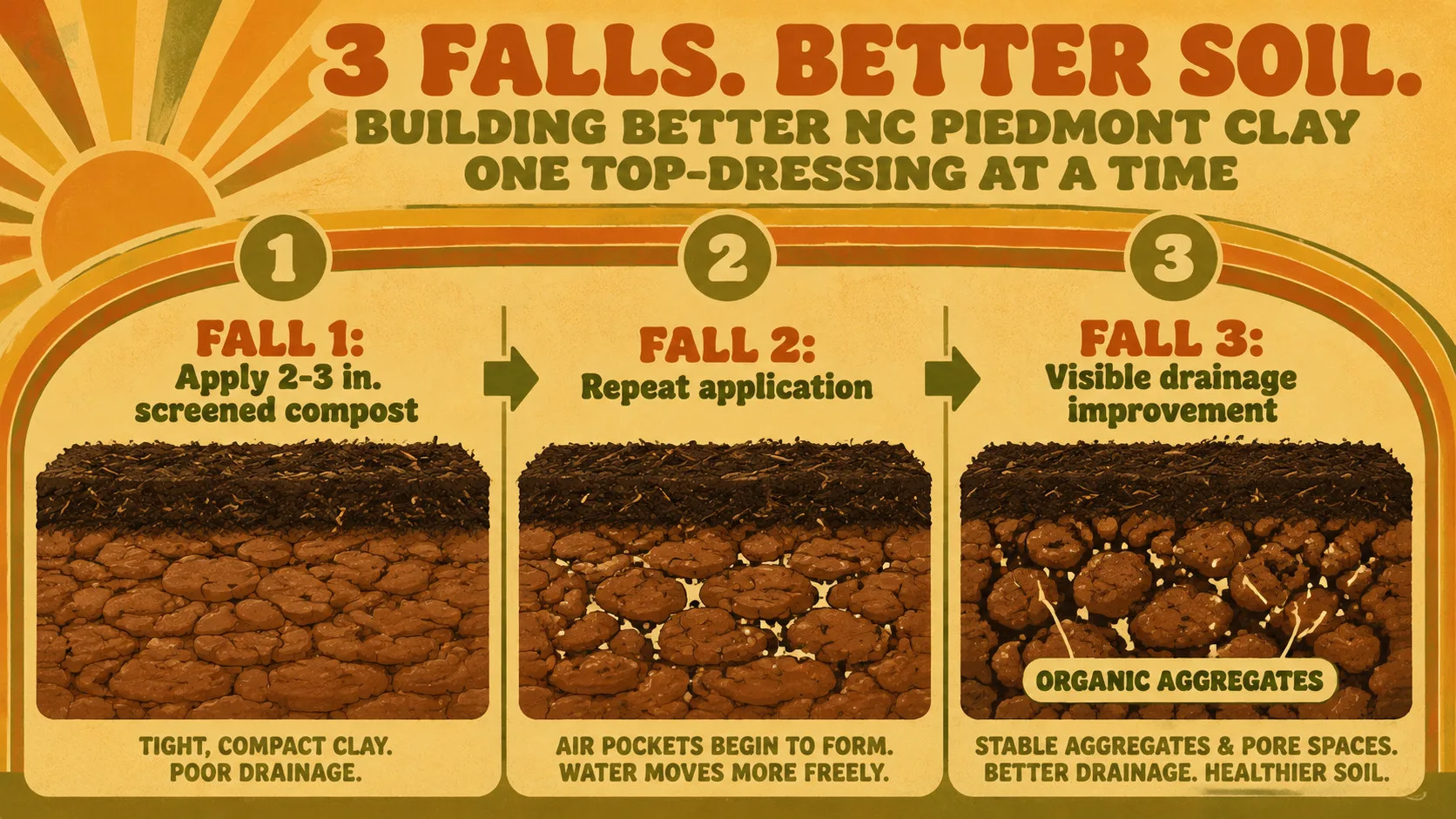
- Apply 2-3 inches of screened compost across the wet zone.
- Rake level and overseed with a turf variety suited to your sun exposure.
- Repeat each fall for best results.
Realistic timeline: don’t expect instant results. Visible permeability improvement in NC Piedmont clay typically takes 2-3 growing seasons of repeated compost applications. This is a long-term soil rehabilitation strategy, not a one-weekend fix.
Why it works over time: organic matter creates aggregates in clay soil — clumps of particles with air space between them. Each season of decomposition adds more structure. The soil improves incrementally but cumulatively.
Use screened compost, not raw wood chips or fill dirt. Unscreened material doesn’t work into the soil profile the same way.
Fix 3: Minor Grade Correction by Hand
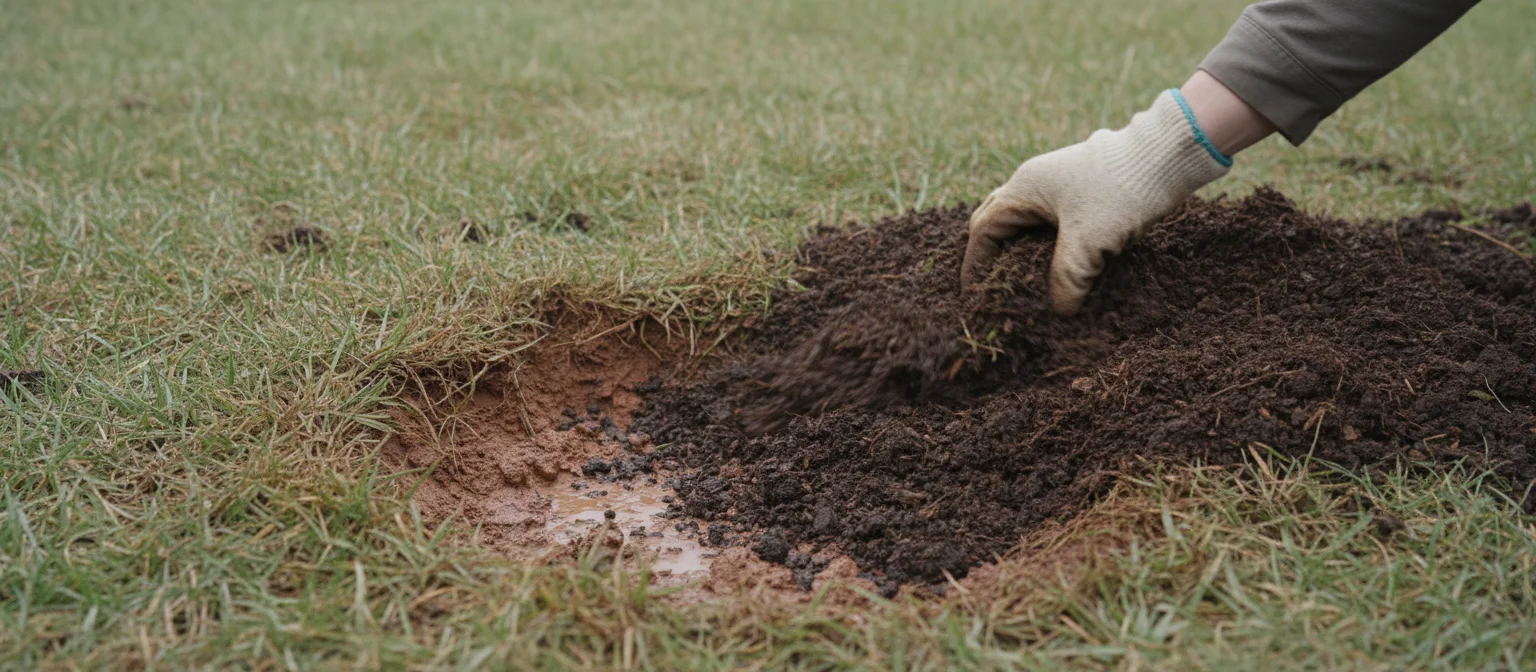
If the wet spot is caused by a subtle low area, hand regrading with topsoil can redirect water away — no equipment needed for small spots.
Sometimes the problem is simple: one patch of the yard sits a couple of inches lower than the surrounding grade. Rain collects there because there’s nowhere for it to go. Adding screened topsoil to crown the low area outward is the fix.
How to do it:
- Identify the high ground surrounding the wet area. You’re looking for the natural drainage direction.
- Add screened topsoil to the low spot in 1-2 inch lifts. Crown the area slightly — you want water to sheet away from the low point, not pond in it.
- Compact lightly with the back of a rake or your foot.
- Seed with turf grass and water in.
Materials: for a 50 sq ft low area that’s 2-3 inches deep, budget 3-5 bags of 40 lb topsoil. Buy screened topsoil, not fill dirt. Fill dirt is typically subsoil — often straight clay with no organic matter — and it will compact harder and drain worse than the area you’re trying to fix.
NC clay note: do not use clay fill or cheap bagged “garden soil” for this. The amendment must have organic matter to integrate into the existing lawn. A topsoil/compost blend works well.
When this works: the low spot is within 2-3 inches of the surrounding grade. The foundation perimeter doesn’t have a grade problem. The water problem is localized to this one low area and isn’t connected to a larger drainage system failure.
Limitation: hand regrading is a surface patch. If the low area is the result of a structural grade failure — soil settlement after construction, a buried utility trench that has subsided, or a grade that runs toward the house — this fix won’t hold. You need a contractor who can diagnose the cause, not just fill the low spot.
When to Stop DIY and Escalate
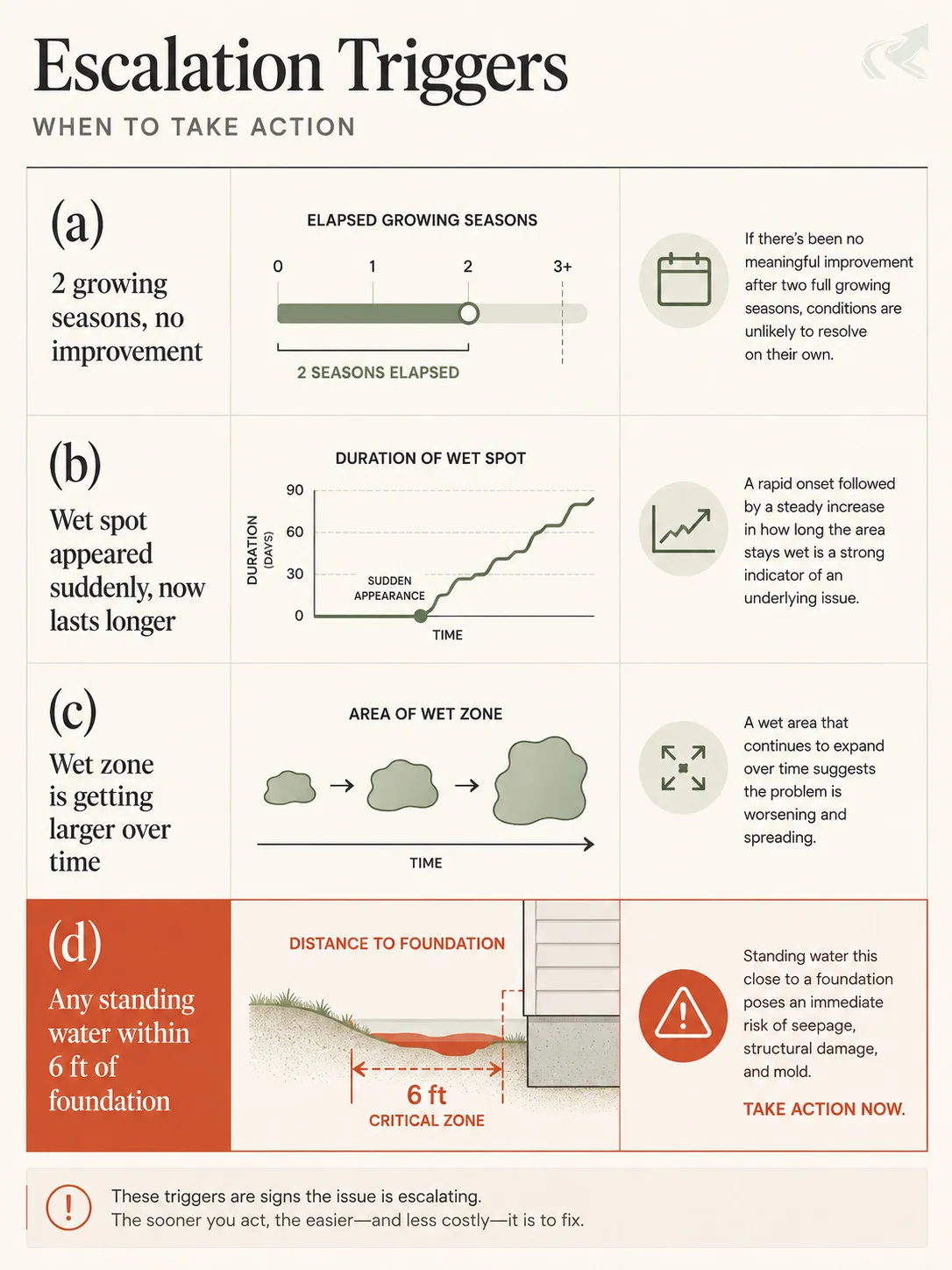
Stop DIY and call a contractor if: the fix hasn’t worked after two growing seasons, new wet spots appear, or the wet spot is migrating toward the foundation.
These are the concrete escalation triggers. Not “when you feel like it’s not working” — these specific signals:
(a) Two growing seasons with aeration + compost and no improvement. The problem is deeper than surface compaction or organic matter deficiency. This is a grade problem or a drainage system problem. See why your NC yard holds water — 3-category diagnostic before calling anyone — that page will help you describe the problem accurately.
(b) The wet spot appeared suddenly after a heavy rain and now persists longer than it used to. A change in behavior suggests a grade shift, not just slow soil. That’s medium severity. Start with persistent wet spots — DIY with rental equipment.
(c) The wet spot is getting larger over time. A growing wet zone suggests a drainage system issue — a failed drain, a blocked pipe, or grading that’s directing more water toward the spot than before. That’s not a DIY fix.
(d) Any standing water within 6 feet of the foundation. This is not low severity regardless of how it got there. Call a grading contractor near me in NC and ask for an itemized quote that diagnoses the cause before proposing a solution.
When you call a contractor, use this question as your filter: “Is this a grade problem, a drainage system problem, or a soil problem? Can you diagnose which one before recommending a fix?”
A contractor who can answer that question specifically is worth hiring. One who jumps straight to a solution without diagnosing the cause is not.
Copy this question before calling a contractor:
“Is this a grade problem, a drainage system problem, or a soil problem? Can you diagnose which one before recommending a fix?”
Series: Where Does Your Situation Fall?
| Severity | Duration | Location | Foundation Risk | Fix Type |
|---|---|---|---|---|
| Low (this page) | Clears in 24-48 hrs | One defined spot | Not near foundation | Hand tools, compost, topsoil |
| Medium | Persists 48-72+ hrs | Spreading or multiple spots | Not near foundation | Rental equipment, minor drain work |
| High | Days to weeks | Large area or near foundation | Yes — potential risk | Contractor required |
Not sure where you fall? Use the standing water in yard NC — full severity triage hub to work through the diagnostic before starting any fix.
If you’re in the right spot but the DIY fixes above don’t work after two seasons, you’ve moved into medium severity. That’s not a failure — it’s information. The medium-severity page covers rental-equipment approaches and when to bring in a contractor.