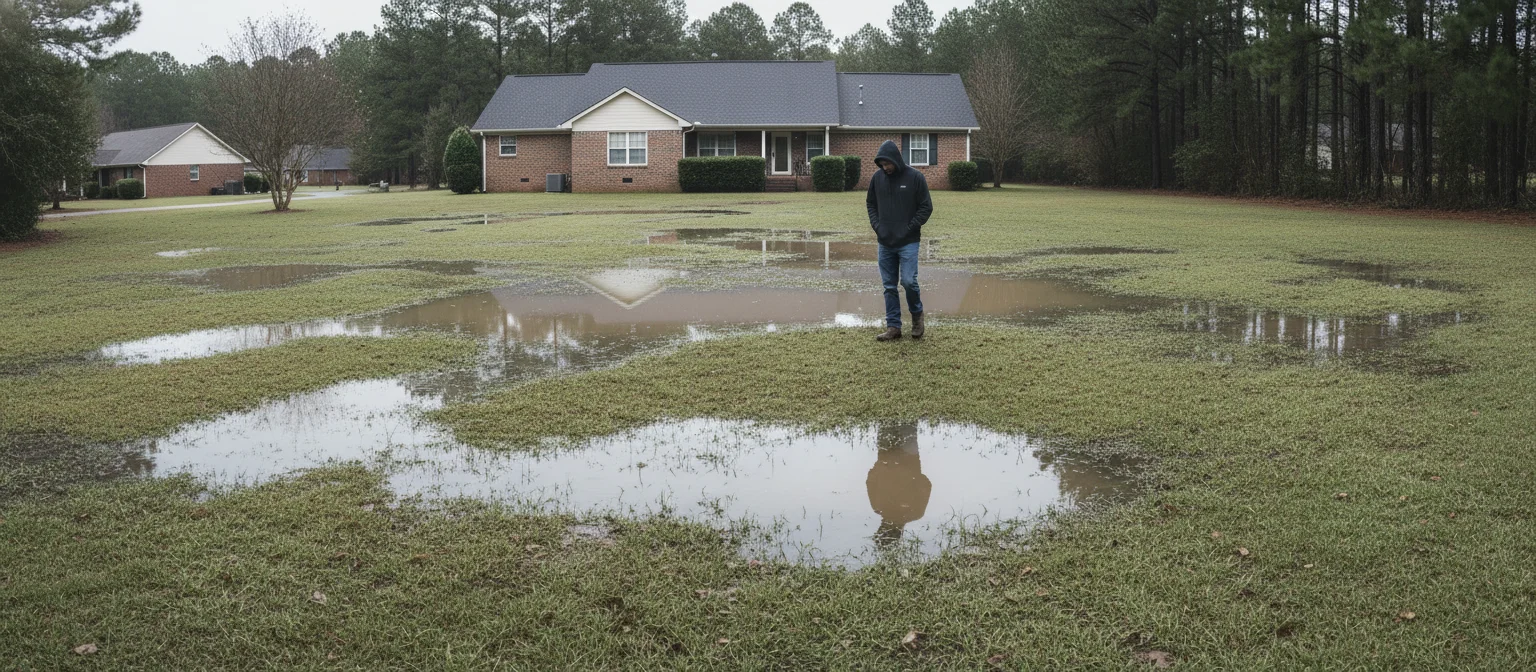
You tried the hand-tool fixes — aeration, compost top-dressing, cleaning the downspout extensions. The wet spot you had in one corner of the yard is now showing up in two or three places. After last week’s rain, the low area stayed wet for almost three days. There’s a faint earthy smell near the worst spot — not quite mold, not quite mud.
This is past hand-tool territory. When standing water persists 48—72 hours, appears in multiple locations, or smells musty, you’ve crossed into medium-severity drainage failure. Some medium-severity situations can be addressed with a rented mini skid steer. Others require a contractor. The distinction — grade problem vs. drainage system problem — is the decision that matters most.
This is Part 2 of 3 in the standing water severity series. For context on what came before, see minor yard drainage DIY fixes. For what comes after, see swampy yard — when to hire a pro.
Severity Series Navigation
| Severity | Duration | Key Signals | This Page |
|---|---|---|---|
| Low | Clears in 24—48 hrs | Single spot, one zone, no smell | Low severity |
| Medium | 48—72+ hrs | Multiple spots, possible musty smell | You are here |
| High | 72+ hrs, recurring | Near foundation, persistent smell, recurring | High severity |
Is This Medium Severity?
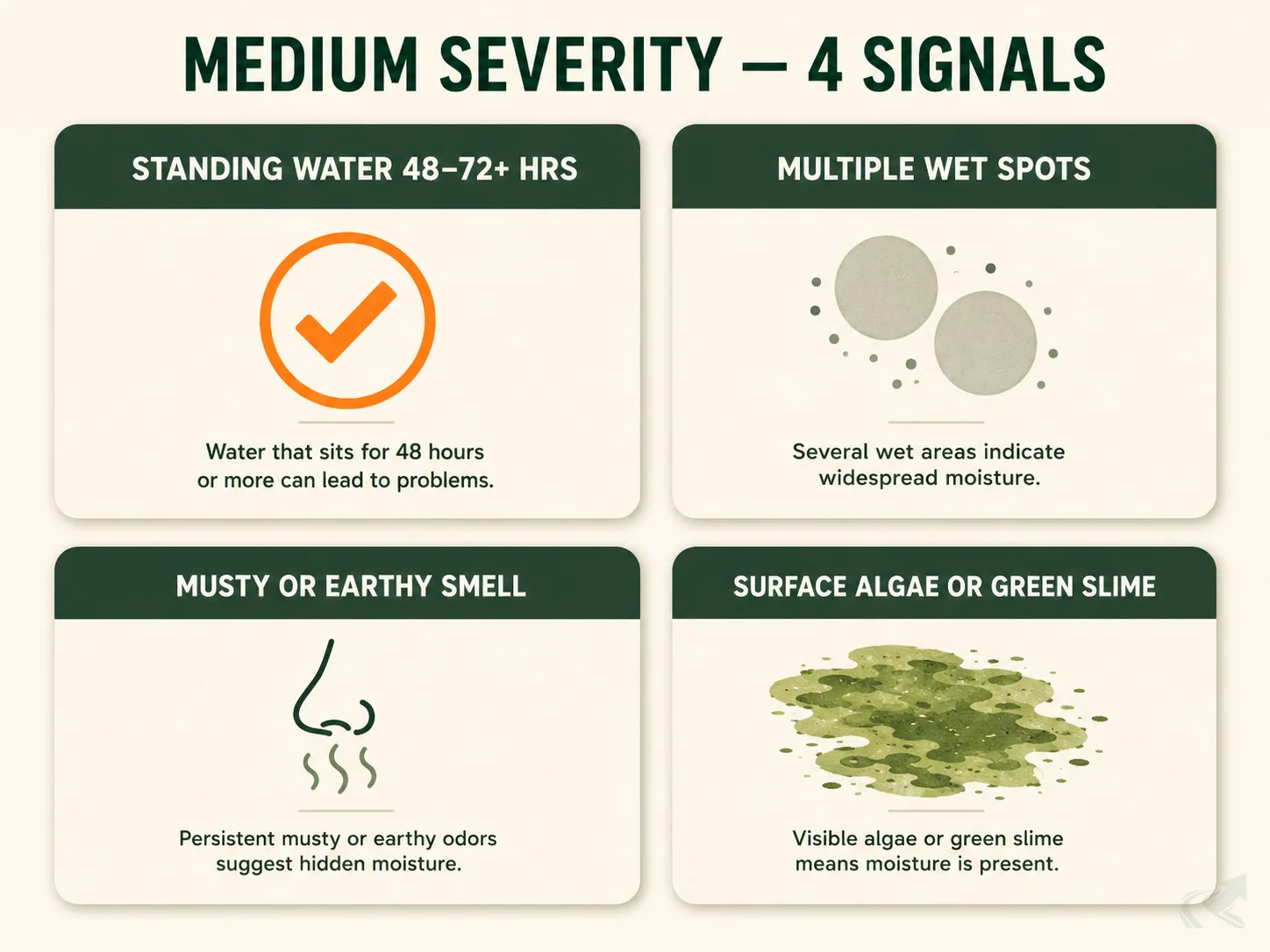
Medium severity: water stays 48—72 hours or longer, appears in two or more defined spots, and may produce a musty smell or surface algae.
Use this diagnostic checklist before assuming the severity level:
- Standing water 48—72+ hours after rain — yes? Medium severity or higher. Single-event duration isn’t diagnostic on its own; if it happens across multiple rain events at roughly the same threshold, that’s your baseline.
- Multiple wet spots, not just one — two or more separate wet zones in different parts of the yard signal a pattern, not an isolated low point. Medium severity or higher.
- Musty or earthy smell from the wet area — a smell means the soil has been wet long enough for organic matter to begin breaking down without oxygen. That’s medium severity at minimum; see the musty smell section below.
- Surface algae or green slime on soil between rain events — chronic saturation, not just slow drainage after a heavy rain. Medium severity.
One important North Carolina calibration: Piedmont clay holds water far longer than national guides suggest is normal. In North Carolina, standing water persisting 72 hours after a 1-inch-plus rain can still fall within the expected range for heavy clay soils — particularly on lots with newly disturbed fill. The pattern across multiple rain events matters more than any single event. If the same spots are wet after every rain, that’s a drainage problem regardless of the per-event duration.
What Multiple Wet Spots Signal
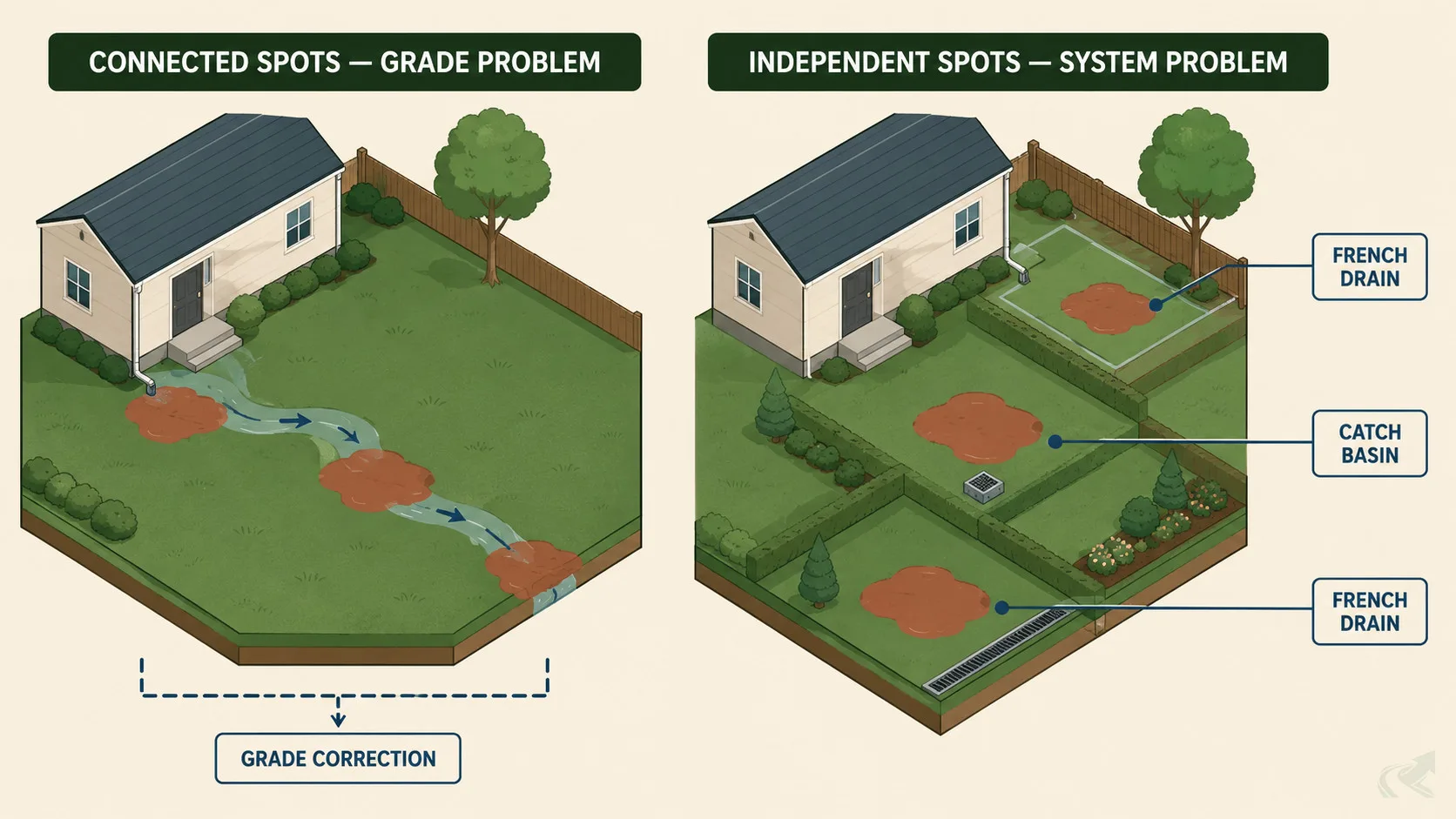
Multiple wet spots in different parts of the yard signal either a grade problem affecting multiple low points or a drainage system inadequacy — not just one isolated depression.
The location pattern tells you something useful about the cause.
If the wet spots are connected to each other — or if water visibly flows from one to another after rain — the likely problem is a grade pattern where the overall drainage direction is wrong. The “flow” creates multiple collection points in sequence. The fix is grade correction: re-establishing positive drainage across the zone that feeds all the wet spots.
If the wet spots are independent — different parts of the yard, no visible connection, no flow pattern between them — the likely cause is separate low spots created at different locations, often from construction disturbance. Each was filled or graded differently and settled differently. These need to be addressed individually.
Why this matters for the fix: multiple connected spots point to a single grade correction. Multiple independent spots may require addressing each zone separately, which can mean grade correction at each location, a drainage system element (French drain or catch basin), or both.
For a full breakdown of what creates these patterns, see the standing water causes — 3-category diagnostic page. Before committing to a fix approach, use the yard slope calculator — verify your slope to confirm whether the grade is actually wrong or whether the problem is subsurface.
The Musty Smell: What It Signals
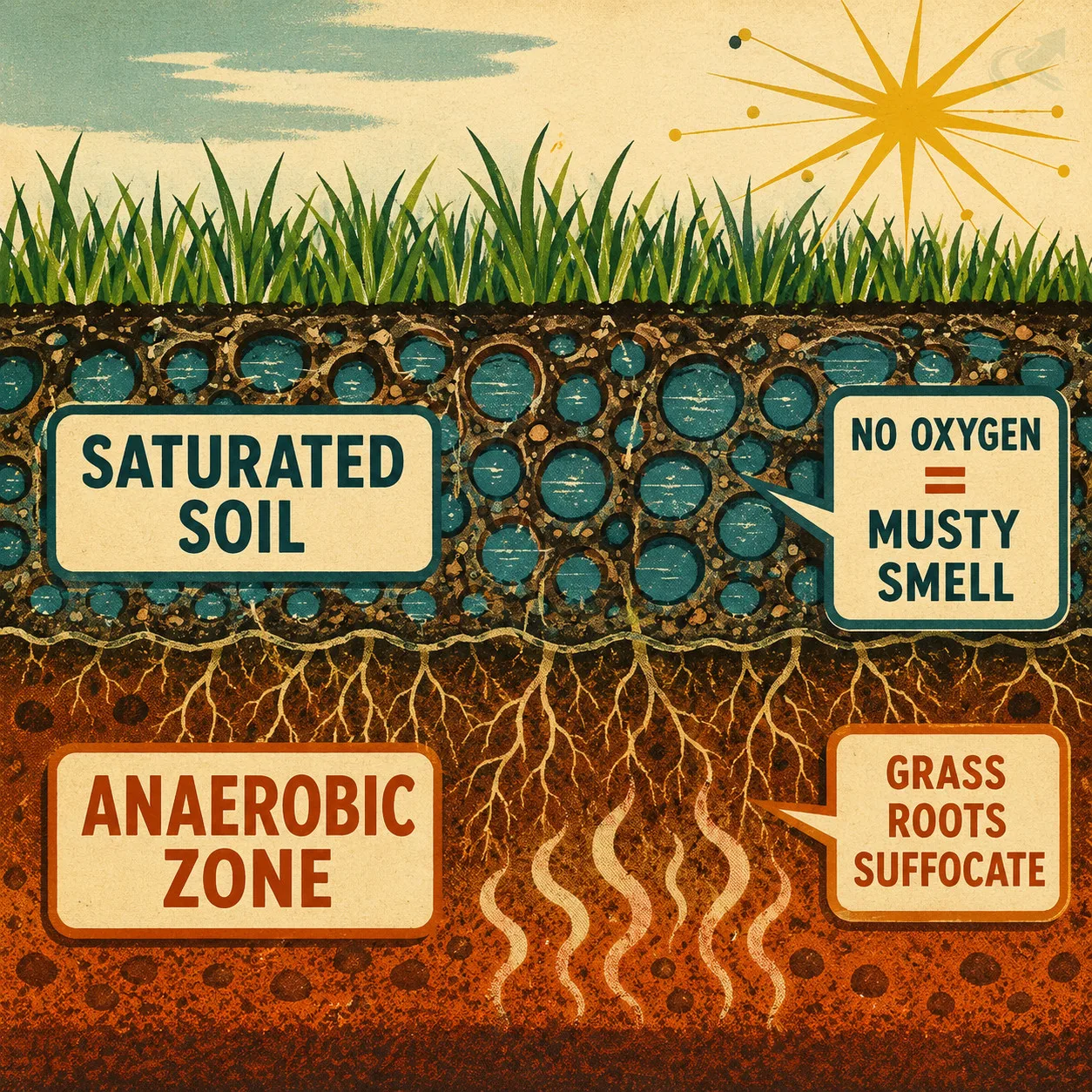
A musty or earthy smell from chronically wet soil means anaerobic decomposition is occurring — organic matter breaking down without oxygen in saturated soil.
“Anaerobic” simply means without air. When soil stays wet long enough, the water fills the pore spaces that normally hold oxygen. Soil microbes switch from oxygen-based decomposition to oxygen-free decomposition, which produces the sulfur compounds and organic acids that smell musty or like rotten eggs.
This matters beyond just the smell. If the soil is staying wet long enough to go anaerobic, you’re dealing with chronic saturation — not just slow drainage. Chronic saturation does several things that slow drainage alone doesn’t:
- Suppresses lawn grass — grass roots need oxygen. Chronically saturated soil kills turf from the roots up, which is why wet spots often go bare or mossy.
- Creates conditions for fungal growth in the soil itself — not just on the surface.
- Near the foundation: means the soil against the foundation wall may stay wet between rain events, not just during them. That’s the escalation trigger.
One important signal: if the musty smell persists during dry weather — not just immediately after rain — the soil isn’t drying out between events. That pushes this toward high severity. See the escalation section at the bottom of this page.
Fix Options: DIY with Rental vs Hire a Contractor
Medium severity is the DIY-with-rental threshold — a mini skid steer can address grade correction at this scale, but only if the diagnosis is a grade problem and you’re comfortable with the equipment.
The decision tree has one branch point: is this a grade problem or a drainage system problem?
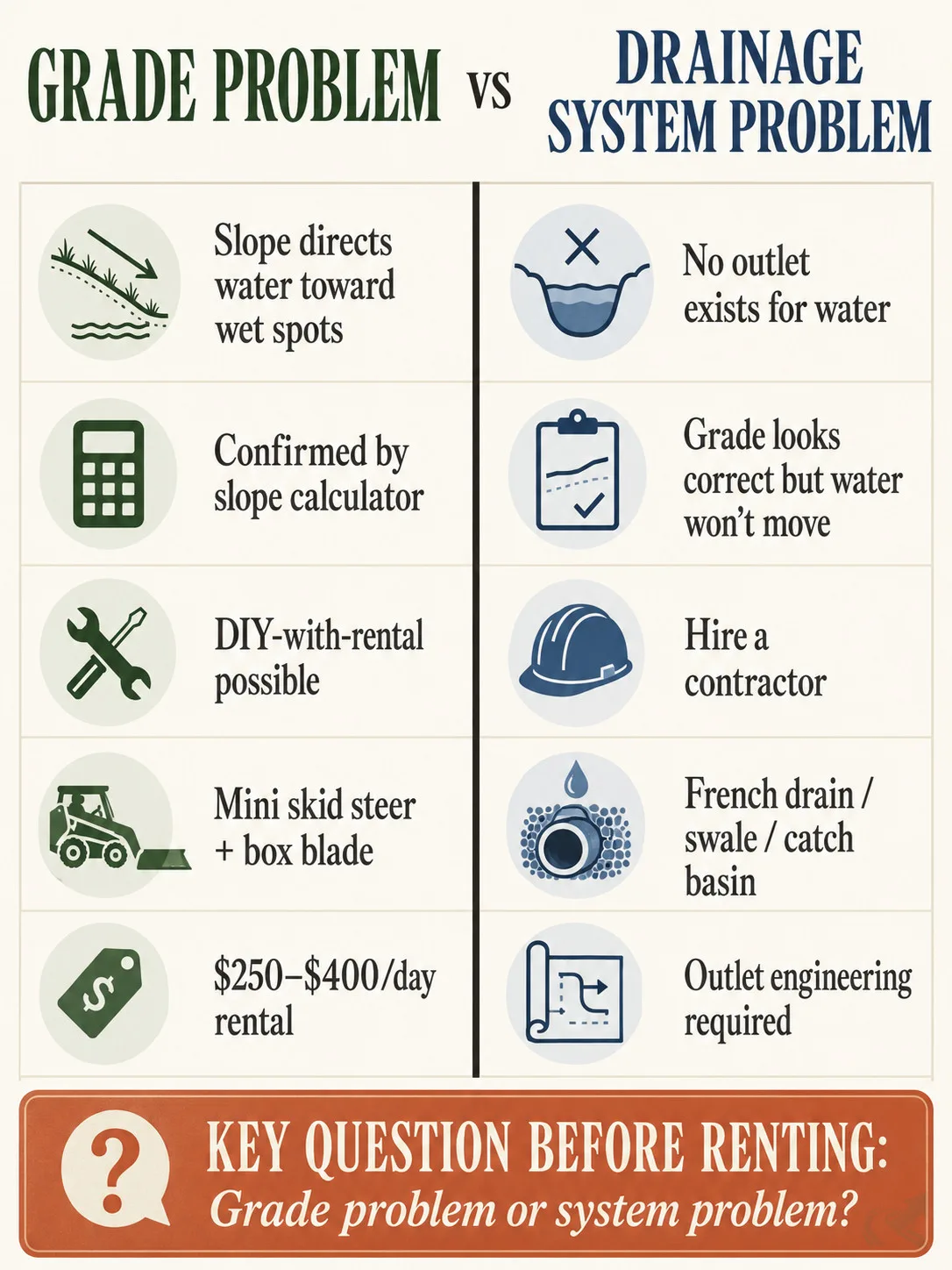
Grade problem (slope is wrong)
If your yard slope calculator confirms the grade is directing water toward the wet spots rather than away from them, grade correction is the fix. At medium severity — multiple wet spots, not a single minor depression — this requires machine work.
DIY-with-rental is possible if:
- You can confirm the problem is grade (not system)
- The wet zones are accessible to equipment
- You have some comfort with a skid steer or are willing to learn
What you’d need: a mini skid steer with a box blade attachment, fill dirt (if you’re raising low spots), and seed or sod for restoration after grading. Rental cost for a mini skid steer in the North Carolina Triangle area typically runs $250—$400 per day, depending on the rental yard and attachment package.
The rental reality in NC clay: mini skid steer work on Piedmont clay is harder than it looks on YouTube. Clay compacts differently than sandy or loamy soil. First-time operators commonly overshoot grade corrections, creating new low spots. The two techniques that matter most in NC clay are float-the-bucket (using the blade’s float mode to follow existing grade rather than fighting it) and heel grading (using the rear edge of the box blade for fine finish passes). Getting those wrong can make the problem worse in a single afternoon.
If you rent, set a conservative target — establish positive drainage, not a perfect grade. You can always re-rent for a finish pass. A screwed-up grade correction that creates new low spots is harder to diagnose and fix than the original problem.
Drainage system problem (no outlet exists)
If the wet spots don’t have an obvious low point that water can drain to — or if the yard grade already looks correct but the water won’t move — the problem is likely that no outlet exists for the water to exit the yard. A grade correction won’t fix a system problem.
In this case, hire a contractor. The fix options include a swale (surface drainage channel), a French drain (subsurface perforated pipe to a daylight outlet), or a catch basin — depending on whether the water is surface or subsurface and where a functional outlet can be established. See NC yard regrading — rough vs finish for what a correct machine-grade correction looks like, and hire an NC grading operator if you want itemized quotes before committing to either path.
The question to ask before renting anything
Before renting equipment: “Is this a grade problem (slope is wrong) or a drainage system problem (no outlet)? What’s your diagnosis before I rent anything?”
If you’re getting contractor quotes, ask each one to answer this question explicitly in writing. The answer determines the fix — and a contractor who can’t distinguish between the two is telling you something.
What a Correct Medium-Severity Fix Looks Like
A correctly diagnosed medium-severity fix either re-establishes grade with compacted fill, adds a drainage system element, or both — depending on the root cause.
Grade correction
Machine-grade correction at medium severity means rough grade to establish positive drainage, compacted fill placed in 6-inch lifts (not dumped all at once), finish grade to blend with the surrounding yard, and seed or sod to restore the surface.
The compaction step is non-negotiable. Fill placed without compaction settles unevenly over the following months, often re-creating the low spots you just fixed. If you’re doing this yourself with a rental, compact each lift before adding the next one.
Drainage system addition
If the problem is a system failure — water with nowhere to go — the fix adds a pathway: a swale directs surface water to an outlet; a French drain handles subsurface water; a catch basin intercepts concentrated surface flow. The right choice depends on whether the water is moving along the surface or percolating up from below.
Combined fix
Most medium-severity North Carolina yards with both grade problems and system failures need both elements. Grade correction re-directs surface water; a drainage system handles what the grade alone can’t move fast enough given the clay’s low permeability. If a contractor is only proposing one element, ask whether the other element also applies.
When to Escalate to High Severity
Escalate if: water stays more than 72 hours after a typical rain, wet spots are appearing near the foundation, or the musty smell persists in dry weather.
Any one of these conditions is sufficient to escalate:
- Water duration exceeds 72 hours after a rain that’s an inch or less
- A wet spot has migrated to within 6 feet of the foundation
- The musty smell is present on a dry day, not just after rain
- A DIY rental attempt made the situation worse
- The grade or drainage fix you tried hasn’t moved the problem after one full rain cycle
High-severity standing water carries foundation risk. The remediation options and stakes are different. See swampy yard — when to hire a pro for what pushes this into high-severity territory and what the fix paths look like from there.
| Severity Level | Duration | Location | Foundation Risk | Fix Type |
|---|---|---|---|---|
| Low | Under 48 hrs | Single spot | Low | Hand tools, compost, minor grade |
| Medium | 48—72 hrs | Multiple spots | Moderate | Machine grade correction and/or drainage system |
| High | 72+ hrs, recurring | Near foundation | High | Contractor-required; may involve French drain, catch basin, or major regrading |