
Two questions people often ask
Why did two contractors quote completely different fixes for my flooded yard?
Because "drainage" is at least five different jobs. A French drain, a yard regrade, a foundation drain, a swale, and a catch basin solve different problems. If two quotes disagree 3x, usually one is selling you the system they install most — not the system your yard needs.
Does the same drainage fix work everywhere in NC?
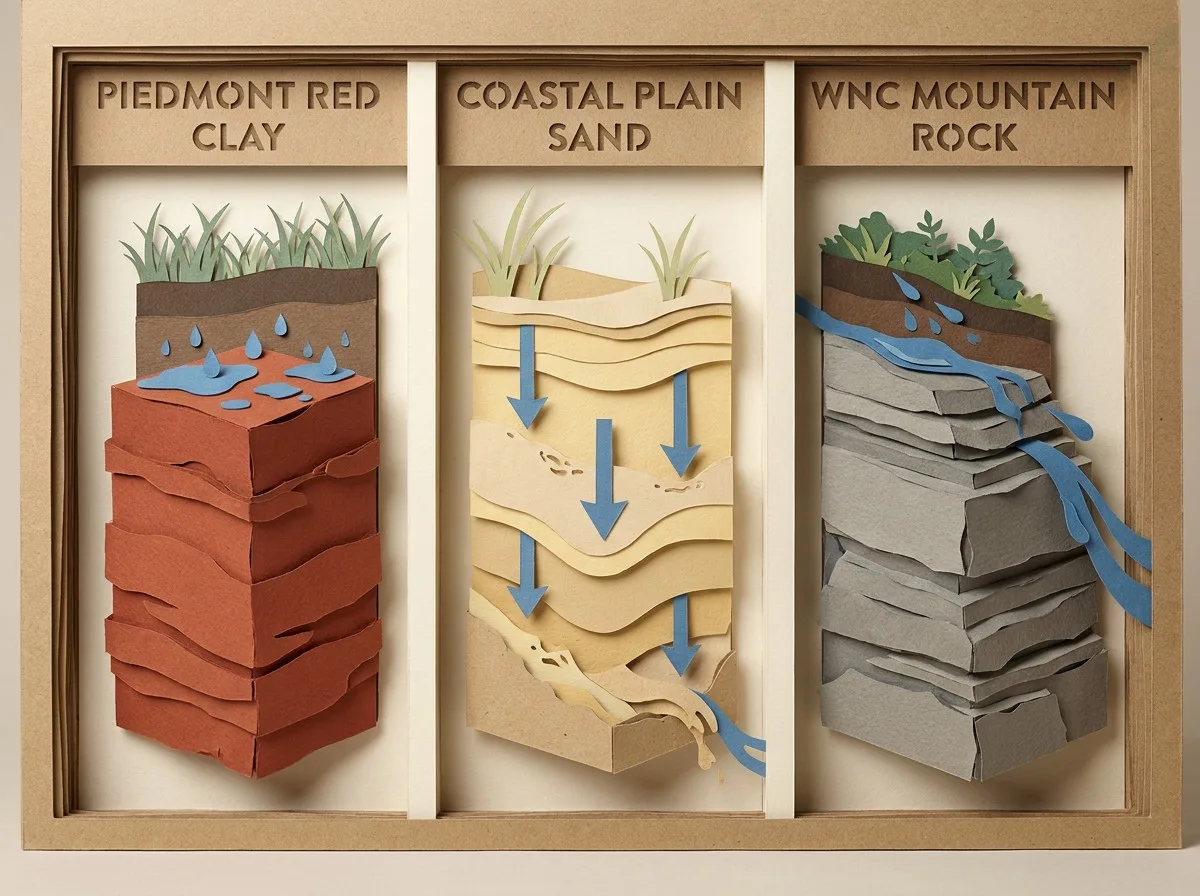
No. Piedmont red clay sheds water and swells. Coastal Plain sand drains fast but moves. WNC mountain soil is shallow over rock with slope-driven washout. The right fix changes with the soil zone. A French drain in Holly Springs solves a different problem than one in Bat Cave.
Blue Ridge / Mountains
Asheville & WNC
Shallow soil over rock
Water sheets off fast
Drainage = slope control + washout protection
Piedmont / Red Clay
Charlotte - Triad - Triangle
Cecil red clay
Clay sheds water — it pools on top
Drainage = move surface water away (French drain, swale, regrade)
Coastal Plain / Sandy
Wilmington, east of I-95
Sandy soil
Drains fast, but soil shifts
Drainage = manage volume + erosion
West to east across NC — the fall line (near I-95) splits red-clay Piedmont from sandy Coastal Plain. Your soil zone drives every drainage decision.
Drainage work in North Carolina isn’t one job — it’s three different jobs depending on where you are. Piedmont red clay (most of the Triangle and Charlotte metro) swells and sheds water. Coastal Plain sand (east of I-95) drains fast but moves. WNC mountain soil is shallow over rock, with concerns dominated by slope and washout.
A French drain spec that works in Cary clay is unnecessary in Wilmington sand and physically impossible in Bat Cave rock. Name your zone before you pick a system. This hub covers the five drainage systems NC contractors install — and which one actually matches your problem.
NC Soil Zones — Three Different Drainage Problems
The same rainfall produces three different failure modes depending on which side of the state you’re on.
- Piedmont red clay (Triangle, Charlotte, Triad) — the dominant soil zone for most NCGH work. Clay sheds water laterally instead of absorbing it. Standing water sits for days. Crawl spaces stay damp through summer. Most NC drainage failures we see are clay-zone failures. Read the Piedmont red clay primer before approving any quote here — knowing the soil saves you from a contractor selling a sand-zone fix in a clay-zone yard.
- Coastal Plain sand (east of I-95) — drains fast vertically, but sandy soil moves under load and washes out. Different failure mode: shifting, not pooling. Solutions here lean toward stabilization and runoff-routing, not water removal. A French drain in pure sand is usually unnecessary; the water is already moving.
- WNC mountain soil (Buncombe, Henderson, Rutherford) — thin soil over rock, slope as the dominant variable. Helene recovery work is concentrated here. Daylight exits are usually free (the slope gives you one) — but cutting the channel through rock changes the cost picture.
Full reference at the NC soil guide. Most of the rest of this hub assumes Piedmont clay because that’s where most NC drainage projects happen.
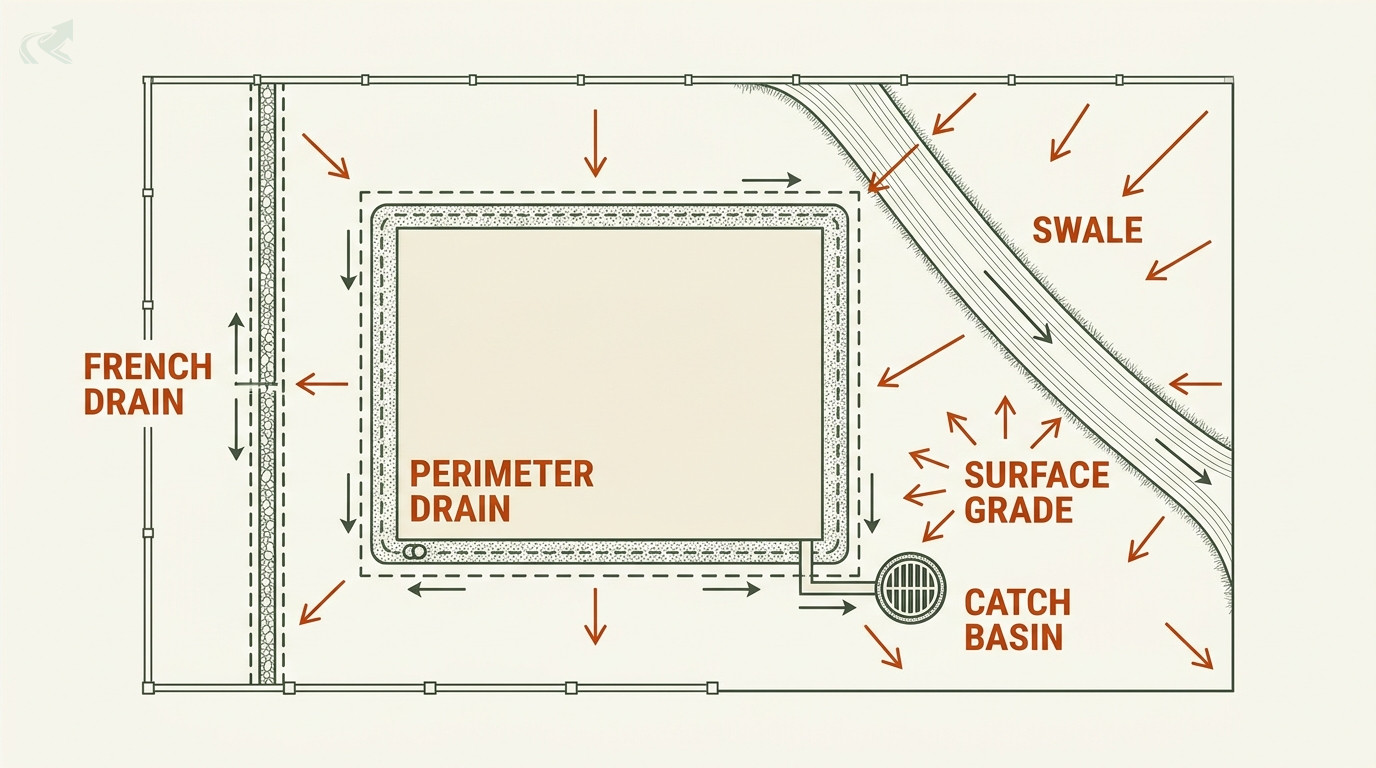
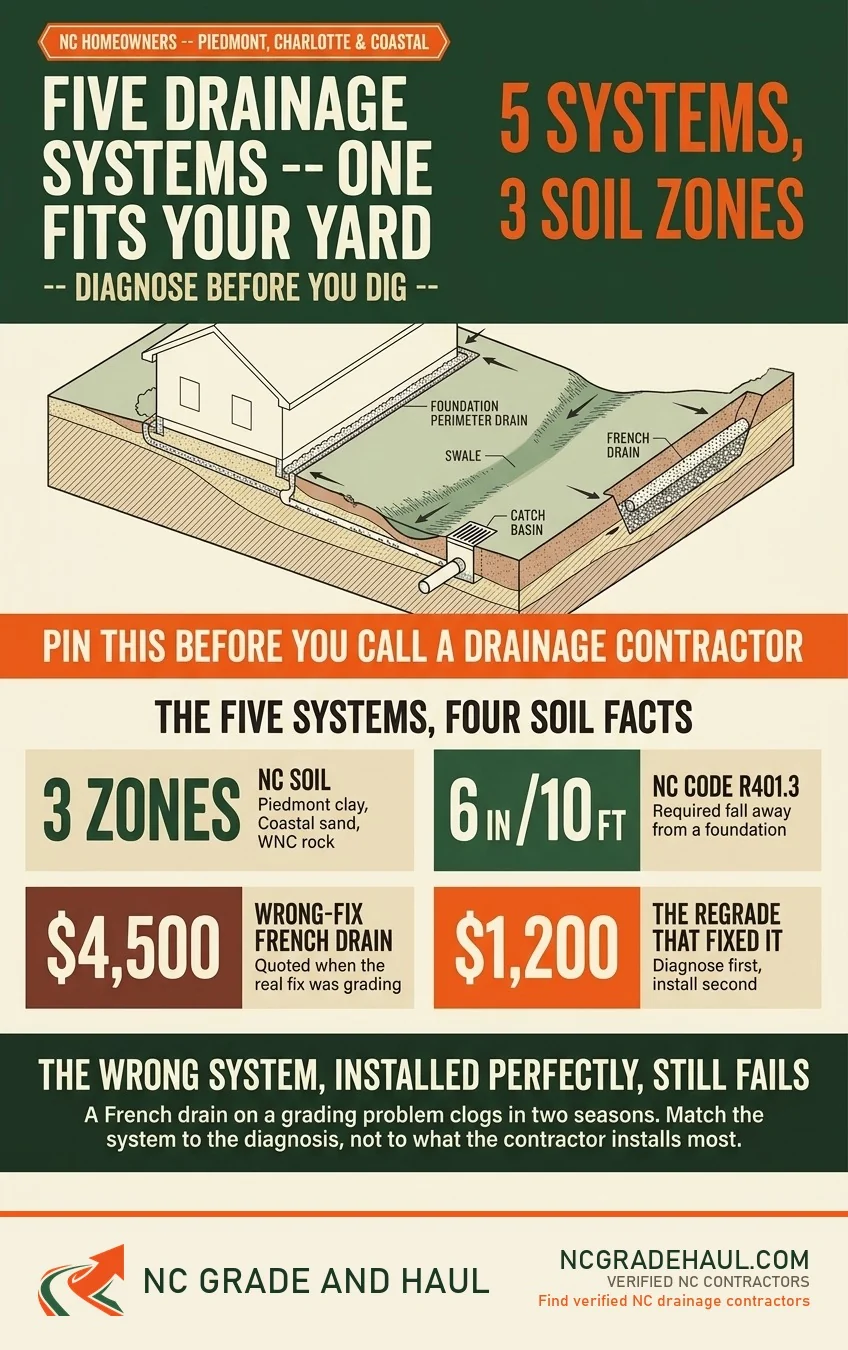
The Five Drainage Systems NC Contractors Install
Each system solves a specific problem. The wrong system installed correctly still fails — because it was the wrong system.
- NC French drain installation for red clay — subsurface perimeter drainage. Gravel-wrapped pipe set in a trench with a daylight exit downhill. The most-Googled NC drainage solution and the most over-recommended. Good for moving subsurface water that’s already in the ground. Bad when the actual problem is surface water or a grading failure.
- how to diagnose standing water in your yard — the diagnostic page. When the problem is “my yard floods,” the fix depends on whether you have a drainage problem, a grading problem, or a foundation problem. Start here if you’re not sure which system you need.
- foundation perimeter drain installation in NC — perimeter drainage tied to the foundation footing. NC code requires positive drainage away from foundations; new builds frequently ship without it. This is the playbook page when the builder skipped it and now you’re paying. Pairs with builder accountability when the warranty period is still open.
- drainage swale design and installation — surface drainage channel. A shaped depression in the lawn that moves sheet runoff to a designed outlet. Often the right answer when a French drain isn’t — cheaper, less invasive, and works in clay where a French drain would clog.
- catch basin installation for downspout drainage — point-source water capture for downspout collection and driveway-runoff capture. Often paired with one of the other systems — catch basin captures, the pipe moves the water to a French-drain field or swale.
The systems overlap. A bad yard usually needs two of them, not one. A contractor who only quotes the system they install most is the contractor to get a second quote against.
Which System Do You Actually Need?
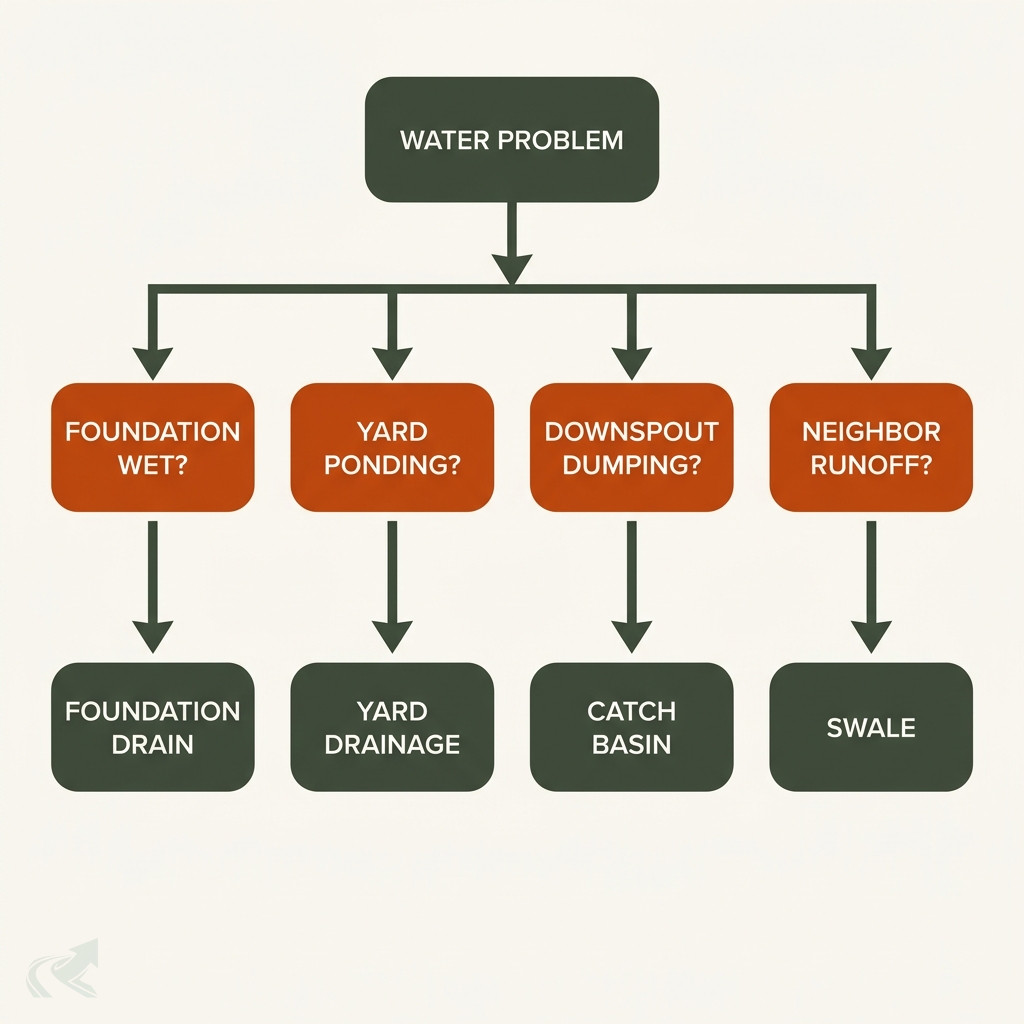
Match the symptom you can see to the page that diagnoses it.
- Water pools against your foundation after rain → foundation perimeter drain installation in NC. Grading and footing-tied perimeter drain. Not a French drain across the yard.
- Water sits in the back yard 24+ hours after rain → how to diagnose standing water in your yard. The fix depends on whether it’s a low spot (regrade), a soil-permeability issue (subsurface drain), or runoff from upslope (swale).
- Downspouts dumping onto the lawn → catch basin installation for downspout drainage or a tied-in pipe to daylight. Cheap fix, large impact.
- Driveway washes out every storm → driveway washout repair. Usually a grading + base-material problem before it’s a drainage problem.
- Surface runoff crossing the yard from a neighboring lot → drainage swale design and installation along the property line.
- New build, drainage already failing, builder isn’t returning calls → foundation perimeter drain installation in NC for the technical fix plus builder accountability for the warranty playbook.
If you read all of those and still aren’t sure, the yard drainage diagnostic is the right first stop. The most common mistake we see: a homeowner Googles “French drain near me,” signs a $4,500 quote, and the yard still floods because the real problem was positive drainage at the foundation — a $1,200 regrade. Diagnose first, install second.
Hiring a Drainage Contractor in NC
The same vocabulary you’d use to hire a grading contractor applies here — itemized quote, named materials, daylight exit, positive drainage spec, written warranty.
Drainage work in NC is almost always done by a grading contractor, not a separate “drainage company.” The skills overlap: shaping ground, setting 2% slope, specifying #67 washed stone instead of unwashed crusher run, filter-fabric wrap so clay fines don’t migrate in and clog the pipe within two seasons.
Vetting questions that flush out bad quotes fast: where does it daylight, what stone, washed or not, what slope, what warranty, and is the license number on the quote. Vague answers — walk away.
Hiring deep-dive at how to hire a grading contractor for drainage work, or the broader NC contractor vetting checklist for general vetting questions.