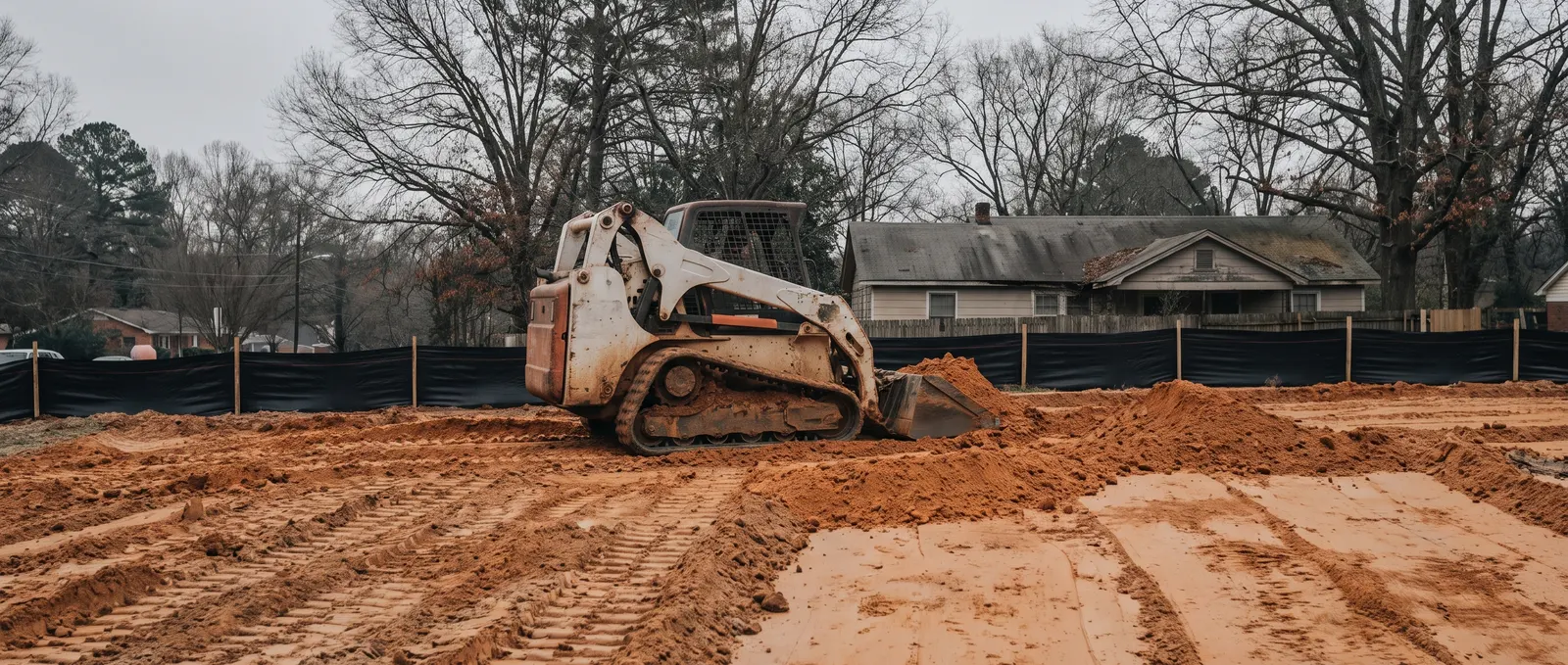
Hiring a grading contractor in most of the Triangle starts with a question that has nothing to do with grading: which jurisdiction am I in?
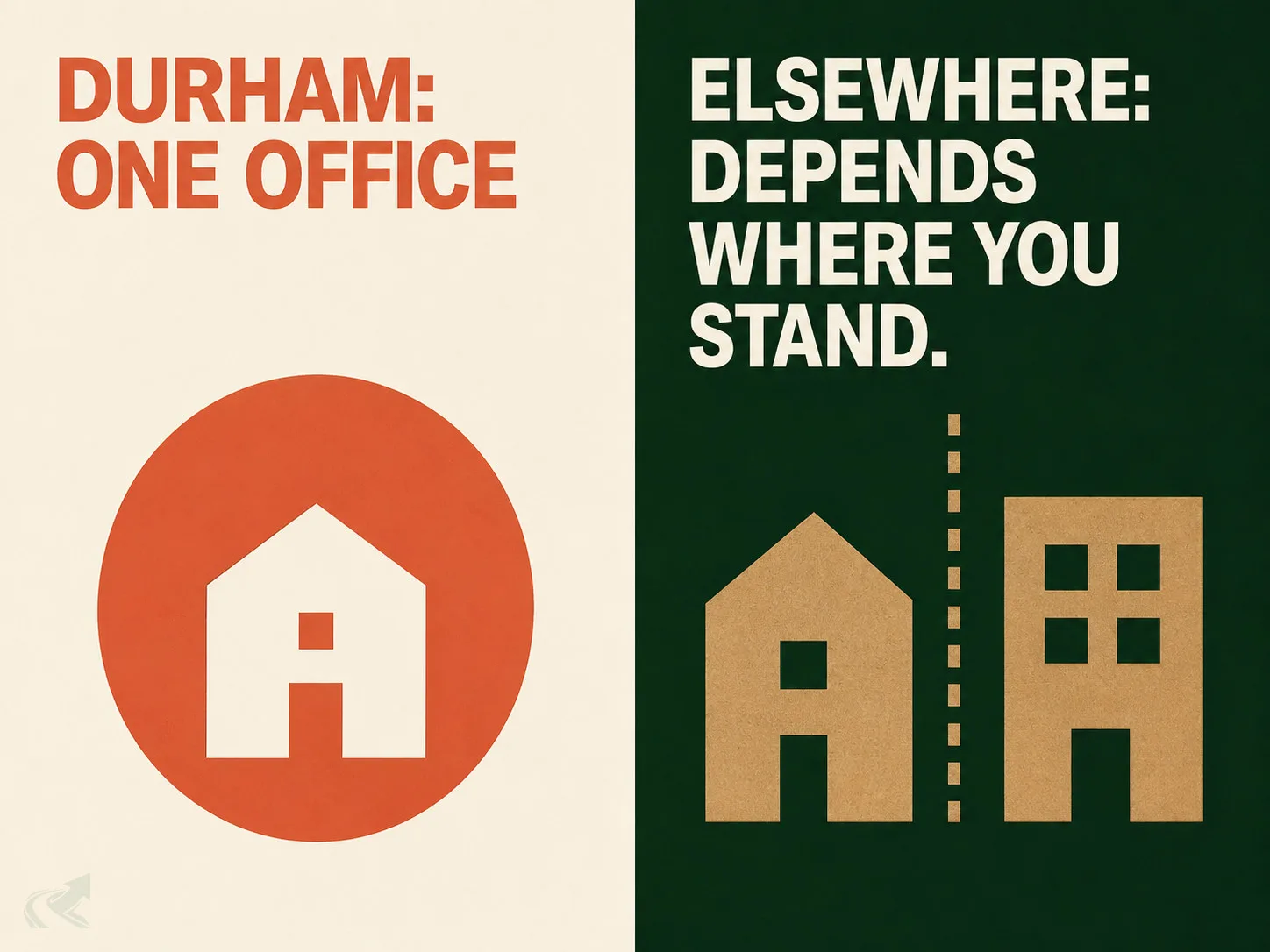
In Durham you can skip it. The City and the unincorporated county run a joint programme — one office, one rulebook, one place to ask. That is genuinely unusual in North Carolina, and it makes Durham the simplest place in the region to get a straight answer before you sign anything.
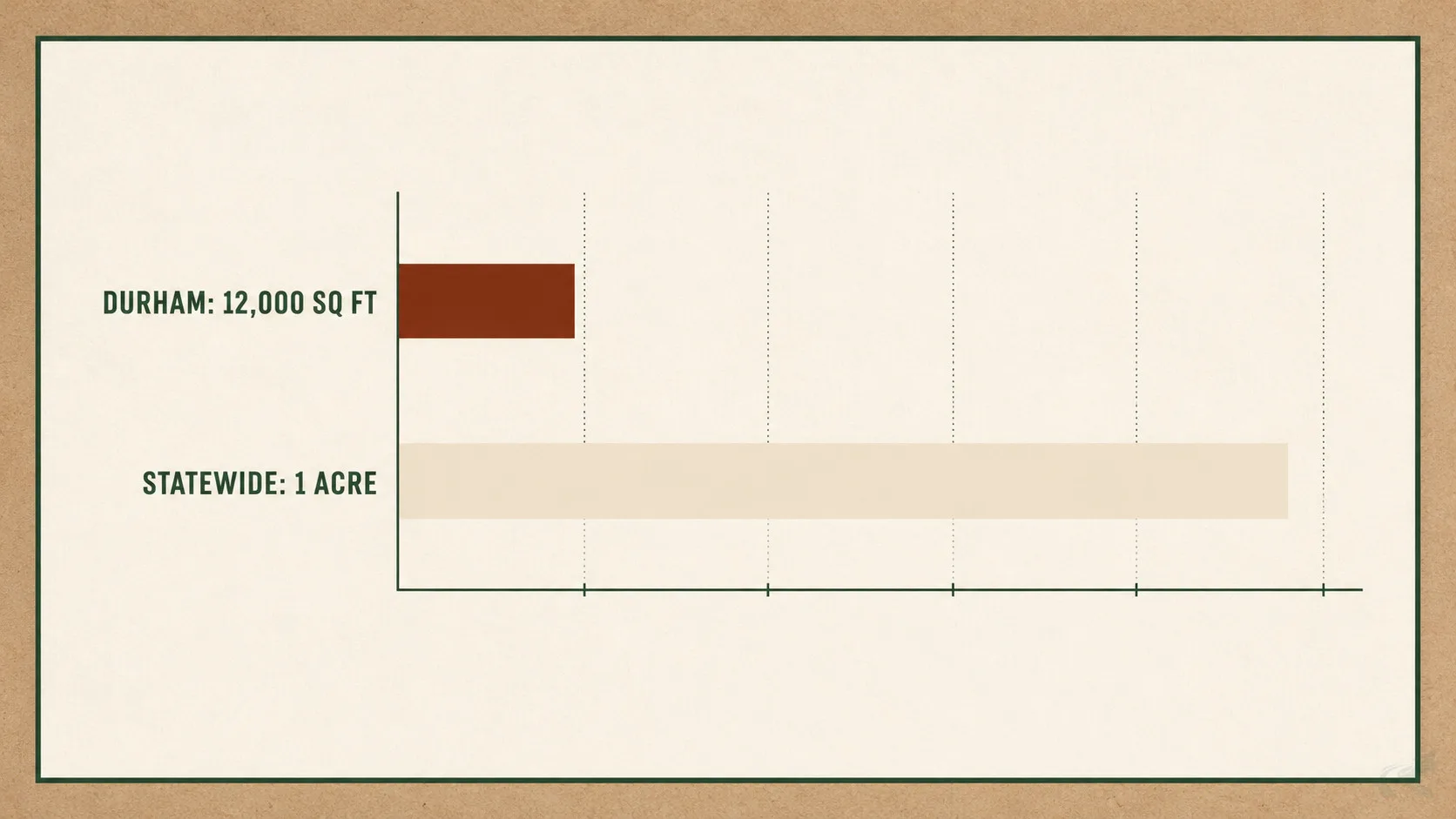
What it does not do is make the rules loose. Durham’s land-disturbance trigger is 12,000 square feet, well under the statewide one-acre rule, so projects here cross the line at sizes that would be exempt in much of the state.
This page is about hiring: what the work actually involves on Durham clay, what a complete quote looks like, and how to check the person quoting it.
For thresholds and process in full, see Durham County’s permit rules. If your actual problem is standing water rather than a grading project, start with yard drainage in Durham.
What a Durham grading contractor actually does
Four scopes, priced very differently.
| Common Durham grading scopes | What it involves | What drives the cost |
|---|---|---|
| Drainage correction | Reshaping the surface so water leaves, and carrying it to a real outlet | Finding the outlet. On clay this is the whole problem — not the trenching |
| New-home pad preparation | Cutting and compacting a level pad, setting the finish grade around it | Lot size, how much material moves, and whether fill has to be imported |
| Driveway grading | Establishing grade and crown, base stone, and getting water off the surface | Length, base depth, and whether the existing base is salvageable |
| Lot clearing and rough grading | Removing vegetation and stumps, shaping the ground to a workable contour | Disposal — what leaves the site, and how far it travels |
Drainage correction
- What it involves
- Reshaping the surface so water leaves, and carrying it to a real outlet
- What drives the cost
- Finding the outlet. On clay this is the whole problem — not the trenching
New-home pad preparation
- What it involves
- Cutting and compacting a level pad, setting the finish grade around it
- What drives the cost
- Lot size, how much material moves, and whether fill has to be imported
Driveway grading
- What it involves
- Establishing grade and crown, base stone, and getting water off the surface
- What drives the cost
- Length, base depth, and whether the existing base is salvageable
Lot clearing and rough grading
- What it involves
- Removing vegetation and stumps, shaping the ground to a workable contour
- What drives the cost
- Disposal — what leaves the site, and how far it travels
The scope most often under-quoted is the first. Drainage correction looks like trenching, so it gets priced like trenching — but on dense Piedmont clay the cost is in establishing continuous fall to somewhere the water can legally go.
The Durham advantage, and the Durham catch
One office is a real simplification. A 12,000 sq ft trigger is a real constraint.
The advantage. A joint City-County programme means the answer to “who reviews this” doesn’t depend on a municipal boundary. Compare Wake, where a lot inside Raleigh follows city rules at a different threshold than a lot just outside it. In Durham, one programme covers both — which also means a contractor who works here regularly deals with the same office every time, and knows it.
The catch. The trigger is 12,000 square feet, roughly a third of the statewide acre (43,560 sq ft). Most single back-yard projects stay under it, but larger scopes, multi-lot work, and anything in a Falls Lake or Jordan Lake water-quality area need checking before work starts — requirements tighten inside those areas, and a lot can sit in one without the owner knowing.
The practical hiring test: ask a contractor what the local threshold is. Someone who works Durham will say 12,000 without pausing. Someone who says “an acre” is quoting from the statewide rule and hasn’t worked here much.
Thresholds, fees, and the water-quality overlays in full are on Durham County’s permit rules. Confirm current figures with the programme before relying on them.
What a complete quote includes
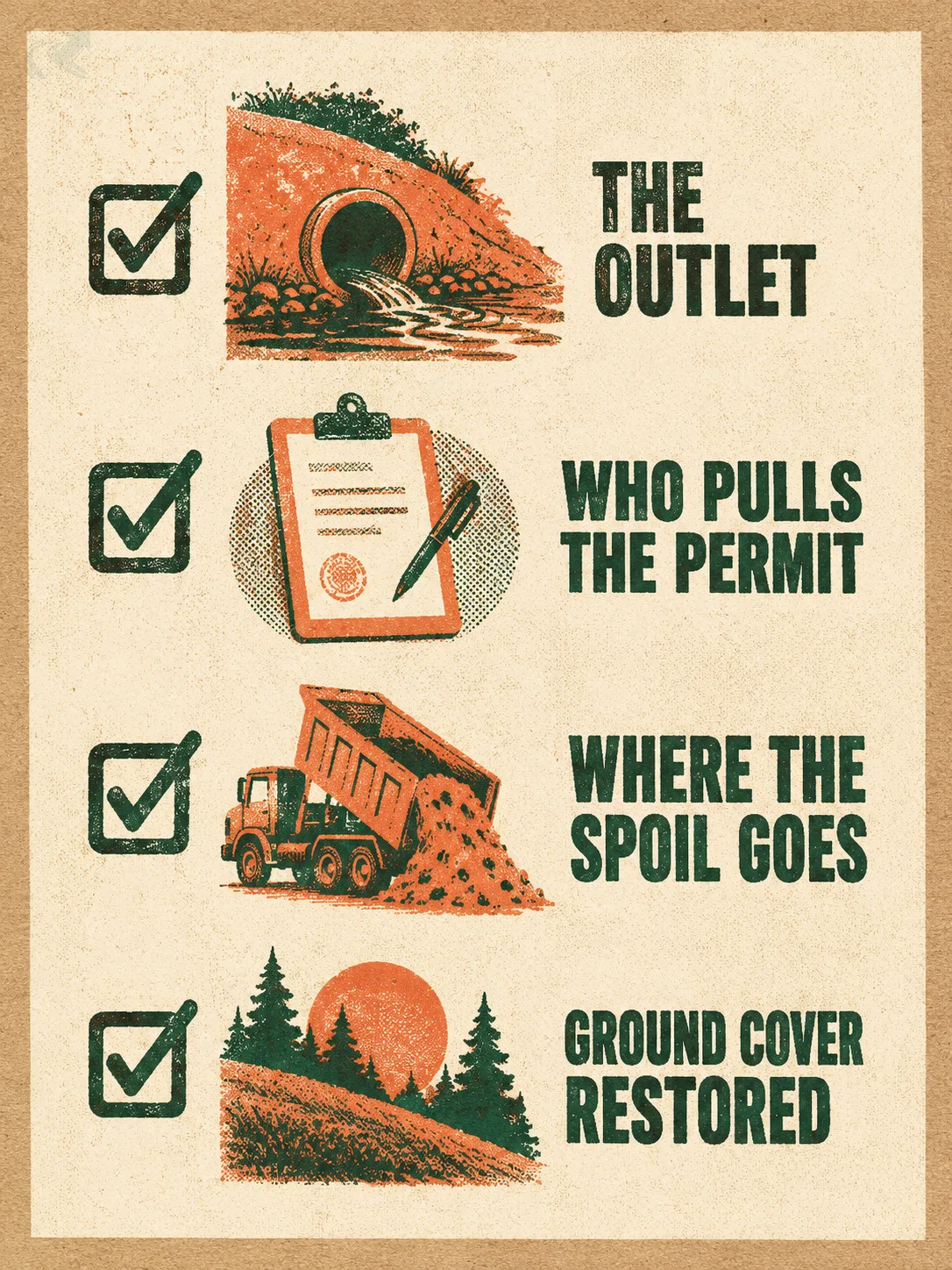
Four things. A quote missing any of them is priced on assumptions you can’t see.
- The outlet. Where does water end up, and is that legal? A drainage scope with no named discharge point is incomplete, whatever the trench detail says.
- Who pulls the permit, and when. If the scope may cross 12,000 sq ft, the answer should be explicit and the approval should precede the work.
- What happens to the spoil. Excavated clay has to go somewhere. Hauling it off is a real line item; spreading it on site changes your grade and may create the next problem.
- Restoration. Does the price include re-establishing ground cover, or does the job end at bare dirt? This is the most common gap between two quotes that otherwise look alike.
Checking the contractor
Three checks, in order of how much they protect you.
Licence. Verify it against the NC Licensing Board record directly rather than a card or a website claim — how to check an NC contractor licence walks the lookup. The licence threshold is $40,000: above that, a general contractor licence is required.
Insurance, from the agent. A certificate the contractor emails you is a starting point. One sent by their insurer, naming you, is the real thing.
Recent local work. Ask for two Durham-area jobs from the past year. A contractor who works here regularly will have them close by, and the request itself is informative.
The patterns worth walking away from are collected at contractor red flags — the pressure to decide today and the discount for paying cash are the two that recur.
What this page does not cover
Permit thresholds, fees, and process detail live on Durham County’s permit rules. If the problem is standing water rather than a grading project, yard drainage in Durham is the diagnosis page. Sewer conversion is its own project with its own rules — see septic to sewer in Durham. The statewide hiring guide is at finding a grading contractor in NC.
From our directory
Verified grading contractors near Durham
Every listing is cross-checked against the NC Licensing Board public record before it appears. Pick your city:
Or browse the full NC contractor directory.