The two questions people land on this page for
Do I need a grading permit in Durham?
Probably earlier than you think. Durham runs a joint City-County erosion program, and a land-disturbing permit is required once you disturb more than 12,000 square feet — well below the statewide one-acre rule. A full sedimentation and erosion control plan kicks in above 20,000 square feet (or 12,000 in certain water-quality areas).
Why does Durham clay seem worse than other Triangle clay?
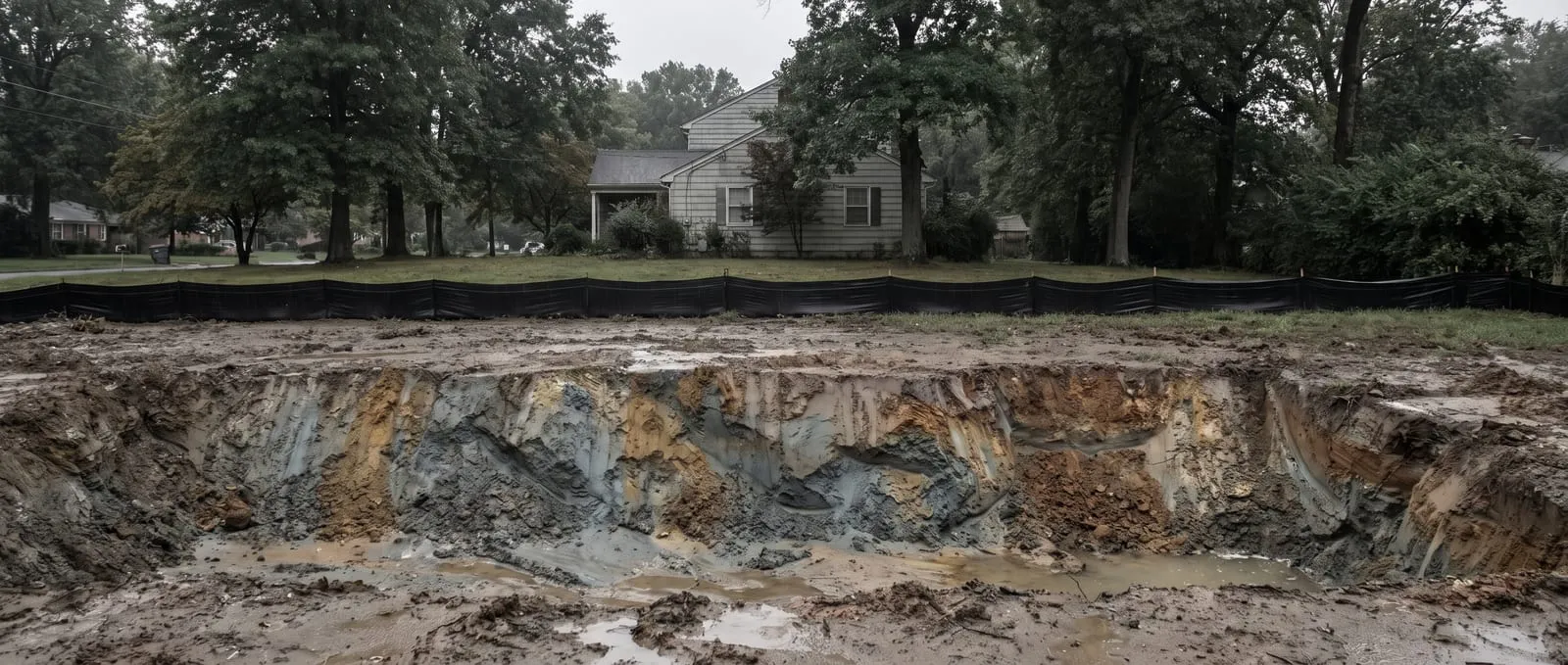
Much of Durham sits on the Triassic Basin — a denser, more expansive clay than the red clay to the east. It swells when wet and presses on foundations, and it drains even more reluctantly. A drainage plan that works in Raleigh isn't automatically a Durham plan.
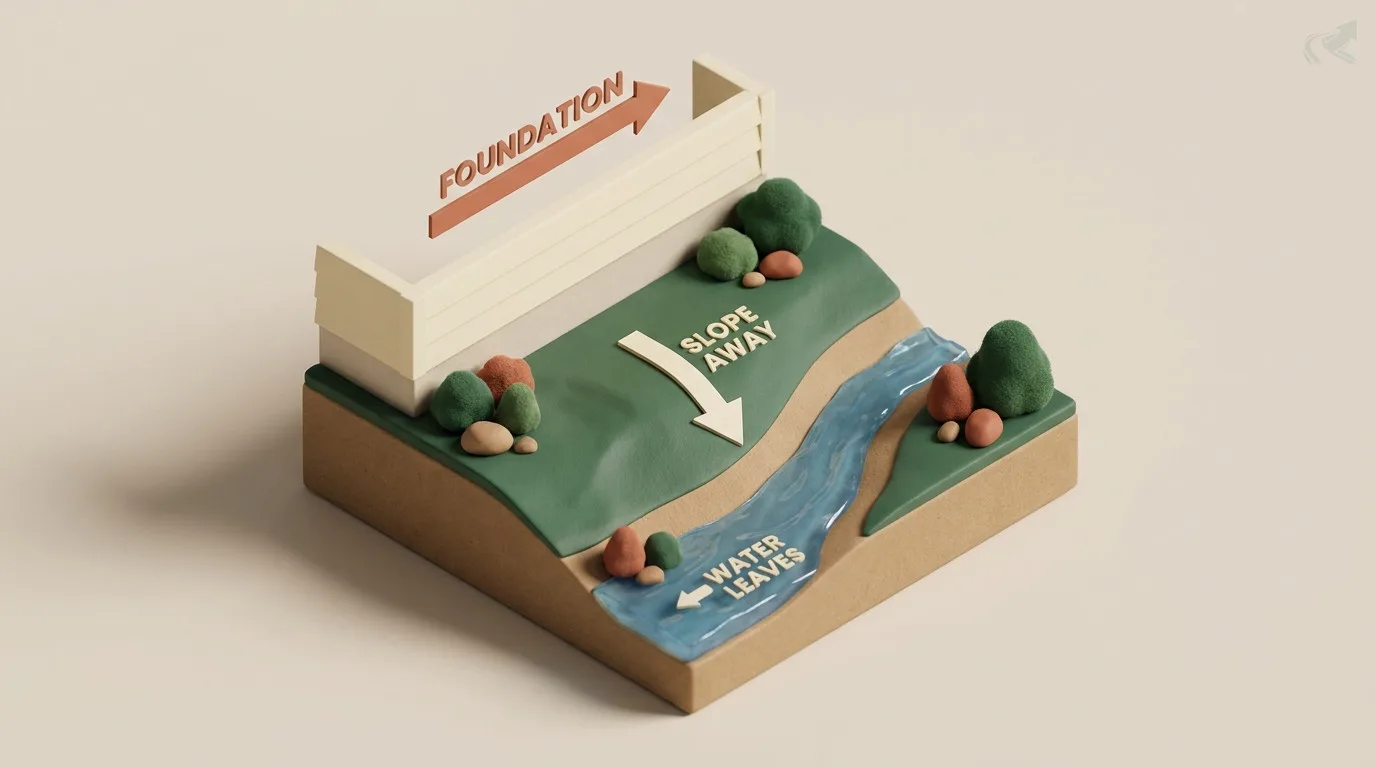
A homeowner in Durham decides to level a sloping back yard and add a patio. The statewide rule requires an erosion plan at one acre, and the project is nowhere near that — so the work begins.
Durham’s rules were already lower. The city and county run a joint erosion-control program, and a land-disturbing permit is required once you cross 12,000 square feet — a threshold most residential regrading projects can reach faster than expected. And the ground itself doesn’t cooperate: much of Durham sits on dense Triassic-Basin clay that swells, holds water, and behaves differently from the red clay a few miles east.
This page translates both — Durham’s permit thresholds and its distinctive clay — plus the process, the resources, and the septic-to-sewer picture that matters to a slice of Durham homeowners.
Do you need a permit? The joint program
Durham’s City-County erosion program triggers a land-disturbing permit at 12,000 square feet of disturbance — far below the statewide one acre.
Unlike Wake County, where jurisdiction fragments across the county and its towns, Durham runs a single joint program covering both the City of Durham and the unincorporated county. That makes the which office question simpler — but the thresholds are strict:
| What you need | Requirement | Triggers at |
|---|---|---|
| Land-disturbing permit | More than 12,000 sq ft disturbed | City of Durham + unincorporated county, joint program |
| Sedimentation & erosion control plan | More than 20,000 sq ft (12,000 in certain water-quality areas) | Stricter in Falls Lake / Jordan Lake nutrient watersheds |
| Statewide comparison | 1 acre = 43,560 sq ft | Durham triggers roughly 3.6x earlier |
Land-disturbing permit
- Requirement
- More than 12,000 sq ft disturbed
- Triggers at
- City of Durham + unincorporated county, joint program
Sedimentation & erosion control plan
- Requirement
- More than 20,000 sq ft (12,000 in certain water-quality areas)
- Triggers at
- Stricter in Falls Lake / Jordan Lake nutrient watersheds
Statewide comparison
- Requirement
- 1 acre = 43,560 sq ft
- Triggers at
- Durham triggers roughly 3.6x earlier
Two things worth knowing before you dig:
- Nutrient watersheds add rules. Projects in the Falls Lake and Jordan Lake nutrient-sensitive watersheds carry extra design-storm and buffer requirements. Much of Durham drains to one or the other.
- The officer can require a plan below the threshold. If off-site damage is occurring or likely, Durham’s Sedimentation and Erosion Control Officer can require a control plan even for a smaller disturbance.
When you can’t tell whether your project crosses a line, treat it as a question for the program, not a judgment call — Durham’s Stormwater and Erosion Control division is the place to confirm.
What the permit process looks like
The land-disturbing permit runs through Durham’s joint program, and above 20,000 square feet it requires an approved erosion-control plan first. The sequence:
- Confirm your trigger — your disturbance area, and whether you’re in a Falls Lake or Jordan Lake watershed or another water-quality overlay.
- Prepare the submittal — a site plan; a sedimentation and erosion control plan where required (above 20,000 sq ft, or 12,000 in water-quality areas); and a form.
- Submit for review and address plan comments.
- Add state coverage where it applies — a project disturbing an acre or more also needs coverage from .
- Install erosion controls and pass inspections through construction.
- Establish permanent ground cover on schedule after grading.
Fees are set by the program and calculated on the project; confirm the current schedule when you apply rather than budgeting from an old figure.
Durham’s clay is a different animal
Much of Durham sits on the Triassic Basin — a dense, expansive clay that swells when wet and drains even more reluctantly than the red clay to the east.
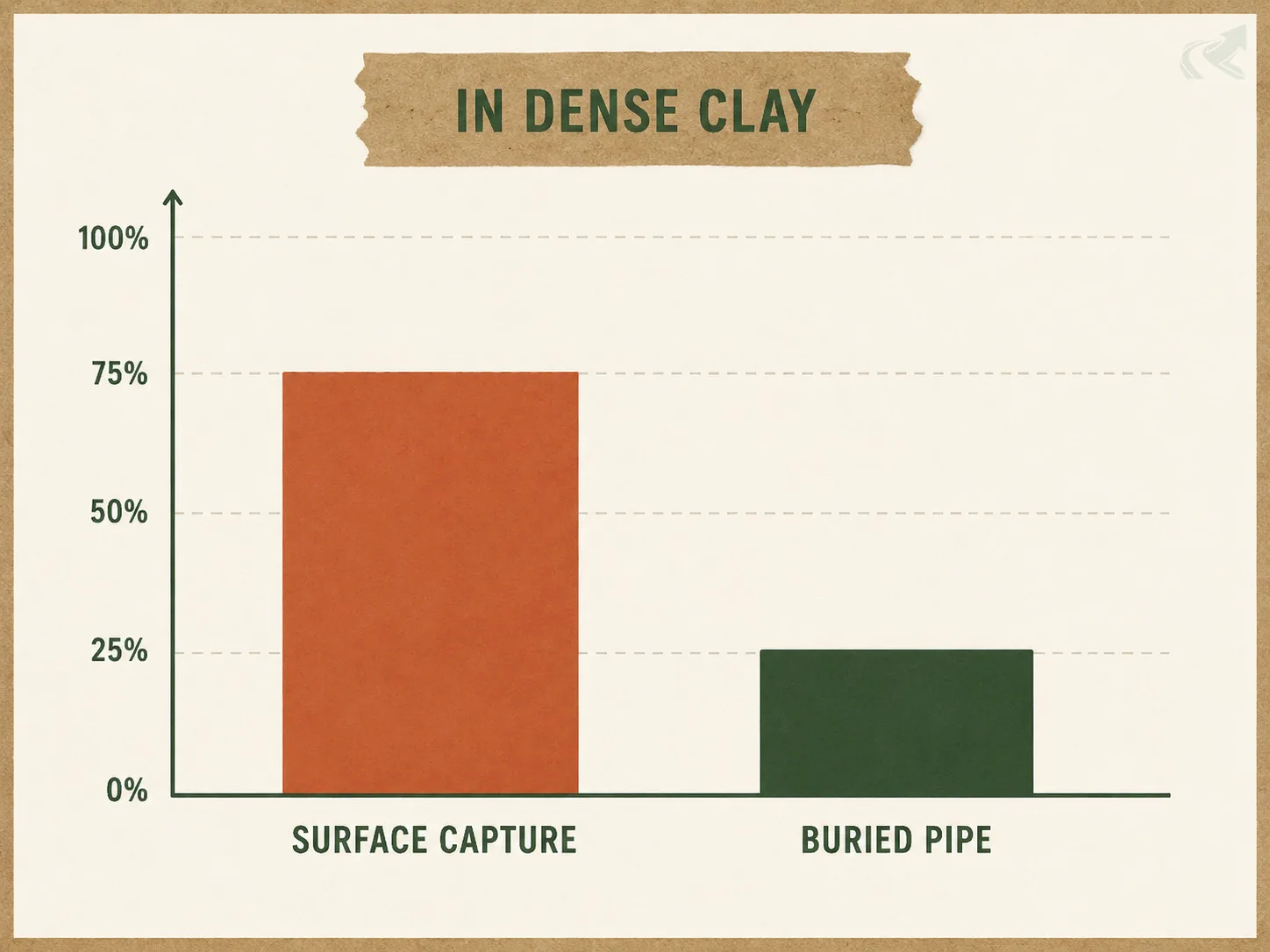
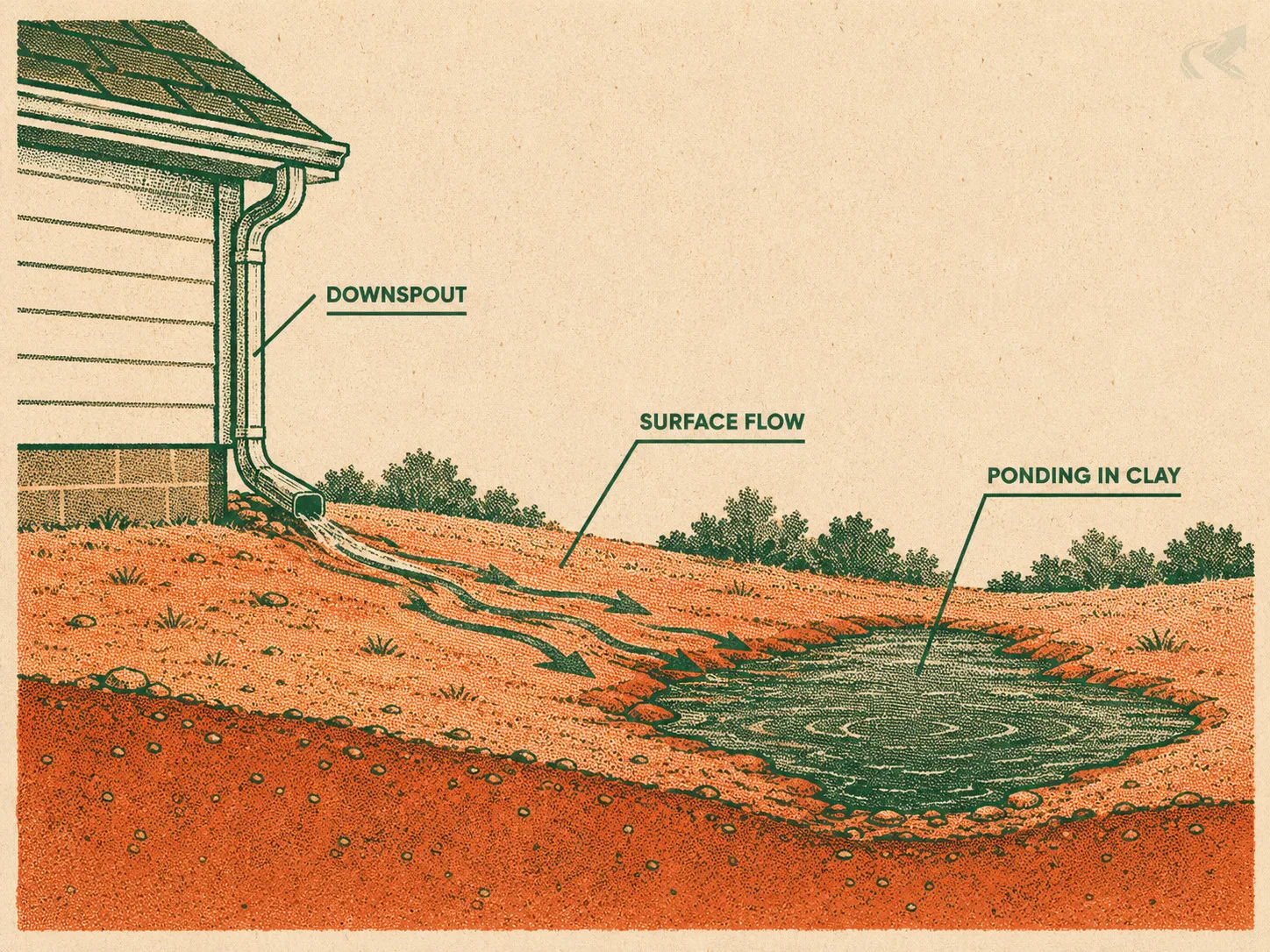
Homeowners describe it bluntly: it “acts less like a sponge and more like a ceramic bowl.” When it saturates, it expands, and that expansion presses against foundation walls — a contributor to the bowing and cracking that shows up in older and newer Durham homes alike. For drainage work, it means surface water has to be caught and carried, because it will not soak away on its own.
The practical upshot: a drainage plan copied from a Raleigh or Cary job can underperform in Durham. Catch basins and surface capture matter more here, not less. Our Piedmont red clay guide covers the soil science, and the standing-water fix walks through what actually works in clay this dense.
Septic to sewer in Durham
Durham has run a cost-share program to help qualifying homeowners in the Northeast Creek watershed convert from septic to city sewer — but its funding was scheduled to end in June 2026, so confirm current availability before counting on it.
The program was open to City of Durham property owners on septic within the Northeast Creek watershed where a city sewer line is available, with additional hardship funds for qualifying residents. Conversions had to be completed within 18 months of approval.
Because the funding window was set to close in mid-2026, treat any figure or eligibility detail here as needing a fresh check with Durham Public Works before you rely on it — this is the fastest-changing information on the page. A septic-to-sewer conversion is real earthwork either way: expect line installation from the house to the main, tank decommissioning, permits, and landscape restoration, with costs that vary widely by distance and site.
Every Durham resource you’ll need
Grouped by what you’re trying to do.
If you’re hiring, start with hiring a grading contractor in Durham — what a complete quote names, and how to check the person quoting it.
If your yard holds water, start with standing water in a Durham yard — the diagnosis layer, and why the outlet matters more than the trench on this clay.
Before you dig
- NC 811 — call before you dig. Free and legally required: notify utility owners at least two business days before you break ground. Call 811 or 1-800-632-4949.
Before you hire
- NCLBGC license lookup. Any contractor on a project of $40,000 or more must hold an active license. Search at the license portal — no account needed.
- Our verified Triangle directory. Every contractor in our Durham-area directory is cross-checked against that NCLBGC record before listing.
Applying and tracking
- Durham Stormwater & Erosion Control. The joint City-County program handles land-disturbance permits, plan review, and inspections — Durham County Stormwater & Erosion Control.
Site conditions
- USDA Web Soil Survey. Pull soil and drainage ratings for your parcel at Web Soil Survey — especially useful in Durham, where Triassic clay changes what a drainage plan must do.
- Watershed check. Confirm whether your lot drains to Falls Lake or Jordan Lake before designing — it changes the buffer and nutrient rules.
Septic to sewer
- Durham Public Works — Septic to Sewer. The city’s septic-to-sewer page and Public Works (919-560-4326) — confirm current program status given the mid-2026 funding window.
What this means for your project
Durham is, in one way, simpler than Wake — one joint program, not a patchwork of town offices. But the thresholds are low, the watersheds add rules, and the clay is genuinely worse. Confirming, not assuming, is the habit that saves you a doubled fee or a failed drain.
For the wider Triangle picture — the region’s permit maze and why its clay behaves the way it does — start at the Triangle earthwork hub. For the neighboring county, see Wake County. And if you’re vetting a contractor for a Durham job, the Durham directory lists only operators whose licenses we’ve checked against the public record.
We’re a directory, not a permit office — we can’t file, expedite, or influence anything. What this page can do is get you to the right counter with the right questions already answered.
Verified contractors in Durham County
Every licence number below links to that contractor’s own record on the NC Licensing Board — we don’t ask you to take our word for it.
From our directory
Verified contractors near Durham
Every listing is cross-checked against the NC Licensing Board public record before it appears. Pick your city:
Or browse the full NC contractor directory.