Two things Triangle homeowners ask first
Why does water just sit in my Triangle yard instead of draining?
Piedmont red clay. It behaves less like a sponge and more like a ceramic bowl — water pools on top and in any hole you dig instead of soaking down. That single fact is why a French drain built for sandy soil often fails here, and why the fix usually needs surface catch basins, not just a buried pipe.
Do I need a grading permit to work on my lot in the Triangle?
It depends entirely on which jurisdiction you're in — and the thresholds are much lower than the statewide one-acre rule. Raleigh and Durham trigger a permit at 12,000 square feet. And if your lot is in an active Wake County subdivision, a land-disturbance permit can be required at essentially any size. Check your specific town or county before you dig.
A couple closes on a new build outside Raleigh in the fall. By spring, water stands in the back yard for days after every rain, right up against the foundation. They do the sensible thing and check the rule first: North Carolina requires an erosion plan at one acre of disturbance, and their lot is a quarter of that. So a landscaper starts regrading.
Two problems surface at once. The lot sits in an active subdivision, where Wake County requires a land-disturbance permit regardless of size — so the work needed one. And the real issue was never the grade; it was the clay, which no amount of reshaping makes drain on its own.
That’s Triangle earthwork in miniature. It isn’t mountain work and it isn’t coastal work — it’s a clay problem wrapped in a permit maze, playing out on fast-growth suburban lots where the builder has already moved on. Advice written for other soils, or for the statewide rule, can be quietly wrong here.
This page is the map. Below: why red clay behaves the way it does, the permit thresholds that change with every town line, the new-construction drainage problem, how the fix actually works — and every Triangle guide we’ve published, sorted by the problem you’re trying to solve.
What’s actually different in the Triangle
The Triangle is the mirror image of the mountains. Out west, shallow soil over rock sheds water too fast and gravel washes out. Here, deep red clay drains too slowly, and water pools where it lands.
The soil is clay that holds water. Most of the Triangle sits on Piedmont red clay — dense, fine, and slow to drain. Dig a hole and it fills with water that sits for days rather than soaking away. Homeowners describe the ground as “digging through bricks,” and one spent the better part of a month on a single post hole: dig, fill with water, wait a week, try again. Our red clay guide covers the soil science and why it drives every drainage decision.
Durham’s clay is its own animal. Durham sits on the Triassic Basin — a denser, more expansive clay than Raleigh’s, sometimes called “Bull City Blue.” It swells when wet and presses on foundations. A Durham drainage plan isn’t automatically a Raleigh one.
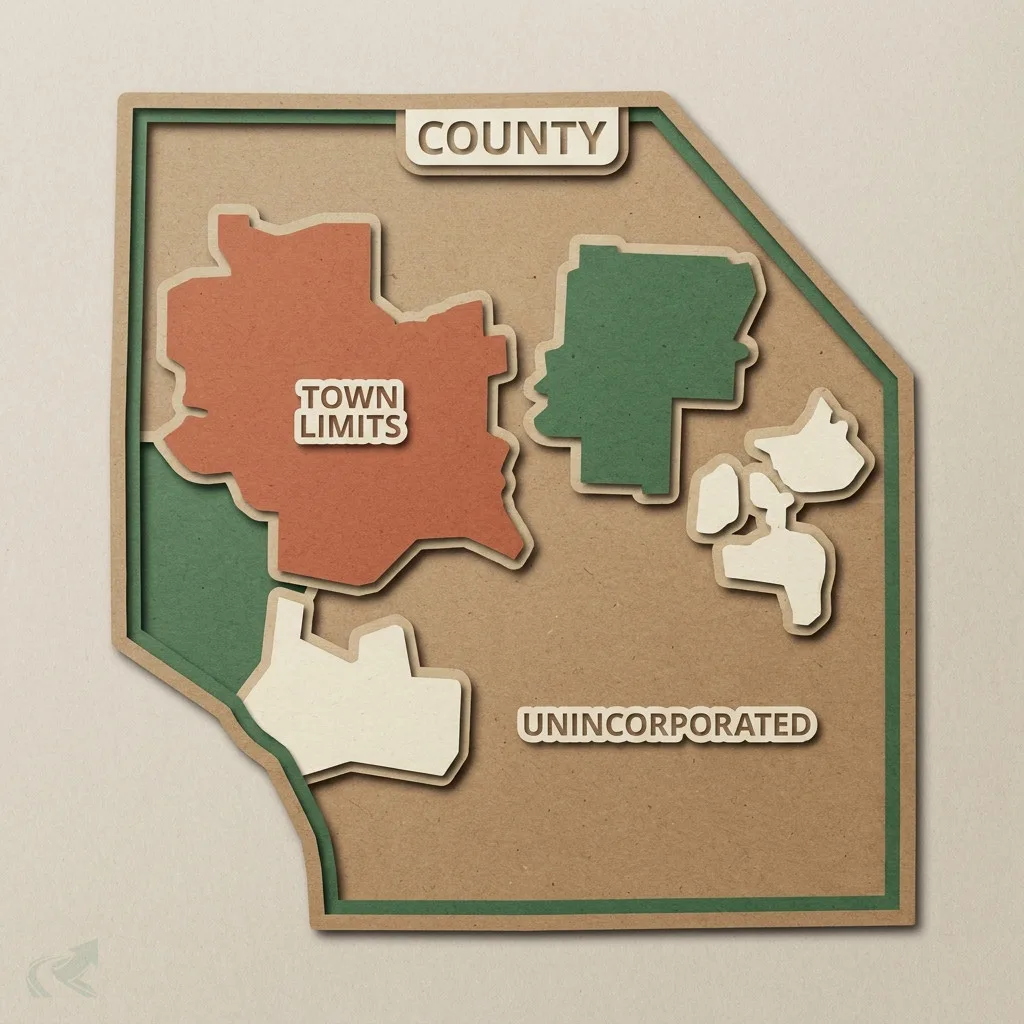
The permits change with the town line. More on this below — it’s the single most useful section on the page. There is no one Triangle rule.
The market is new construction. The Triangle is one of the fastest-growing regions in the country, and most earthwork pain traces to a recently built lot: rushed grading, compacted clay, and a builder whose obligations ended at closing.
The permit maze: there is no single Triangle threshold
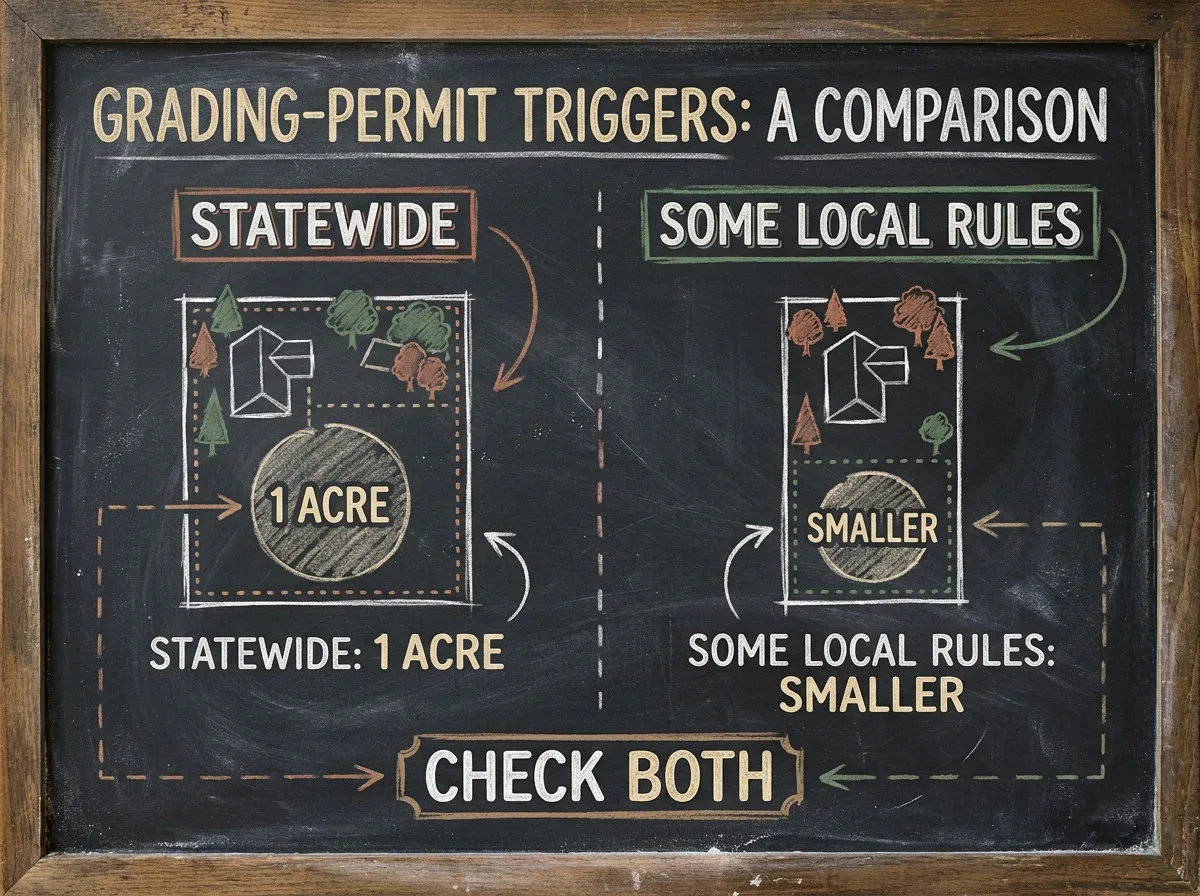
North Carolina’s statewide rule requires an erosion and sedimentation control plan at one acre of disturbance. Almost every Triangle jurisdiction triggers far earlier — and each sets its own number.
This is the trap that catches people. You read the state’s one-acre rule, assume a small project is exempt, and start work. But the town or county you’re in may require a permit at a fraction of that — and in an active Wake County subdivision, there may be no minimum at all.
| Where the work is | Land-disturbance permit triggers at | Versus the state's 1 acre |
|---|---|---|
| North Carolina (statewide) | 1 acre (43,560 sq ft) of disturbance | the baseline |
| Wake County — active subdivision | Any size — even a small fraction of an acre | effectively no minimum |
| City of Raleigh | 12,000 sq ft (about 0.28 acre) | roughly 3.6x earlier |
| City & County of Durham | 12,000 sq ft (control plan at 20,000) | roughly 3.6x earlier |
North Carolina (statewide)
- Land-disturbance permit triggers at
- 1 acre (43,560 sq ft) of disturbance
- Versus the state's 1 acre
- the baseline
Wake County — active subdivision
- Land-disturbance permit triggers at
- Any size — even a small fraction of an acre
- Versus the state's 1 acre
- effectively no minimum
City of Raleigh
- Land-disturbance permit triggers at
- 12,000 sq ft (about 0.28 acre)
- Versus the state's 1 acre
- roughly 3.6x earlier
City & County of Durham
- Land-disturbance permit triggers at
- 12,000 sq ft (control plan at 20,000)
- Versus the state's 1 acre
- roughly 3.6x earlier
The Wake County line is the one people miss most. For lots in an active subdivision — a “common plan of development,” which is to say most new construction — a land-disturbance permit has been required regardless of size since April 2019. The builder needs one; so, often, does work on the lot afterward.
And the towns each layer on their own rules. Cary and Apex require erosion-control plans at their own sub-acre thresholds and charge per-acre fees; Apex requires a grading permit for essentially all site work under the building code. Even where a permit isn’t required — a single-family lot under Raleigh’s 12,000 square feet, for instance — erosion-control measures like a stone construction entrance and silt fence are still mandatory on every lot.
There’s a second rule that surprises new-build owners: impervious-surface caps. Wake County limits how much of a residential lot can be covered by roof, driveway, and patio — and in protected watersheds like Swift Creek, the cap is a small fraction of the lot, recorded against the deed. You cannot simply pave your way out of a drainage problem.
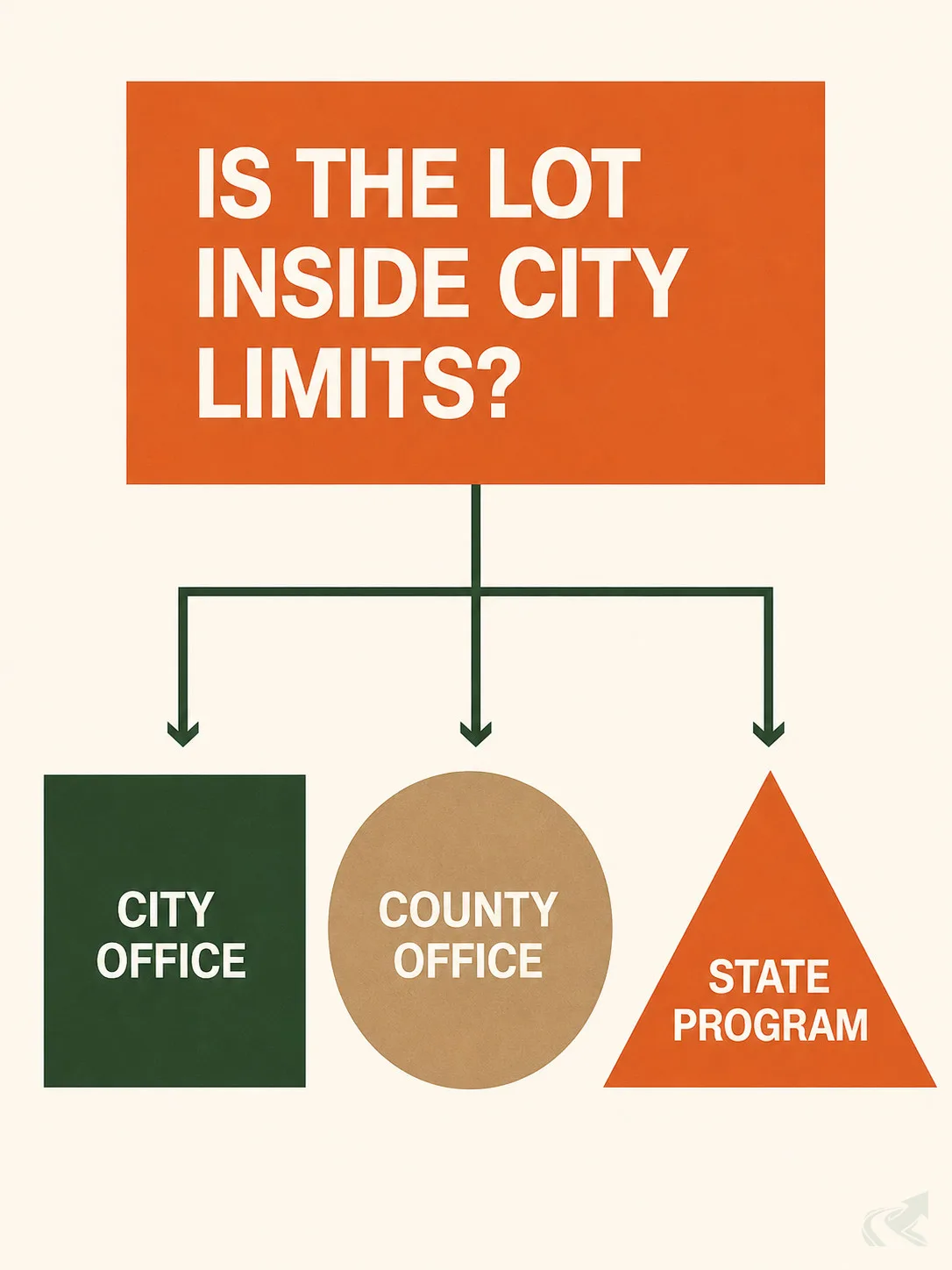
Precise thresholds, fees, portals, and contacts are on the county pages — Wake County and Durham County. For any other NC county, use the permit lookup tool. Verify your number with your own jurisdiction before you break ground.
The new-construction problem
In a fast-growth market, most drainage failures are grading failures — and the grading was somebody else’s.
The pattern repeats across Triangle subreddits. A lot is cleared, the soil compacted by equipment, the grade cut to move water off the pad and toward — often — the new owner’s back yard. The house sells. Months later the water arrives, and the builder’s answer is a contractual threshold: we don’t act unless it stands 48 hours, or the foundation cracks aren’t big enough yet.
That leaves the homeowner to remediate a problem they didn’t create. It’s worth knowing the ground rules before that conversation:
- Document everything, with timestamps. Photos of standing water, and how long it stays, are what move a builder or an insurer.
- Know the drainage law. North Carolina follows the “reasonable use” rule for surface water between properties — it governs what a neighbor, or a developer, can send onto your land. Our guide on what to do when work is done wrong covers the accountability path.
- Get the grade assessed before you buy a fix. The most common mistake is paying for a French drain when the real problem is a grade that sends water at the house — or the reverse.
The Triangle’s growth is also its risk: post-disaster and boomtown markets alike attract operators who follow the money. Verifying a license against the public record before money moves matters more here, not less — every contractor in our directory is cross-checked against the North Carolina Licensing Board before listing.
Fixing red clay drainage (and the fabric question)
A drain built for sandy soil is the wrong drain for clay. In the Triangle, surface water is the enemy — so the fix has to catch water on top, not just underground.
Because clay barely percolates, water sits on the surface and runs across it. The solutions that actually hold up here share a shape:
- Catch basins are non-negotiable. Surface inlets capture pooling water before it has to soak through clay that won’t cooperate. A buried perforated pipe alone, with nothing catching the surface water, underperforms.
- Roof water gets its own path. Downspouts tied into a separate solid pipe, routed away from the foundation, remove a huge share of the water before it ever reaches the yard.
- Regrade first, drain second. If the grade sends water at the house, fix that before spending on pipe.
The most-argued question in Triangle drainage — loud in the how-to videos and their comments — is whether to wrap a French drain in geotextile fabric in clay. Some pros swear it clogs; others wrap every drain. The honest answer is conditional, and it’s exactly the kind of thing worth getting right before you dig. Our French drain guide and the standing-water fix walk through when each approach applies.
One caution that Triangle homeowners themselves raise: be skeptical of any contractor who says a drainage system will “never need maintenance.” In clay, that’s a claim to distrust.
Every Triangle guide, by problem
Start with the problem you actually have.
- Water sits in my yard and won’t drain — Standing water fix · Red clay, explained
- My new build floods and the builder won’t fix it — When the work is done wrong · Wake County grading rules
- A French drain didn’t work / do I need fabric — French drains in NC clay
- I need a permit — Wake County · Durham County · statewide lookup
- A neighbor’s water is draining onto my lot — drainage disputes and NC law
- I’m converting septic to sewer (Durham) — Durham County resources
- I need a contractor now — Verified Triangle contractors
For the underlying methods — how grading, drainage, and hauling work statewide — start at drainage, driveways, or hauling and materials.
Counties and towns we cover
Our Triangle coverage is deepest in Wake County — Raleigh, Cary, Apex, Wake Forest, Morrisville, Garner, Holly Springs, Fuquay-Varina — and Durham County, including the City of Durham. The surrounding Triangle counties — Orange (Chapel Hill, Carrboro), Johnston, Chatham, and Franklin — share the same Piedmont red-clay reality, though permit thresholds and the office you call vary by jurisdiction. Johnston is worth reading separately: it sits in the Neuse River Basin, where protected riparian buffers reach even intermittent streams — a rule with no equivalent in Wake or Durham.
If you’re outside Wake or Durham, the soil and drainage guidance on this page still applies. Verify your permit thresholds with your own county or town before you break ground — the NC permit lookup covers all 100 counties.
From our directory
Verified Triangle contractors by city
Every listing is cross-checked against the NC Licensing Board public record before it appears. Pick your city:
Or browse the full NC contractor directory.