Before you call a contractor
How do I verify my gravel delivery ticket?
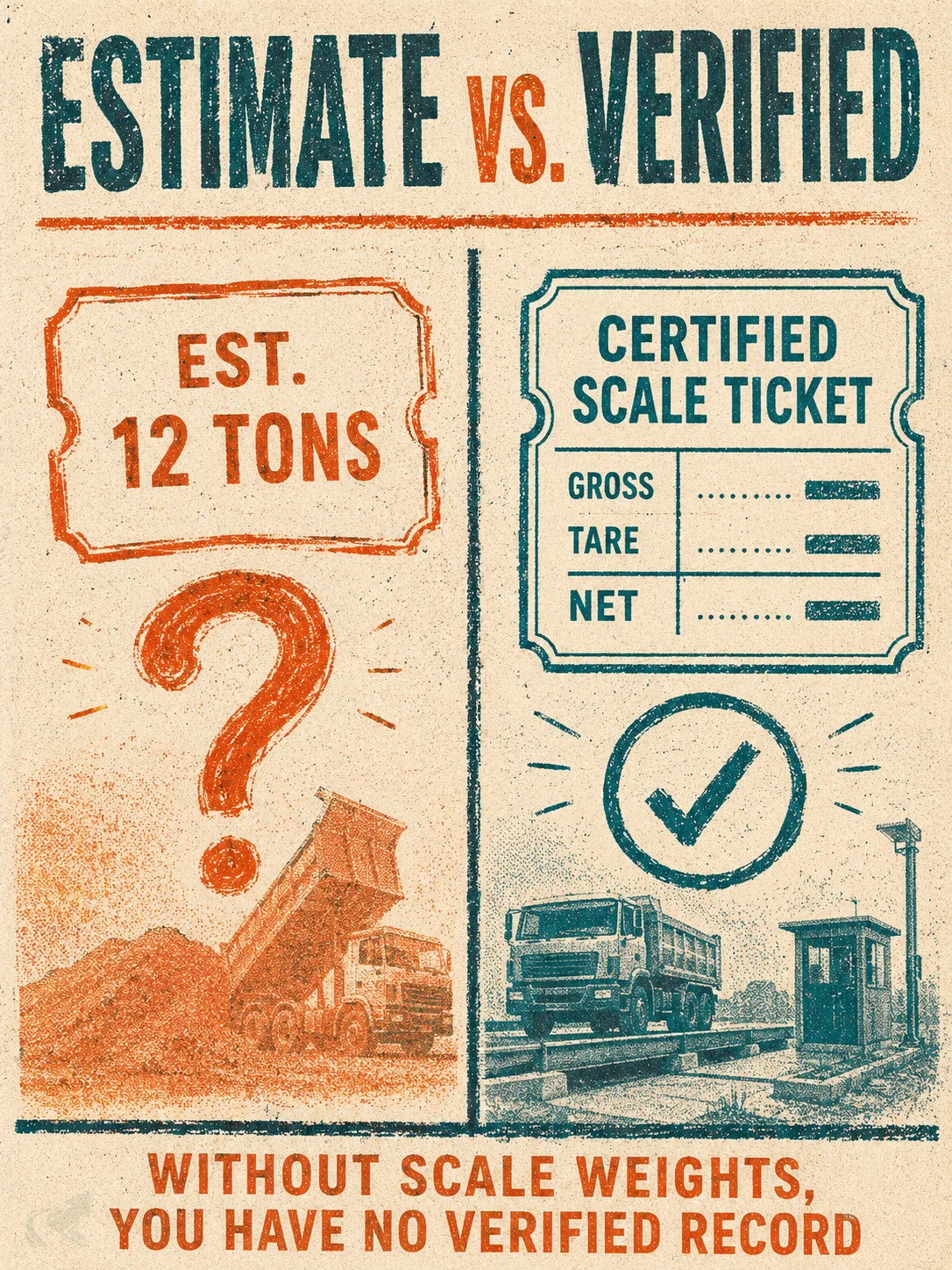
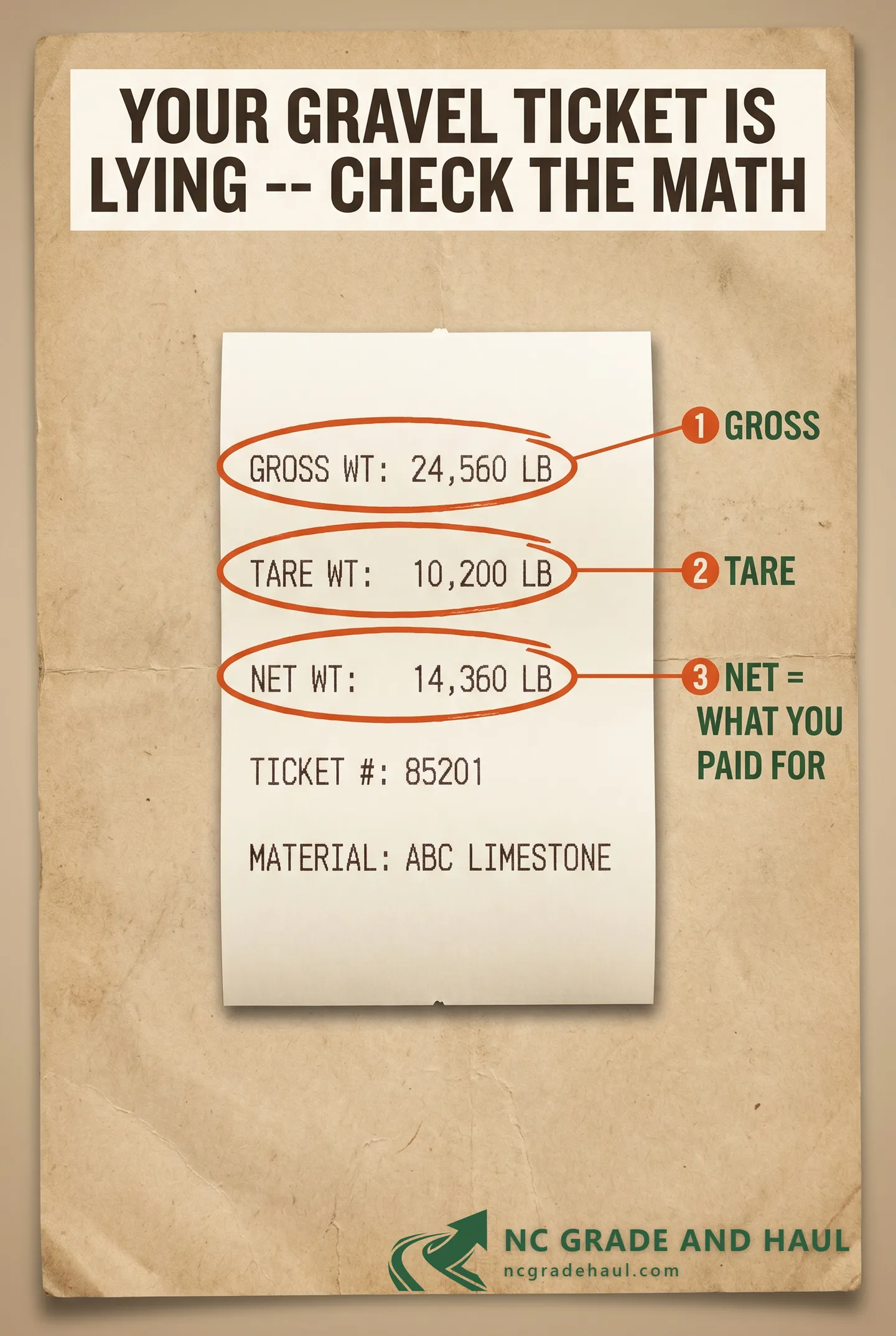
Find three numbers: (1) Gross Weight -- the loaded truck weight from a certified scale. (2) Tare Weight -- the empty truck weight. (3) Net Weight -- Gross minus Tare equals what was delivered. That net weight divided by the material's tons-per-yard gives you the cubic yards. If the ticket shows 'estimated quantity' only -- no scale weights -- you have no verified record.
What is the scale certificate and when do I need it?
A scale certificate is the official printout from a certified weigh station. It shows the ticket number, truck ID, gross and tare weights, and the date. If your delivery ticket and the scale certificate do not match, the certificate controls. Request it from the quarry through your contractor -- most quarries retain records for 30 to 90 days.
The Three Fields That Matter
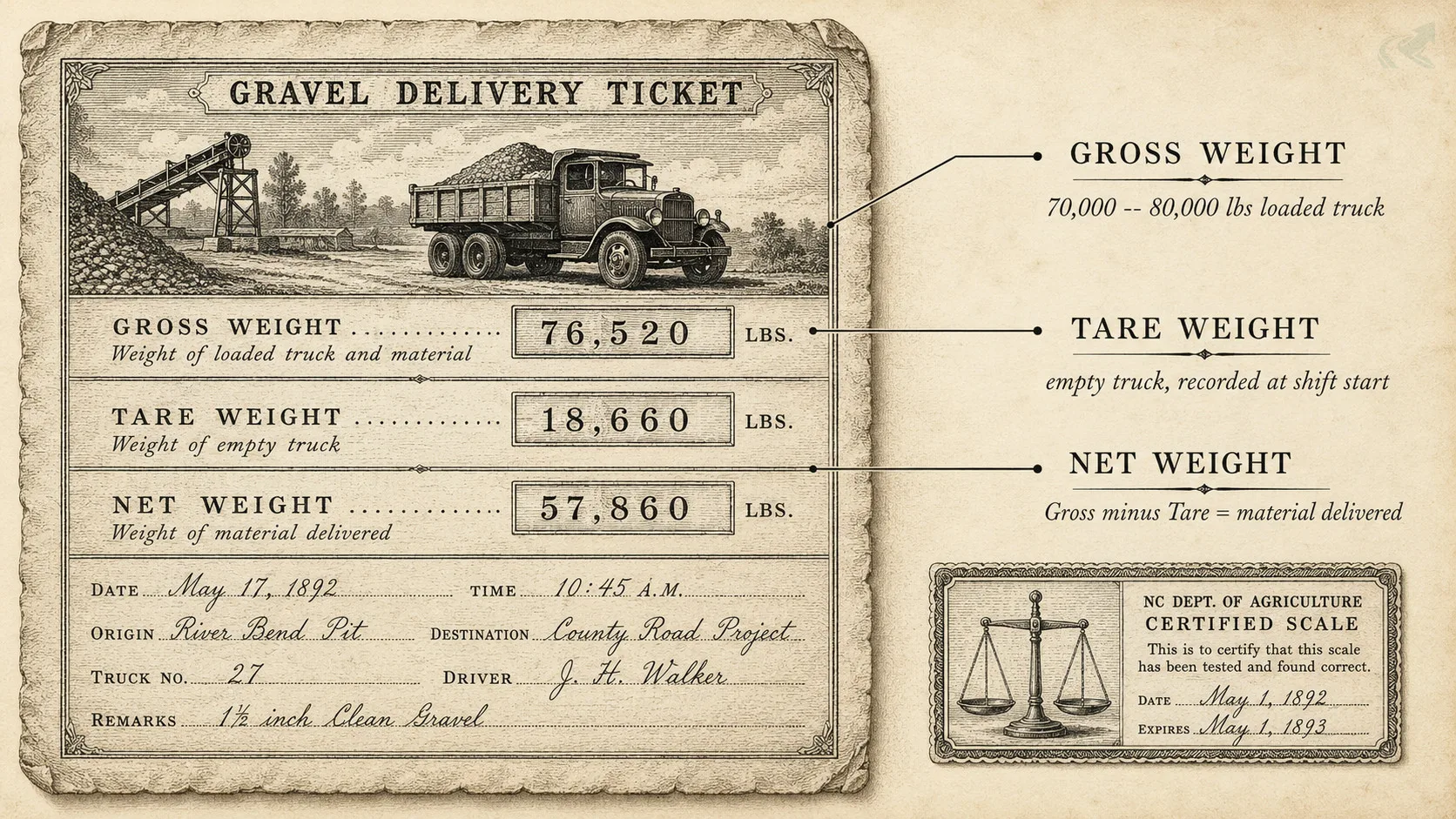
Every legitimate gravel delivery ticket shows three weights: Gross, Tare, and Net — and Net is the only number you paid for.
Gross weight is the total weight of the loaded truck sitting on the certified scale. A fully loaded tri-axle typically weighs 70,000 to 80,000 lbs.
Tare weight is the empty truck weight. This is usually recorded at the beginning of the driver’s shift or when the truck is first weighed empty at the quarry.
Net weight is simple arithmetic: Gross minus Tare. That difference is the material in the bed — the gravel, fill, or stone delivered to your property.
A certified scale ticket also shows the scale’s certificate number, the date and time of each weighing, and the quarry’s name. In North Carolina, commercial scales used for trade must be inspected by the NC Department of Agriculture and Consumer Services Weights and Measures Division. That certification is what makes the weight legally defensible.
If all three numbers appear on your ticket with a date stamp matching the delivery date, the ticket is structured correctly. If any of those three fields is blank or replaced by an asterisk, keep reading.
Flags on the Ticket
A well-structured ticket is easy to spot — so are the red flags.
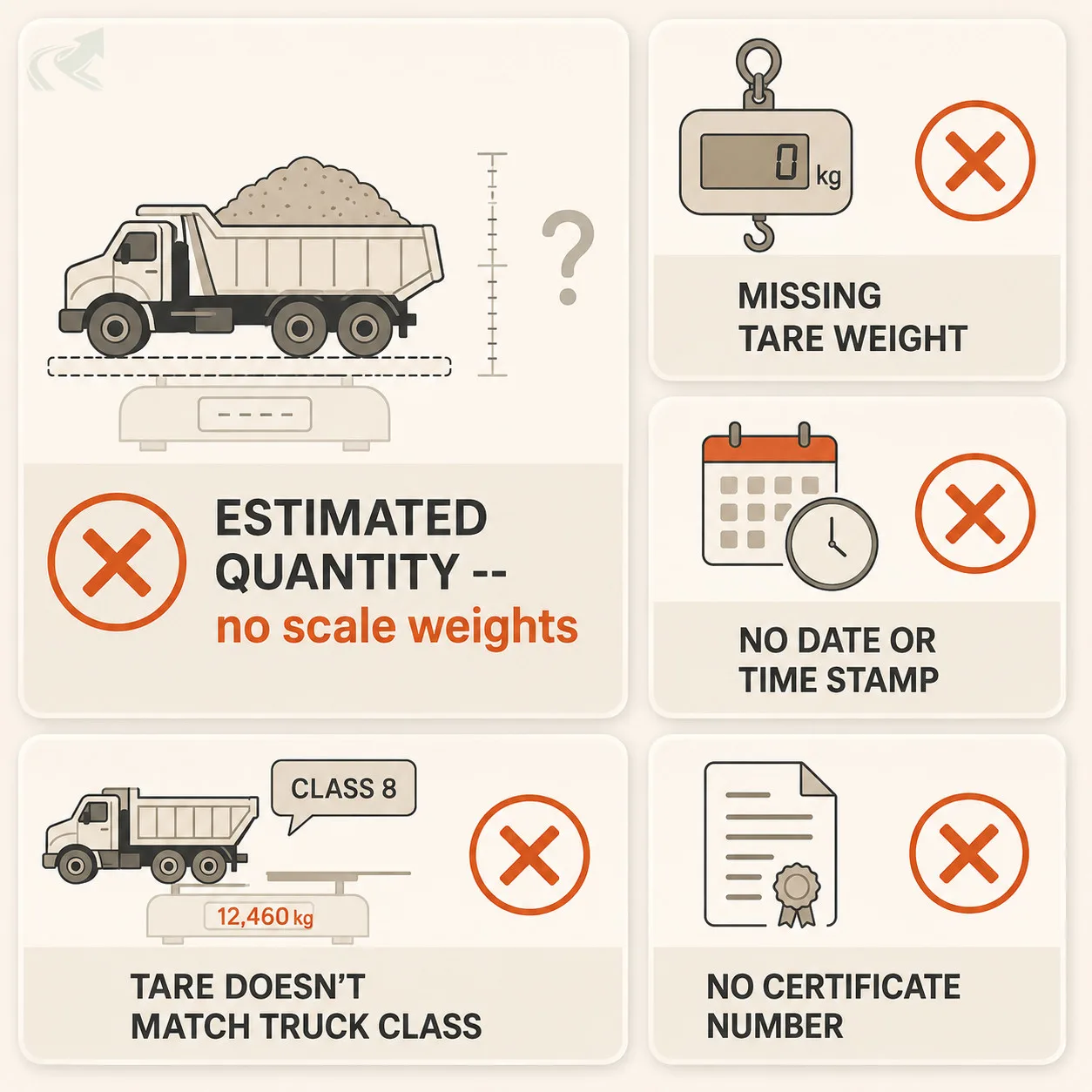
The biggest red flag is “estimated quantity” in place of actual scale weights. An estimated load is not a verified record. You have no independent way to confirm the number.
Watch for these specific issues:
- Missing tare weight. If the ticket shows gross weight but no tare, you cannot calculate net. Ask for both.
- Tare weight that seems too low. A single-axle truck has a lower tare than a tri-axle. If the tare on your ticket does not match the truck class that showed up, the net weight calculation is wrong. Truck class should match.
- No date or time stamp on the scale. The certified scale print includes a timestamp. A handwritten weight is not a scale ticket.
- Scale date does not match delivery date. Tare weights recorded days before the delivery can be legitimate if the truck was not modified — but a gross weight that predates delivery is a problem.
- No certificate number. Every certified NC scale has an assigned number. Its absence means you cannot trace the record back to an inspected instrument.
These flags do not always mean fraud. Sometimes they mean the driver is using a job-site estimate because no scale was accessible. That still leaves you without verified tonnage.
Cross-Checking Net Weight Against Volume
Net weight divided by the material’s density — in tons per cubic yard — gives you the cubic yards actually delivered.
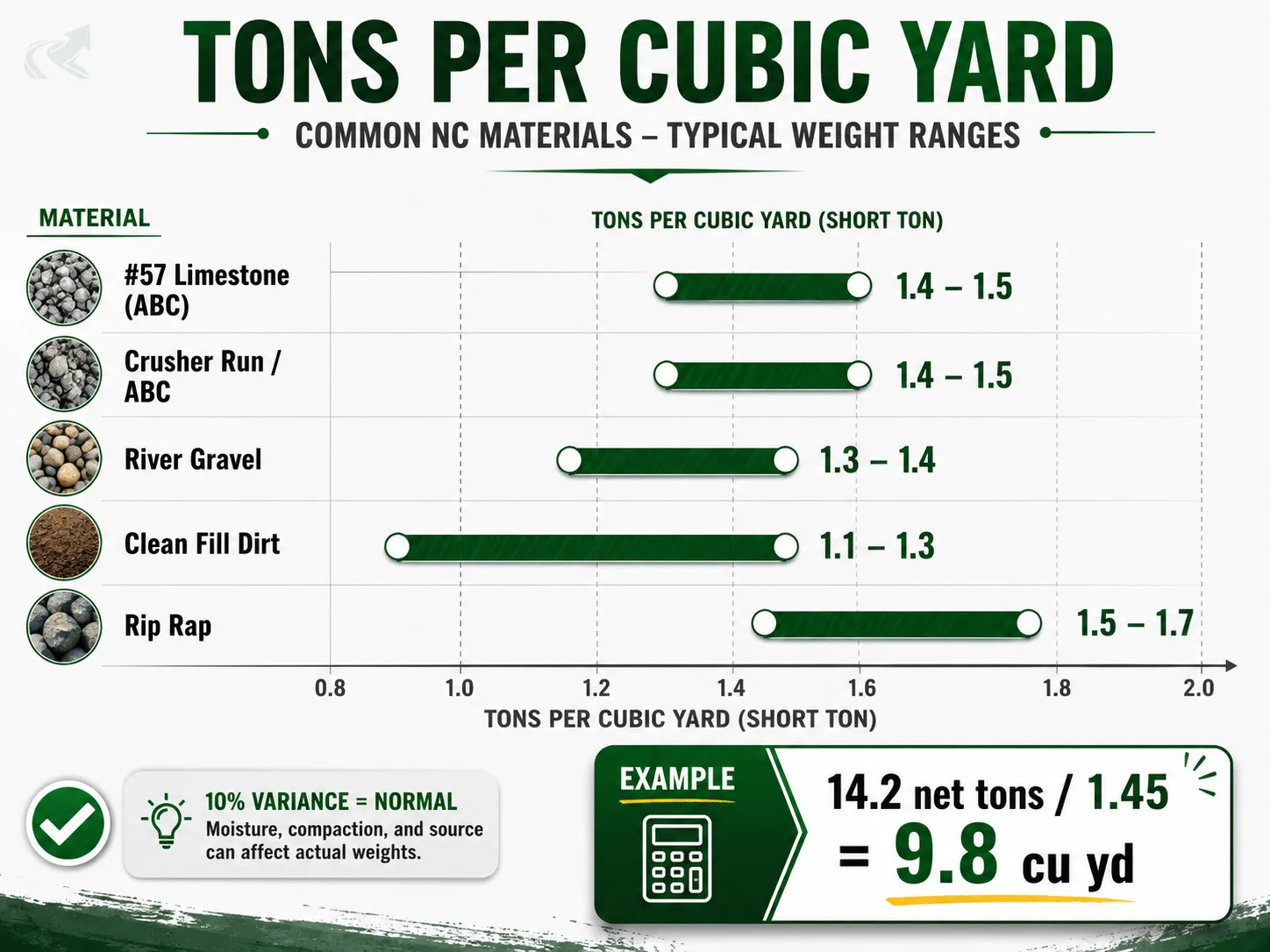
This cross-check requires one piece of data: the density of the material. Common reference points for North Carolina:
| Material | Approx. Tons per Cubic Yard |
|---|---|
| #57 Limestone (ABC) | 1.4 — 1.5 |
| Crusher Run / ABC | 1.4 — 1.5 |
| River Gravel | 1.3 — 1.4 |
| Clean Fill Dirt | 1.1 — 1.3 |
| Rip Rap (large stone) | 1.5 — 1.7 |
Example: Your ticket shows 14.2 net tons of ABC delivered. Divide by 1.45 (midpoint density). Result: approximately 9.8 cubic yards. If you ordered 10 yards, that is within the normal 10 to 15 percent variance window caused by moisture content and load settling.
If the calculated volume is more than 15 percent below the ordered quantity, that is worth escalating. For detailed density figures by material, see using weight-per-yard data to verify the delivery ticket.
You can also cross-check the delivered pile using pile math to cross-check the delivery ticket — measuring the pile dimensions gives a second independent estimate.
What to Do If the Numbers Do Not Check
If gross minus tare does not equal the net weight on the ticket, or if your volume cross-check shows a significant shortfall, follow these steps before the records age out.
Step 1: Request the scale certificate from the quarry. Contact your contractor and ask them to request the original scale certificate from the quarry. The certificate is the authoritative source — it is the actual printout from the inspected instrument. The delivery ticket is a copy derived from that certificate.
Step 2: Verify the tare weight is truck-specific. Tare weights should be recorded per vehicle. Ask the contractor to confirm the tare weight on your ticket matches the specific truck that made the delivery — not a fleet average or a different truck’s empty weight.
Step 3: Compare the certificate to the ticket. Set them side by side. The truck ID, gross weight, tare weight, and net weight should match exactly. If they do not match, the discrepancy is documented and the contractor has a factual basis to take it up with the quarry.
Step 4: Escalate if the records do not align. A verified shortfall — certificate weight less than ticket weight, or net weight materially less than ordered quantity outside normal variance — is a billing dispute. Document everything in writing before the quarry’s record retention window closes.
Most North Carolina quarries retain scale records for 30 to 90 days. Do not wait.
If you are not getting traction with the contractor, red flags when your gravel delivery ticket does not match covers what patterns to document and what comes next.
The Estimated-Load Problem
If your ticket shows only “est. 12 tons” or a similar estimated figure with no certified scale weights, you are not holding a verified delivery record — you are holding a good-faith guess.
This happens more often on small residential jobs where no scale is nearby, or when a driver is running a second load late in the day and skips the quarry weigh-in.
Your options in this situation:
- Accept the estimate if the relationship with the contractor is solid and the delivered pile volume cross-checks reasonably against what you ordered.
- Request a weigh ticket for any future loads. A contractor running regular deliveries from a quarry has access to certified weights — it is a matter of whether they are providing that documentation.
- Understand what “verified” means before you order. The gravel delivery verification and ticket reading NC hub covers the full picture of how tonnage, yardage, and verification connect.
For help finding a contractor who provides certified weight documentation, see hire a verified NC grading and hauling contractor.