
Two questions homeowners ask about NCDOT dump truck weight limits
What are NCDOT weight limits for dump trucks in NC?
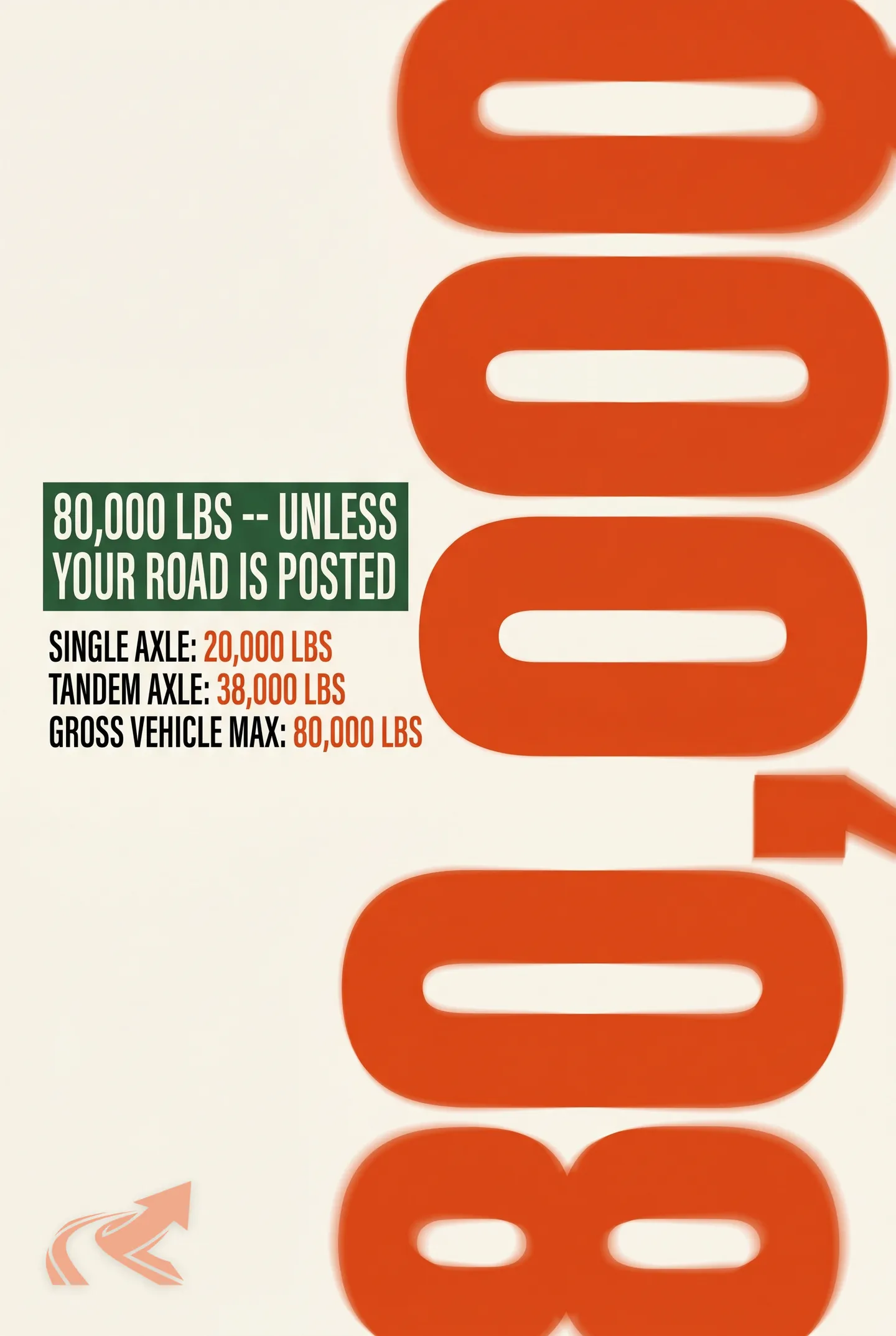
NC weight limits are set by axle configuration under GS 20-118. A single axle is capped at 20,000 lbs and a tandem-axle group at 38,000 lbs, with a maximum gross vehicle weight of 80,000 lbs. More axles mean more legal payload per load. Secondary roads often have lower posted limits -- check before scheduling delivery.
What does 'posted road restrictions' mean on a hauling quote?
A posted road has a weight limit sign -- typically 10, 15, or 20 tons gross -- that restricts what any truck can carry on that road. NCDOT maintains a statewide Posted Roads list of secondary roads that cannot carry heavy vehicles. If your road is posted, the truck makes more trips with smaller loads. That extra trip cost is real and legitimate.
Ray Pettiford farms rural Guilford County on a gravel secondary road. He got a quote to deliver fill dirt and the number was higher than a neighbor paid for the same job two miles away on a paved county road. The quote mentioned “posted road restrictions.” Ray wants to know if that line item is real — or padding.
It is real. North Carolina weight limits are not flat numbers. They vary by truck configuration, road class, and season. A delivery on a posted secondary road in February may legally require smaller loads than the same truck on a primary highway. That means more trips. More trips cost more.
The sections below explain how the weight limit system works and what it means for a delivery quote.
How NC Weight Limits Work
North Carolina sets weight limits by axle configuration under 20-118 — the more axles distributing the load, the more the truck can legally carry.
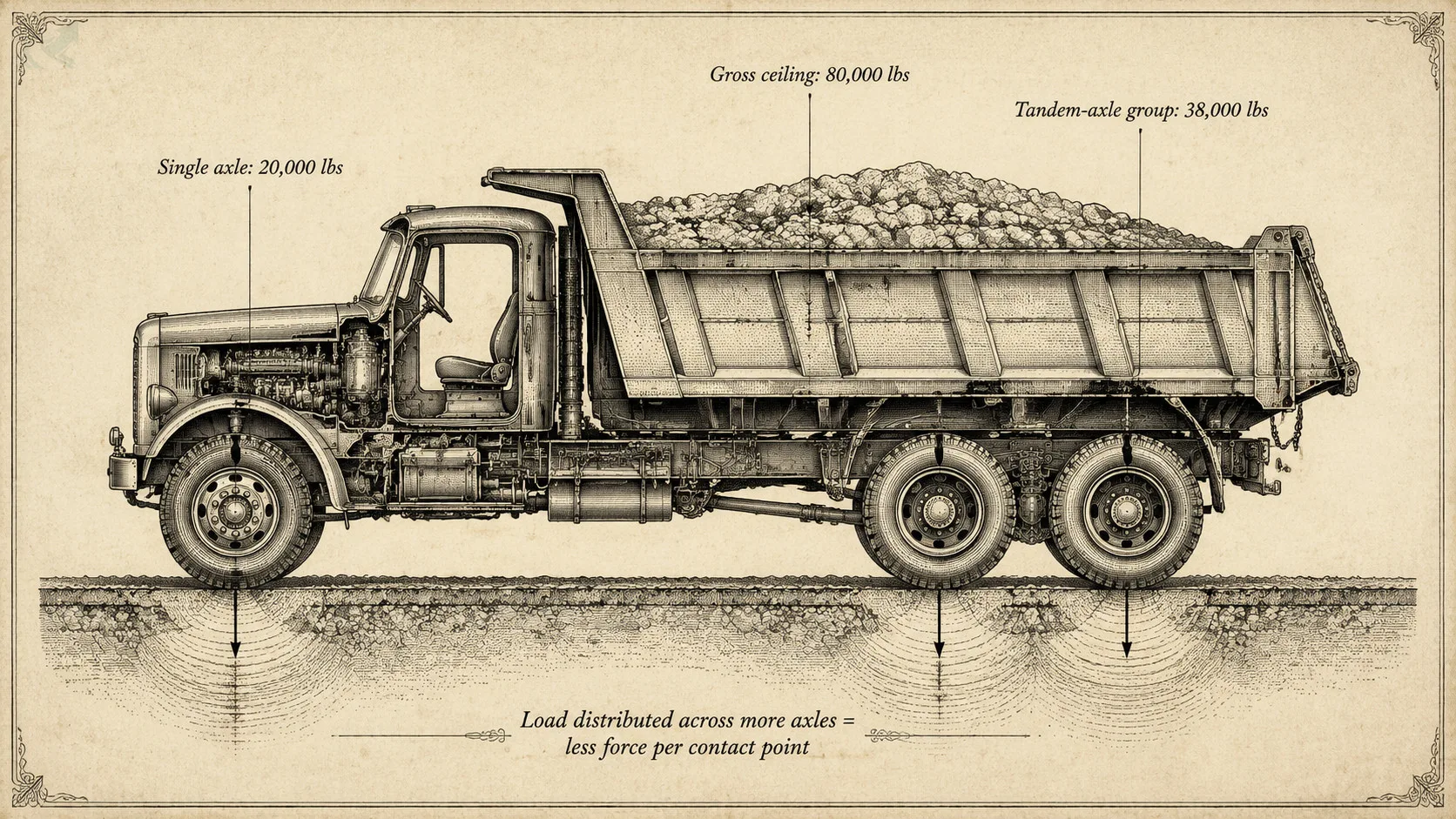
The core concept is axle loading. A road surface and any bridge along the route can only absorb so much force per square foot. Spreading a load across more axles — and more distance — reduces the force at any single point.
North Carolina also limits multi-axle configurations by axle spacing. The NC State Highway Patrol publishes axle-grouping weight charts that set allowable weight based on both the number of axles and the distance between them — the wider the spacing across more axles, the more weight a configuration may legally carry.
The practical result: a tandem-axle truck can haul legally more per load than a single-axle truck on the same road, even on a posted secondary route — because the load distributes differently.
For NCDOT weight limits in NC hauling regulations, this is the governing framework.
Truck Configuration and Payload
The truck’s axle count is the single biggest factor in how much it can deliver per trip — which directly determines how many trips your job requires.
Weight limit reference by configuration — axle and gross limits confirmed against GS 20-118; typical-payload figures are practical estimates (tare weight varies by truck and is not published by any official source):
NC Weight Limits by Truck Configuration
Comparison. Lighter Configurations: Single-axle: 20,000 lbs per axle -- ~5-6 tons payload; Tandem-axle: 38,000 lbs per axle group -- ~14-16 tons payload; Higher trips-per-job on posted secondary roads; Lower per-trip cost; more trips to complete same volume. Heavier Configurations: Tri-axle: governed by NCSHP axle-spacing chart -- ~18-20 tons payload; Tractor-trailer (transfer): 80,000 lbs gross -- ~22-25 tons payload; Fewer trips per job; may not fit on 10-ton posted roads; All configurations subject to the 80,000 lb gross ceiling under GS 20-118.
- Single-axle: 20,000 lbs per axle -- ~5-6 tons payload
- Tandem-axle: 38,000 lbs per axle group -- ~14-16 tons payload
- Higher trips-per-job on posted secondary roads
- Lower per-trip cost; more trips to complete same volume
- Tri-axle: governed by NCSHP axle-spacing chart -- ~18-20 tons payload
- Tractor-trailer (transfer): 80,000 lbs gross -- ~22-25 tons payload
- Fewer trips per job; may not fit on 10-ton posted roads
- All configurations subject to the 80,000 lb gross ceiling under GS 20-118
Payload estimates are practical ranges -- individual tare weight varies by truck. All configurations must satisfy both per-axle limits and the 80,000 lb gross cap simultaneously.
| Configuration | NC weight limit (per axle or group) | Typical legal payload (estimate) |
|---|---|---|
| Single-axle | 20,000 lbs per axle | ~5-6 tons per load |
| Tandem-axle | 38,000 lbs per axle group | ~14-16 tons per load |
| Tri-axle | Varies — axle-spacing chart governs | ~18-20 tons per load |
| Tractor-trailer (transfer) | 80,000 lbs gross | ~22-25 tons per load |
Gross vehicle weight — the truck plus the load — is capped at 80,000 lbs under GS 20-118, separate from the per-axle limits. A loaded vehicle must stay within the single-axle limit, the tandem-axle limit, and the 80,000 lb gross ceiling at the same time.
The configuration matters when your road has a posted limit. A 10-ton posted road effectively cuts each truck to 10 tons gross regardless of what the axle rating would otherwise allow.
When comparing quotes, ask which truck configuration is being used. See how NCDOT weight limits relate to gravel load size for how configuration affects yards-per-load calculations.
Posted Road Limits — Secondary Roads
A posted road carries a sign setting a gross weight ceiling — typically 10, 15, or 20 tons — that applies to every vehicle on that road regardless of axle configuration.
numbered routes are state-maintained roads that connect rural properties to the primary highway network. Many North Carolina secondary roads — especially unpaved or lightly surfaced rural routes — carry posted weight limits lower than what the truck’s axle rating would otherwise allow.
“Posted 10-ton” means no vehicle may operate on that road at a gross weight over 10 tons (20,000 lbs). A tandem-axle truck capable of hauling 15 tons on a primary highway must reduce its load to 10 tons on that road — or stay off it.
How to check whether your road is posted:
- Posted Roads list — NCDOT maintains a statewide record of secondary roads posted because they cannot carry heavy vehicles. Your NCDOT District office can confirm whether a specific SR route is on it.
- Your NCDOT Division office — NC has 14 highway divisions; the Division for your county can confirm posted limits for specific SR routes. Guilford County falls in Division 7.
- NCDOT county highway office — for county-maintained roads that carry posted limits, the local NCDOT District office holds the records.
A contractor who cites a posted road limit in a quote should be able to tell you which road is posted and what the limit is. If they cannot name the road and the limit, ask for that specifically before signing.
See the NCDOT weight limit reference for NC hauling for source links by county.
Weak Secondary Roads and Light-Traffic Designations
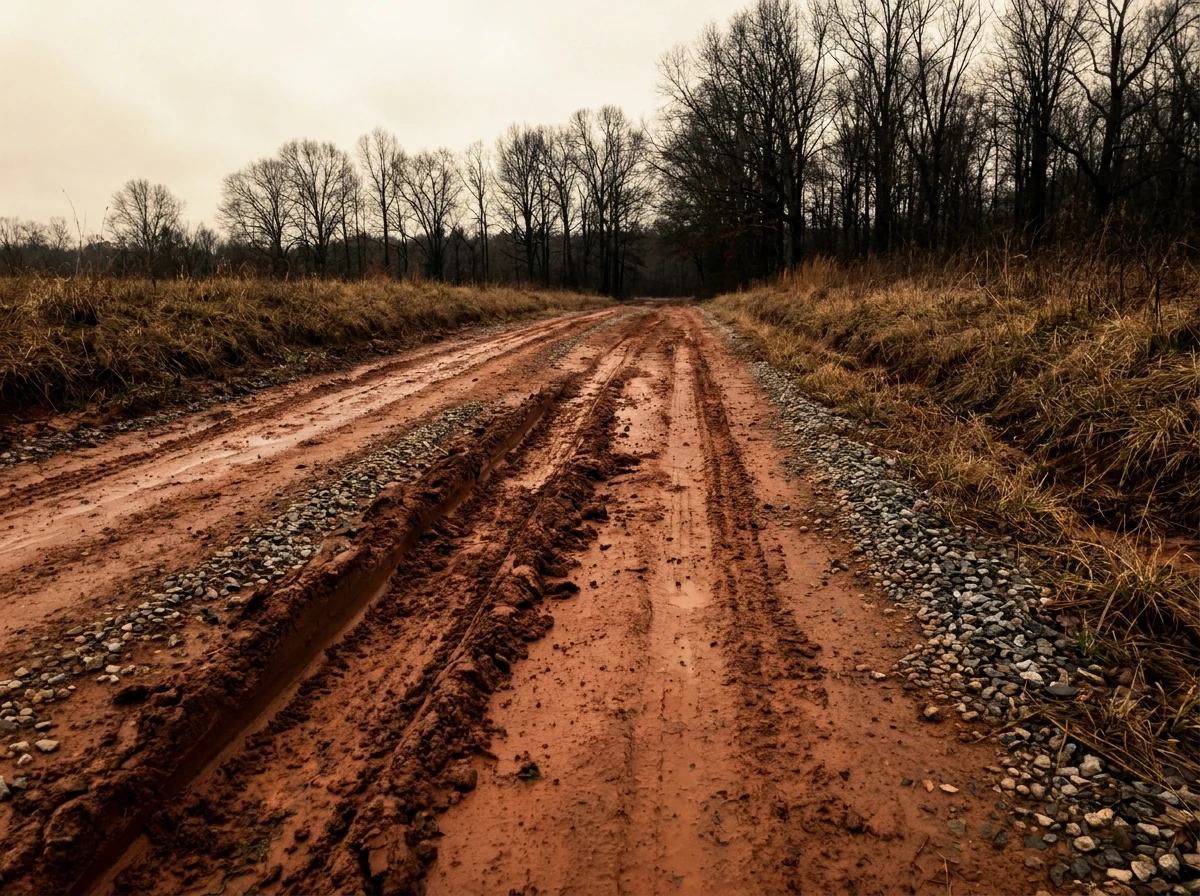
North Carolina does not run a statewide seasonal “frost law” program, but NCDOT can post or restrict secondary roads that are inadequate to carry heavy loads — and unpaved routes are the most likely to be affected.
During winter and early spring, freeze-thaw cycles weaken the aggregate base under unpaved roads. A truck that would be fine on the same road in July can cause rut damage in February. North Carolina does not impose a fixed statewide spring-thaw weight restriction the way some northern states do. Instead, under GS 20-118.2, NCDOT may designate inadequate routes as light-traffic roads and set axle-weight limits on them below the statutory maximum, and it posts secondary roads that cannot carry heavy vehicles.
What this means for a delivery quote:
- A quote should account for whether your specific road is posted or light-traffic-designated at the time of delivery.
- Some contractors schedule deliveries to avoid peak thaw periods when soft, unpaved roads are most vulnerable. Others account for the extra trips required under restricted loads.
- For WNC mountain region and seasonal weight restrictions, higher-elevation routes typically see more extended freeze-thaw impact than Piedmont routes like Guilford County.
Ask your contractor whether your road is posted or restricted before scheduling. That question takes 30 seconds and can explain a significant difference in trip count — and price.
Overweight Permits — When and How
An overweight permit allows a specific truck, on a specific route, to exceed the standard posted weight limit — and is sometimes cheaper than the cost of extra trips at reduced loads.
issues oversize/overweight permits through its Oversize/Overweight Permit Unit. The permit authorizes a single trip or a period of trips at specified gross weights above the standard limit.
Key permit facts:
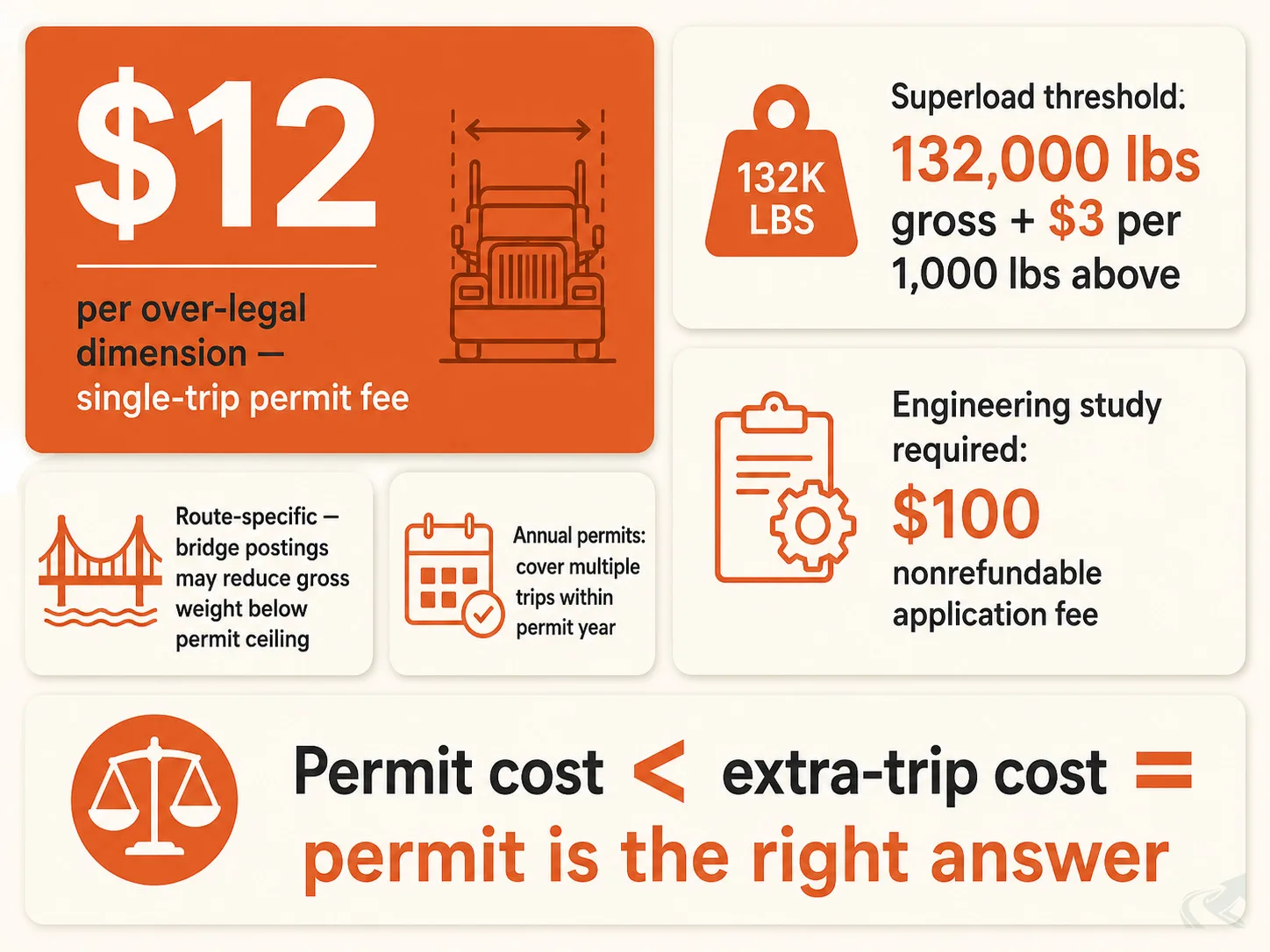
- Single-trip permit: covers one loaded movement on a specified route. NCDOT charges $12.00 for each dimension over the lawful limit (height, length, width, or weight). Loads exceeding 132,000 lbs gross (Superload tier) carry an additional $3.00 per 1,000 lbs above that threshold and require a separate Superload permit application.
- Annual permits: NCDOT also issues longer-term permits covering multiple trips within a permit year, subject to route and weight restrictions.
- Route restrictions: permits are route-specific. Bridge postings along the approved route may restrict gross weight below the permit ceiling. NCDOT specifies any bridge restrictions in the permit language.
- Not all roads are eligible: posted roads with structural concerns may not be eligible for overweight permits, and applications that require an engineering study for pavement or structures carry a separate $100.00 nonrefundable application fee.
When the math works in favor of a permit: if the extra cost of a permit is less than the extra trip cost from restricted loads, the permit is the right answer. A contractor who knows this will raise it in the quote — not after the work starts.
How This Affects Your Delivery Quote
A quote that references posted road restrictions is accounting for real math — fewer tons per trip means more trips for the same job, and the cost difference compounds with distance.
Ray Pettiford’s situation in rural Guilford County is exactly where this matters most. A 10-ton posted secondary road with a 3-mile haul from the material source means more trips than the same job on an unrestricted county road. That difference belongs in the quote as a named line item — not buried in a lump labor number.
What to ask your contractor before accepting a quote:
- Which truck configuration are you using for this job?
- Is the delivery road posted? If so, what is the posted limit?
- Are spring weight restrictions currently in effect on that road?
- Is an overweight permit an option, and is the permit cost lower than the extra-trip cost?
Ask your contractor — posted road delivery
”For delivery on my road: (1) Is this an SR-designated secondary road with a posted weight limit? (2) If yes — what configuration truck fits within that posted limit? (3) Is an overweight permit needed, and is the permit cost lower than additional trips? (4) Are spring weight restrictions currently in effect?”
Get an itemized quote that names the road type, the truck configuration, and the posted limit — if any. If the quote has a single lump number and references “posted road” without explanation, that is the question to ask before signing.
Find a verified NC hauling operator who works secondary road deliveries. When you call, ask specifically which configuration truck they are sending and whether they have checked the posted limit on your road. A contractor who knows the answer before you ask is the one who has done this before.
For regional context on NC Coastal Plain hauling weight limit variations, road surface conditions differ from Piedmont secondary roads — the governing weight limit structure is the same, but seasonal and road-base factors vary by region.