
A contractor gives you a quote and says something like “we heel the high spots first, then float the bucket on the finish pass.” You nod. You have no idea what that means.
These are two operator-voice terms that show up in finish-grade conversations. This page defines both and gives you one question to ask that tells you whether the operator actually uses them — or just knows the words.
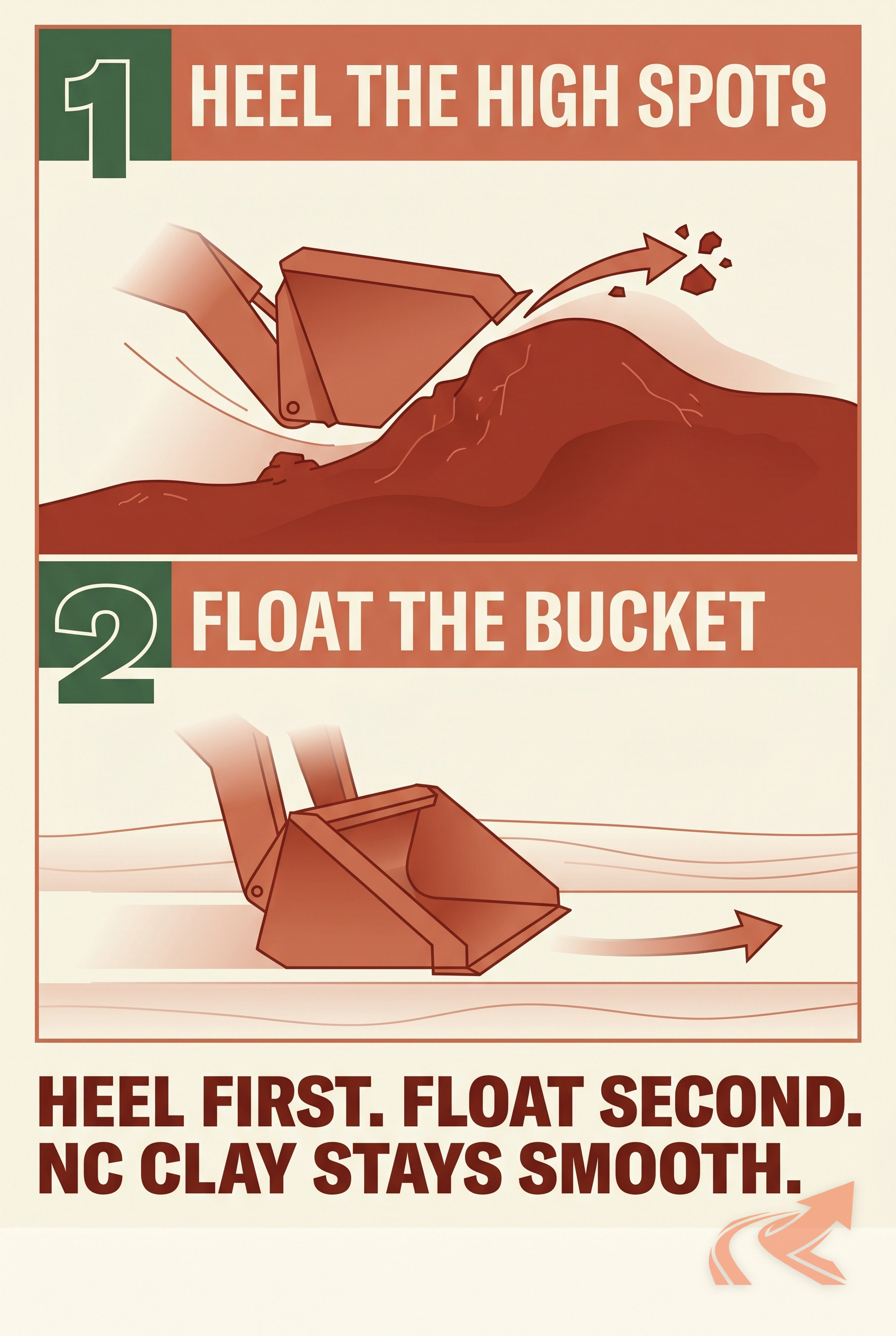
Float the Bucket — Definition
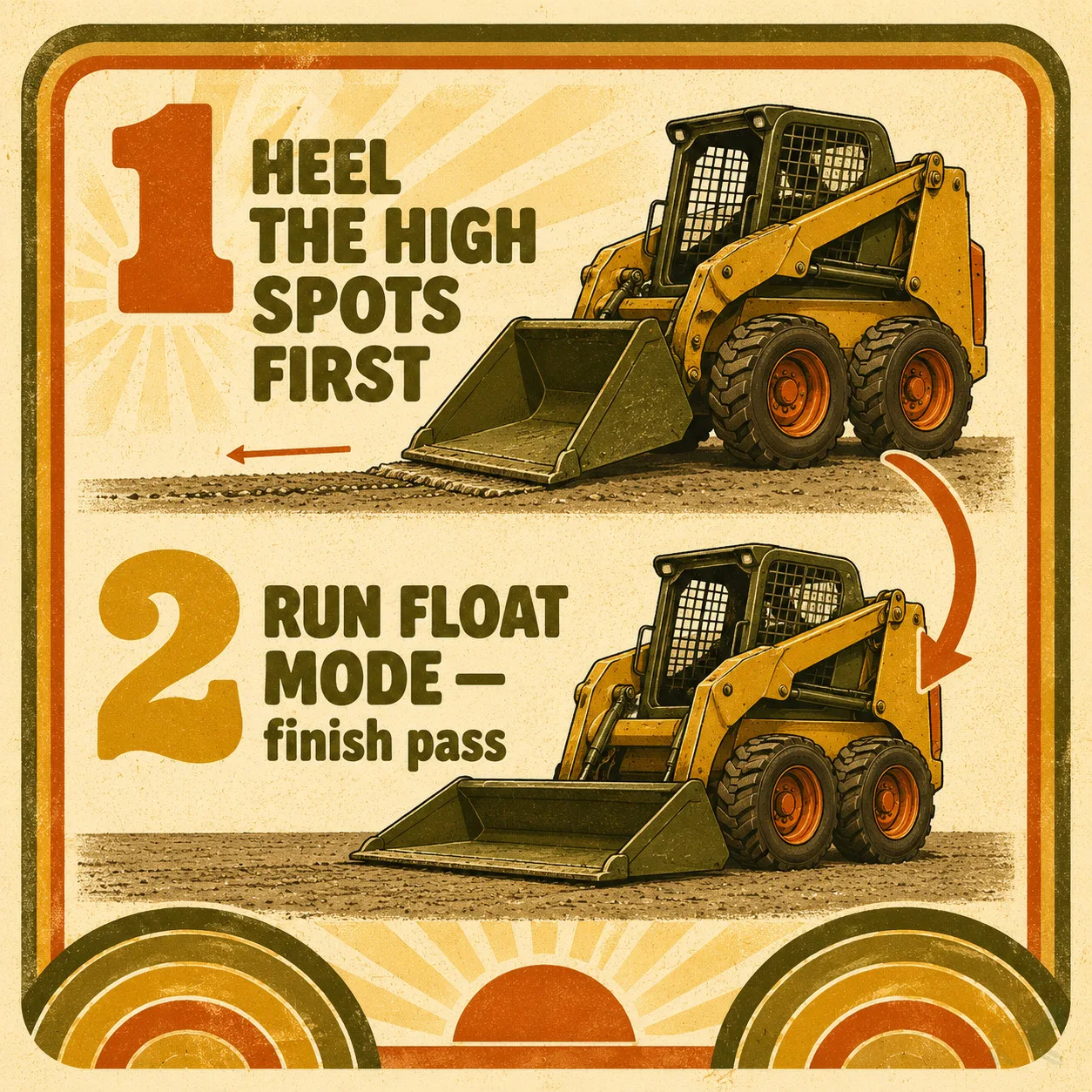
Float mode disengages the bucket’s hydraulic hold so it rides the ground rather than fighting it. The result is a more consistent finish grade in North Carolina clay.
On a standard skid steer, the lift arms are under constant hydraulic pressure. The operator controls bucket height manually. In float mode, that pressure releases — the bucket drops to the surface and follows it passively as the machine moves forward.
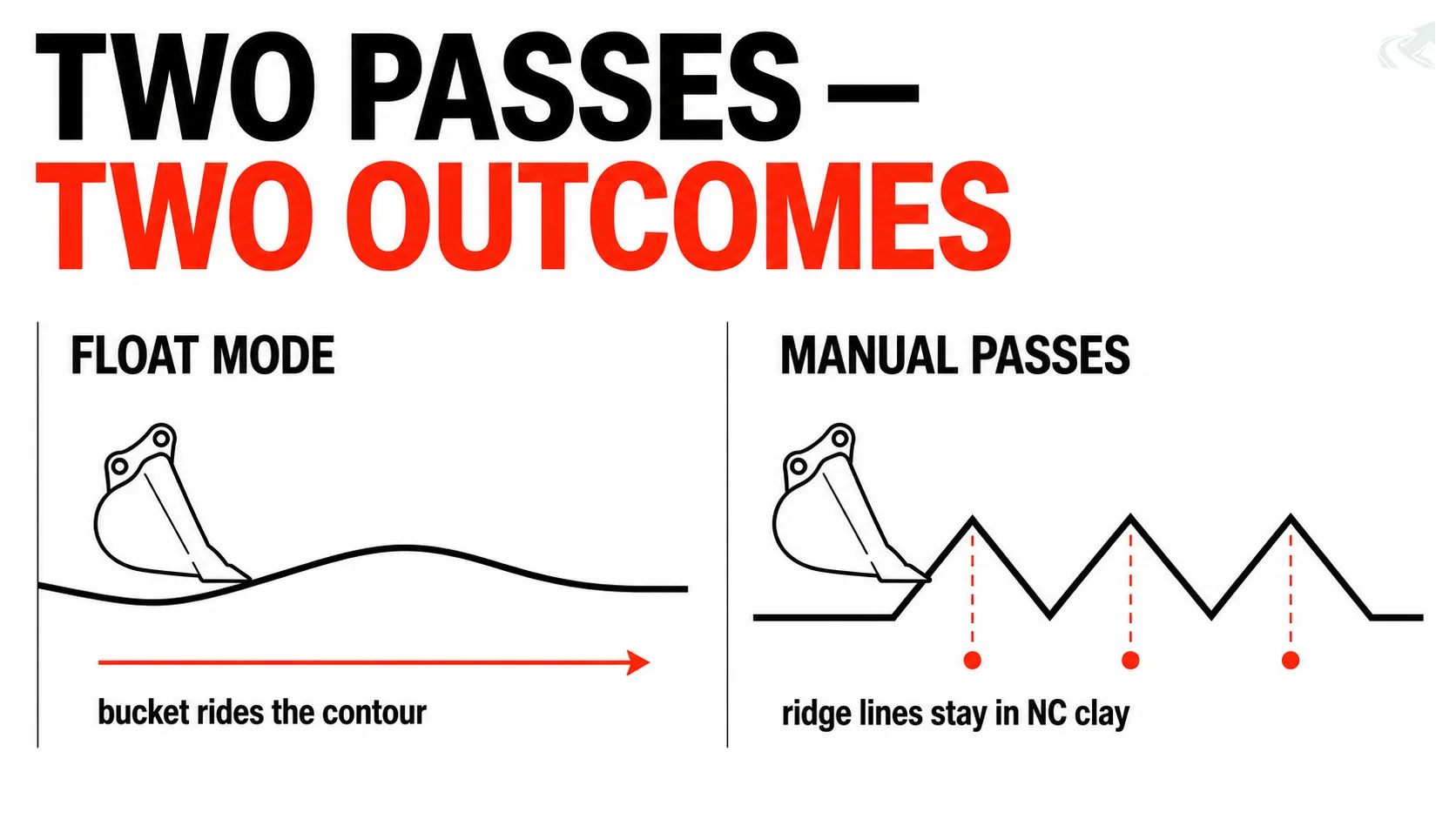
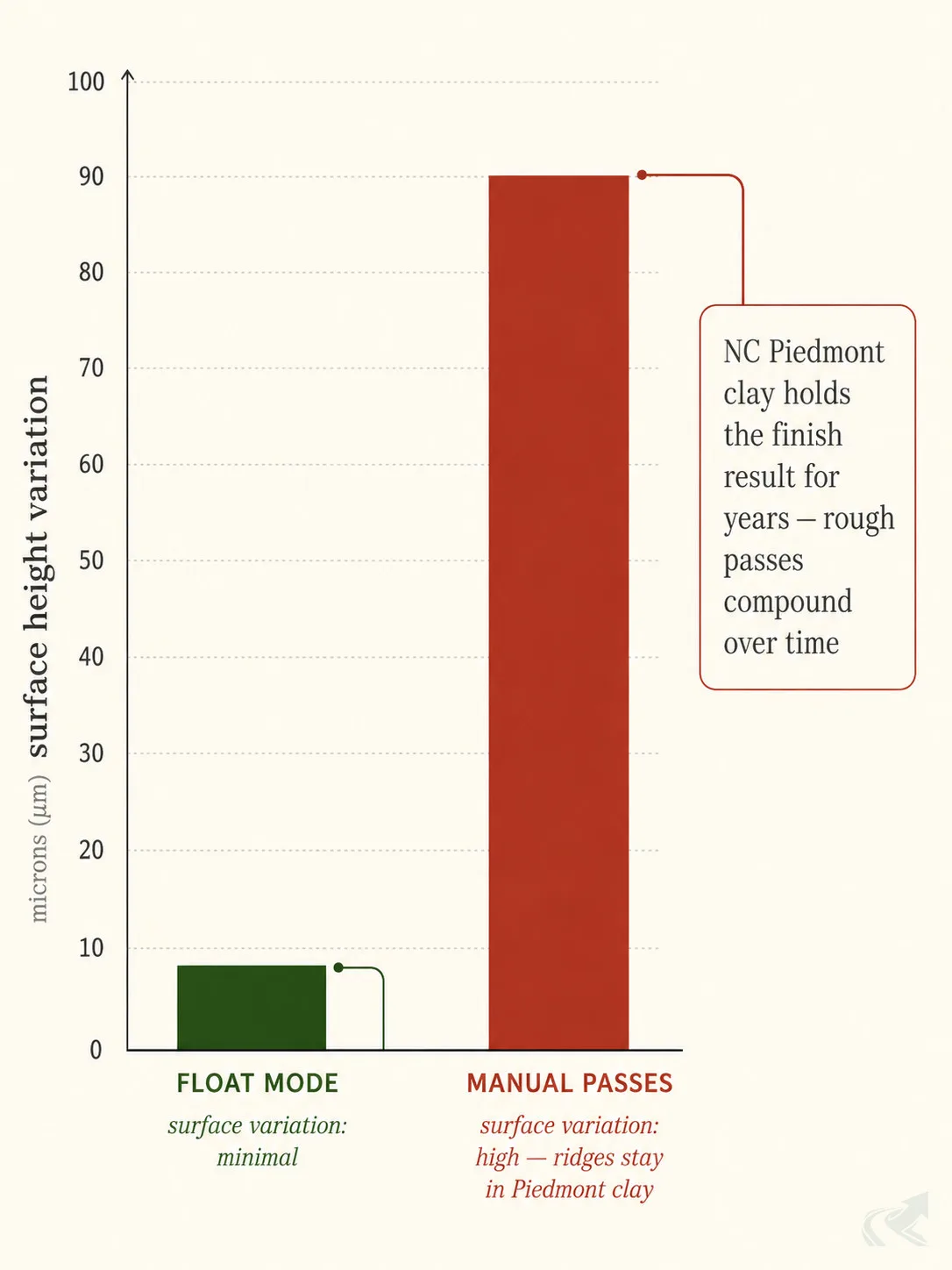
In NC Piedmont clay, this matters. Clay does not self-level after a grading pass the way sandy soil does. A skid steer making multiple rough passes in manual mode leaves bucket ridges and compressed striping in the surface. Those ridges stay.
Float mode smooths them out. The bucket travels the surface contour instead of dragging a fixed-height edge across it. The finish grade holds its shape because the tool conformed to what was already there.
For the full technique walkthrough — including how float mode prevents the ridge pattern that most North Carolina homeowners notice after a job — see float-the-bucket technique in practice.
Heel Grading — Definition
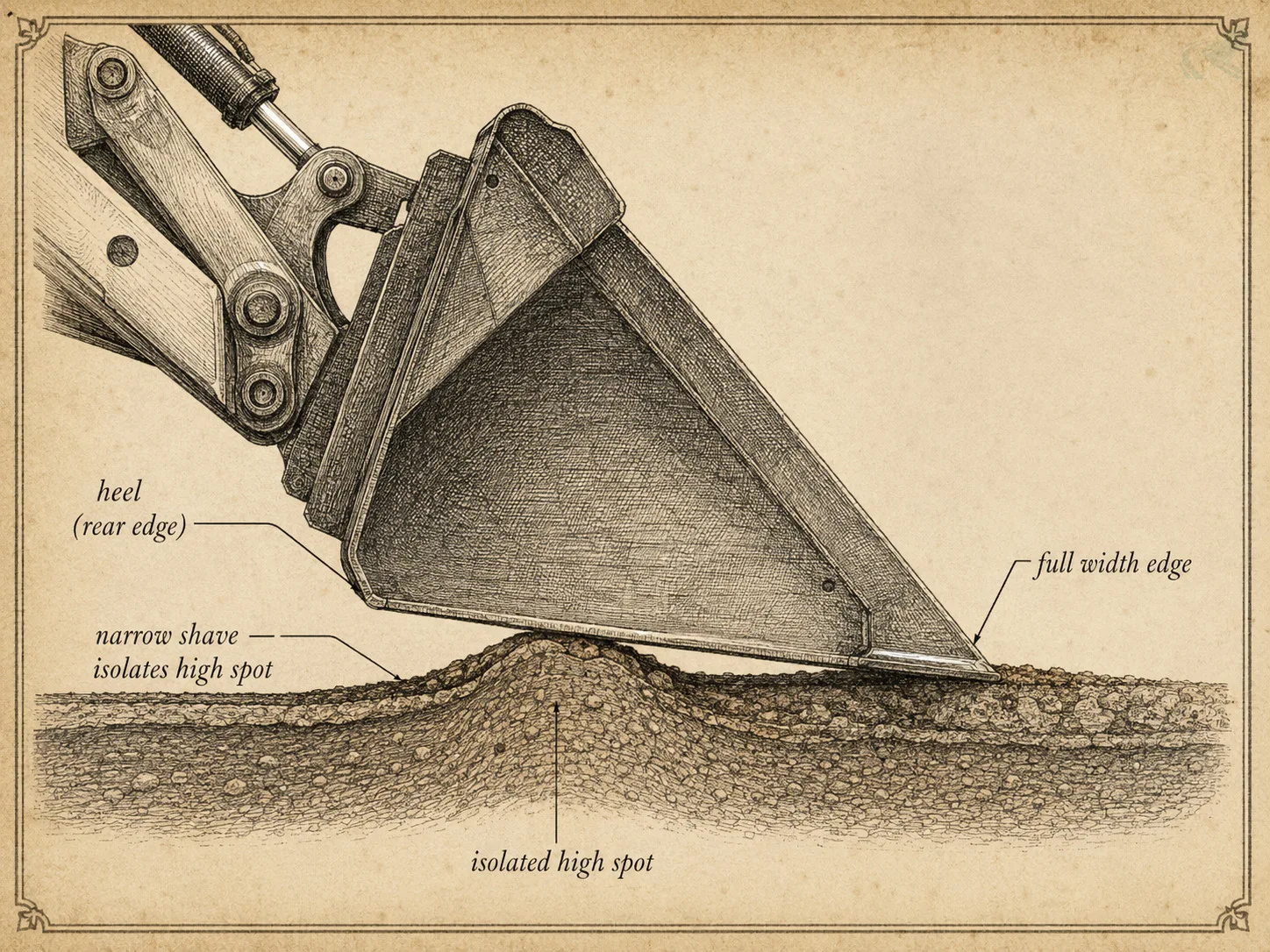
Heel grading uses the rear corner of the skid steer bucket to shave a narrow strip of material from a specific high spot — precision work that comes before the float finish pass.
The “heel” is the lower rear edge of the bucket. When an operator tips the bucket back and advances slowly, that corner acts as a point tool. It cuts a narrow strip instead of the full bucket width.
This is how an experienced operator handles isolated high spots — a knob of clay left by a rough-grade pass, a root crown that sat just above finish grade, a compacted hump near a drainage swale. Float mode cannot eliminate a true high spot on its own. It follows the surface. If the surface has a bump, the bucket follows the bump.
Heel grading removes the bump first. Float mode then finishes the surrounding area.
For the full technique applied to North Carolina clay sites, see heel grading technique defined and applied.
Why These Terms Matter for Vetting
A verified NC grading contractor who uses float and heel technique produces a better NC clay finish than one who just makes multiple rough passes — and you can tell the difference by asking one question.
North Carolina Piedmont clay holds the result of grading technique for a long time. Sandy soil tolerates a rough finish because rain and foot traffic redistribute the surface over a few seasons. Piedmont clay does not. A ridged or rough finish in NC clay stays that way for years — and every rain concentrates water in those ridges.
An operator who uses float and heel technique is speccing for finish quality that holds. One who runs multiple rough passes and calls it done is leaving ridge lines in your yard.
There is one question that separates them:
An operator who answers “yes to both, and I walk the site between rough grade and float to identify the high spots” is doing the work correctly.
An operator who says “we make multiple passes to smooth it out” without mentioning float mode or heel technique is describing a different approach — one that leaves more variation in a Piedmont clay finish.
For more on grading terminology used by NC operators, see the NC grading glossary hub.
To find a contractor who uses float and heel technique on finish-grade work, see hire a grading operator in North Carolina.