
Two questions people often ask
What is heel grading?
Heel grading uses the rear outer corner of the skid steer bucket to shave a narrow strip of material from a high spot -- more precision than a full bucket pass, useful for removing isolated ridges or humps in NC clay before the float finish.
When is heel grading used vs. float-the-bucket?
Heel grading removes isolated high spots that a float pass alone can't address. Float-the-bucket produces an even overall finish across the whole surface. Both are used in the same finish-grade sequence -- heel grade first, float second.
After the rough grade, an experienced operator in North Carolina clay doesn’t immediately run a float finish across the whole surface. They walk the site first.
They’re looking for high spots — anywhere from a half-inch to an inch above target grade. A ridge left by the direction of the rough passes. An isolated mound where a root ball came out. A slight hump where fill wasn’t fully redistributed.
Those spots get addressed before the float finish, using a technique called heel grading. From the sideline it looks like the operator is running the bucket corner along the ground. That’s exactly what’s happening — and it’s deliberate.
This page explains what heel grading is, when it gets used, and what to ask a contractor to verify it was done. If you’ve already read float-the-bucket alongside heel grading NC, this is the companion technique for the same finish-grade sequence.
What Heel Grading Is
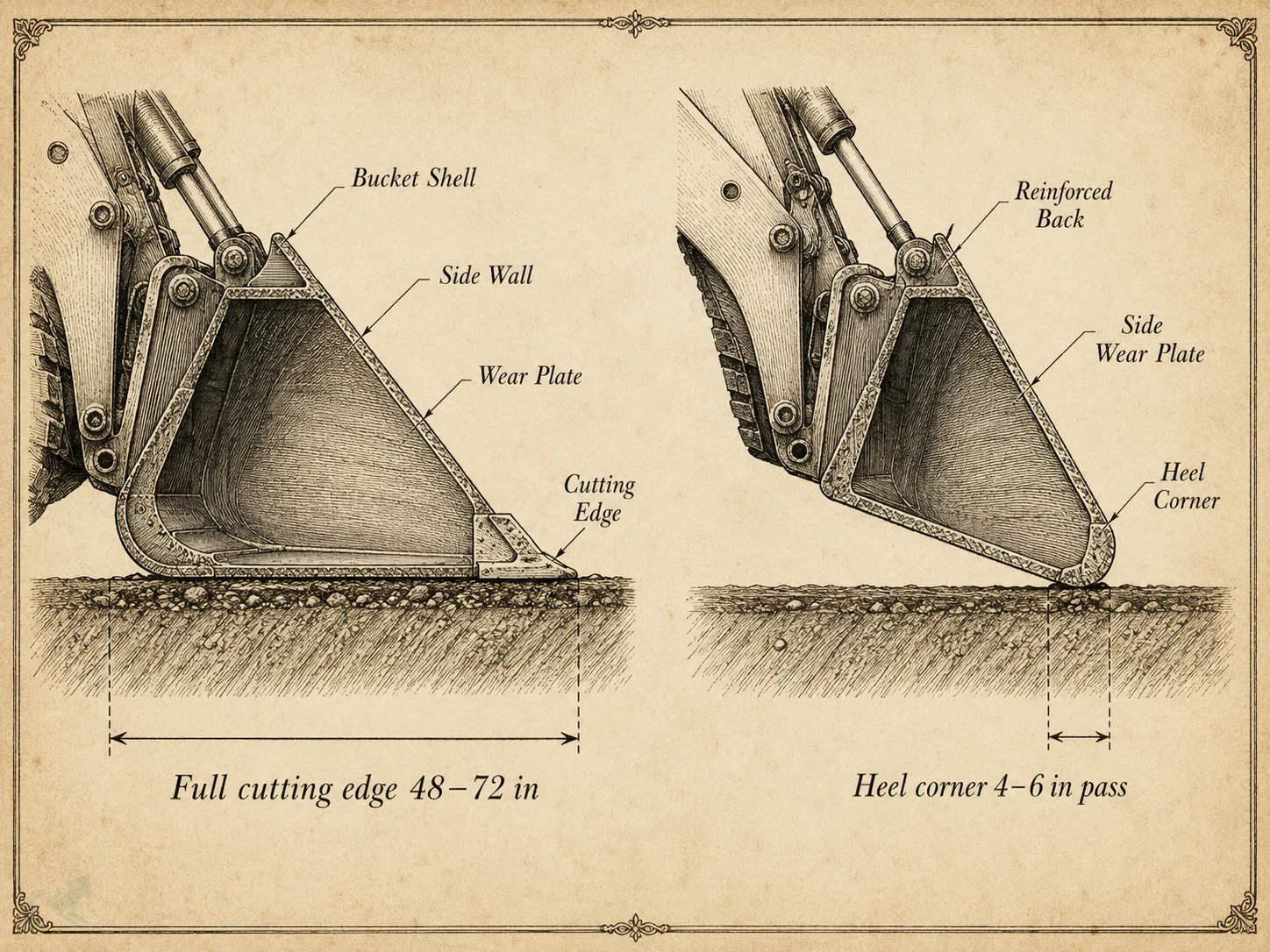
Heel grading uses the outside rear corner of the bucket to make a narrow shaving pass along a localized high spot — it’s precision work, not a whole-surface technique.
The geometry is the key. A skid steer bucket has a full cutting edge along the front — typically 48 to 72 inches wide. That full edge is what moves bulk material. The rear corners of the bucket are points, not edges.
When an operator tilts the bucket and engages just the rear corner with the ground, they control a 4-6 inch wide shaving pass. They’re removing material from a specific high line without disturbing the surrounding surface, which is already at correct grade.
That’s the distinction. A full bucket pass drags across the high spot and the correct-grade areas equally — it can’t isolate one from the other. The heel can.
In NC Piedmont clay, this matters more than in sandier soils. Clay holds its shape. A ridge from a grading pass doesn’t self-erode. It stays where it is until someone removes it deliberately, and a float finish run over it doesn’t flatten it — it rides over it.
Heel grading is the step that removes those isolated anomalies — one of several operator terms explained for NC homeowners — so the float finish has an even surface to work across.
When Heel Grading Is Used
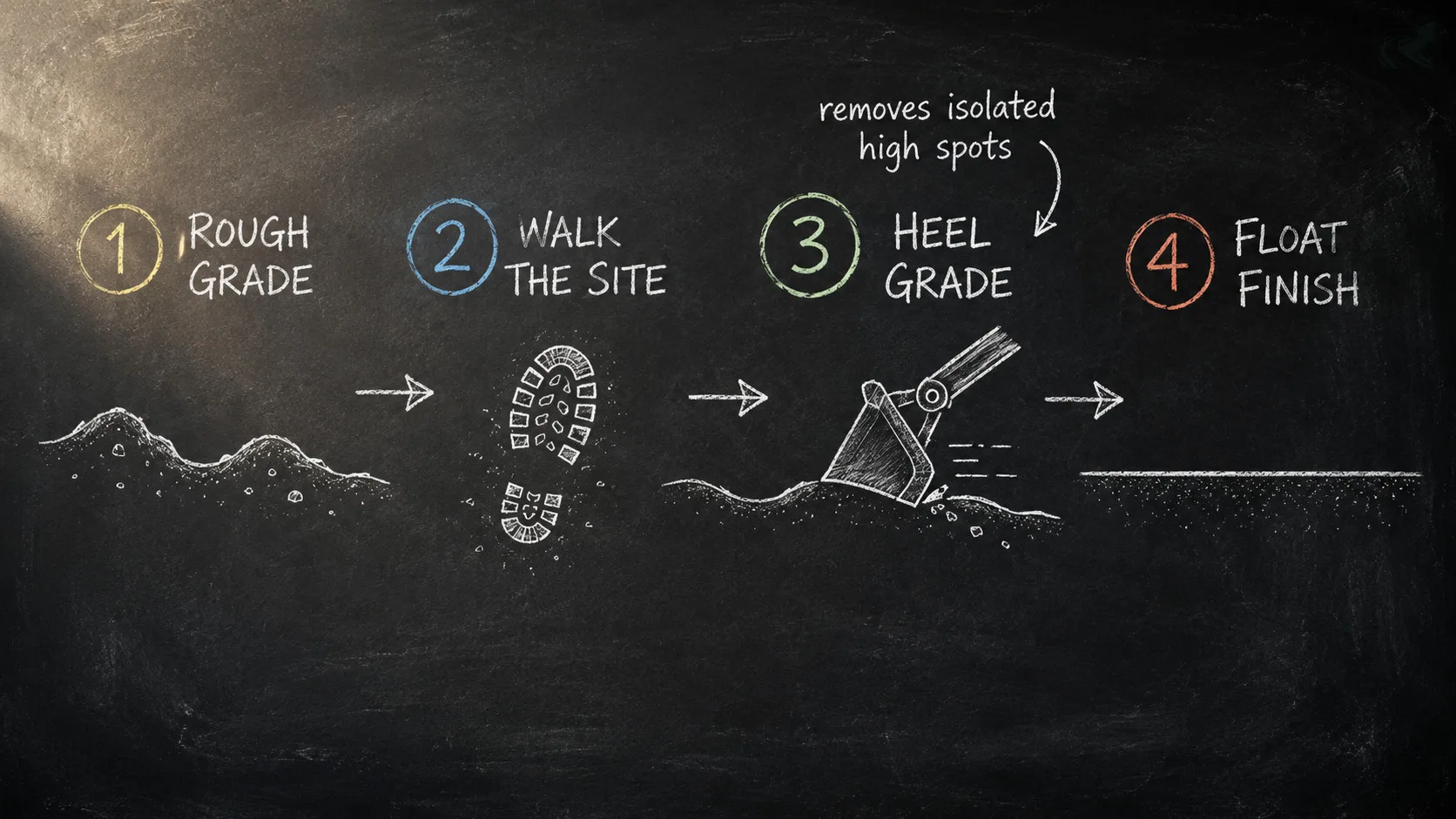
Heel grading is used after rough grade and before float finish — it targets specific anomalies the rough pass left behind.
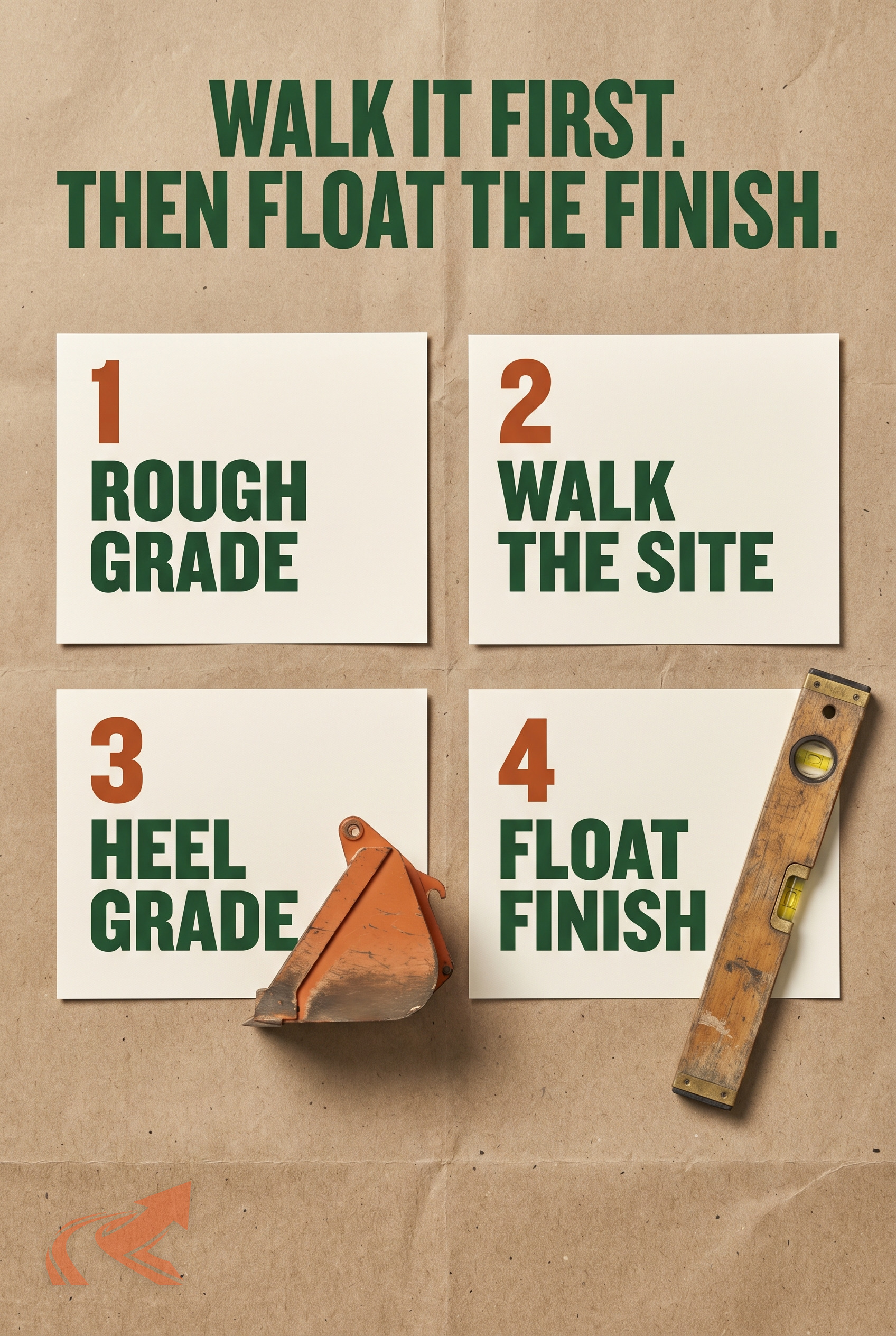
The sequence in a finish-grading job in North Carolina looks like this:
- Rough grade — bulk material cut and fill, approximate grade established
- Walk the site — operator identifies remaining high spots by eye, by level, or by walking the surface
- Heel grade — isolated high spots addressed with heel passes before float
- Float finish — float mode run across the whole surface for a consistent result
Three things typically trigger a heel pass:
- A ridge parallel to the rough-pass direction — the most common, left by the geometry of the initial cuts
- An isolated mound where material was deposited and not fully redistributed during rough grade
- A slight hump at a removal site — where a root ball or rock was pulled and the void wasn’t fully leveled
None of these are rare. On a typical NC residential grading job in clay soil, an experienced operator expects to walk the site and find three to six spots worth addressing before they float.
What This Looks Like in NC Clay
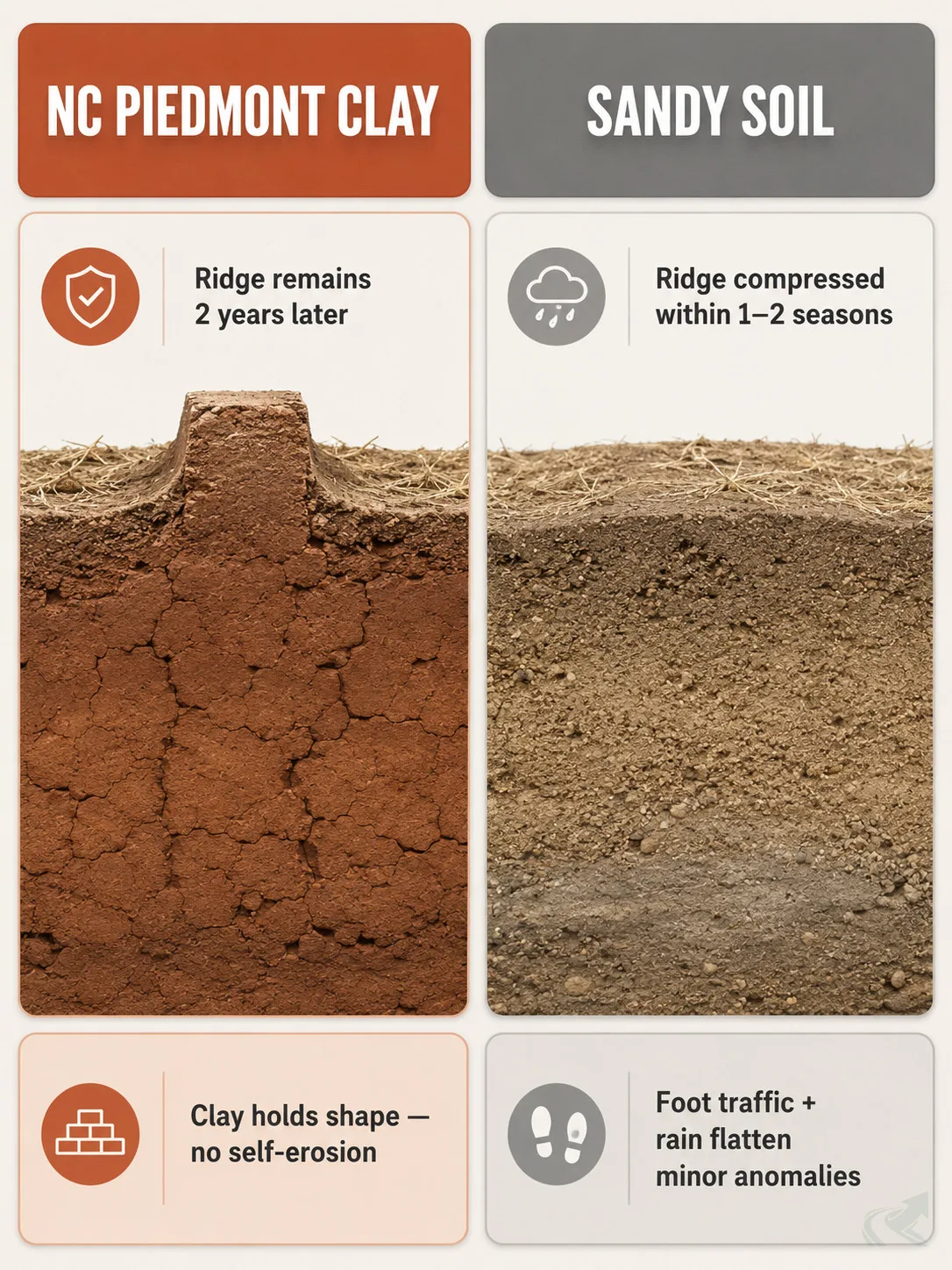
NC clay holds the high spot shape better than sandy soil — heel grading is more necessary here because clay won’t self-erode the high spots flat.
In loamy or sandy soils, a half-inch high spot from a grading pass may compress and settle within a season or two. Foot traffic, rain, and minor vehicle loads flatten minor anomalies over time.
That’s not what happens in Piedmont clay. A half-inch ridge from a grading pass is still exactly that ridge two years later. It’s collecting water on one side and shedding it away from where it should go on the other. The crown profile the contractor built erodes unevenly because the high spot is redirecting surface flow. This matters whether the surface is a residential yard or a gravel lane — what driveway crown means in NC grading applies equally to both.
This makes the pre-float heel pass more important in North Carolina than in lower-clay soil environments. It’s not extra work — it’s the step that makes the float finish actually hold over time. Skipped heel passes are among the leading causes homeowners end up looking for NC yard drainage solutions by slope condition a season after a grade job they thought was done.
How to Recognize Whether a Contractor Used Heel Technique
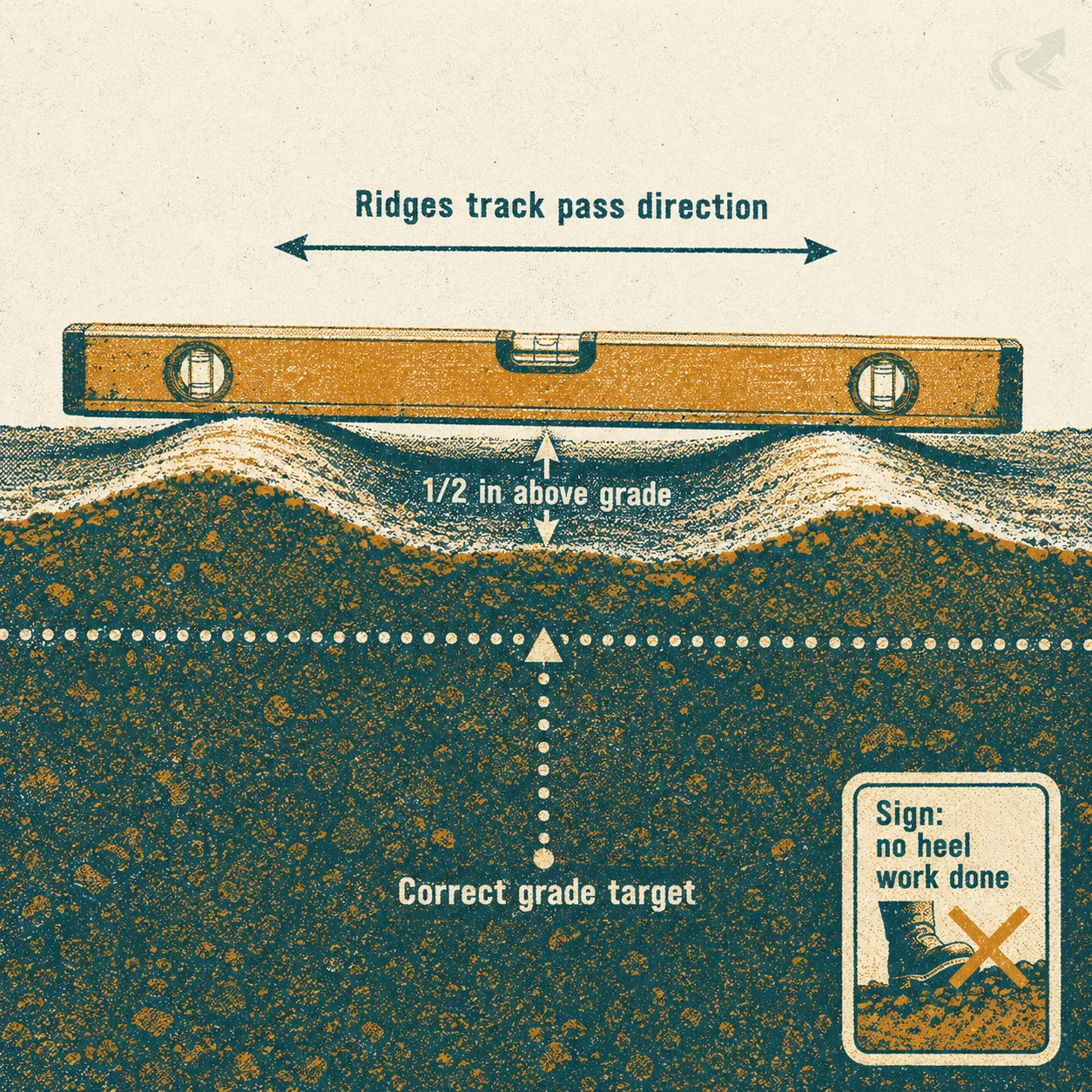
Walk the finished surface with a 4-foot level after the grader is done. Any isolated ridge higher than 1/2 inch that runs parallel to the pass direction is a sign heel work was skipped.
The ridges are visible if you know what to look for. They track in the same direction as the rough-grade passes. They’re not random. A contractor who heel graded the surface before floating it will have removed them. One who skipped straight to float will have smoothed around them.
Before the job starts, one question distinguishes operators who know the sequence from those who don’t:
An operator who says “yeah, we walk it first and shave the high spots before we float” is describing the correct sequence. An operator who says “we just go over it a couple times and it comes out flat” is floating over high spots that will be visible in the finished surface within a year.
The question also reveals something about how the operator thinks about the work. Walking the site before the float pass takes 10 minutes. Skipping it saves 10 minutes during the job and costs the homeowner six months of drainage trouble after.
How Heel Grading Pairs With Float-the-Bucket
Heel grading and float-the-bucket are complementary — heel removes isolated anomalies; float evens the whole surface. Neither alone produces the best NC clay finish.
Think of them as two different problems:
- Heel grading removes point defects — localized ridges and humps that are above grade in specific spots
- Float-the-bucket evens the plane — smoothing the whole surface to a consistent slope
Running float first leaves the high spots in place under a smoother-looking surface. Running only heel passes without the float finish leaves the surface uneven between the shaved spots.
In North Carolina clay, both steps are typically needed for finish work that holds slope over time. The order matters: heel grade the anomalies, then float the whole surface. See float-the-bucket and heel-grading glossary for the terminology breakdown on both techniques.
For the visual context on what the failure mode looks like — a ridge parallel to the pass direction that the float pass rode over — see the finish-grade comparison diagram at the floating-the-bucket page. That diagram applies to both techniques.
If you’re planning a grading project and want to verify a contractor actually uses this sequence, hire a grading operator in North Carolina who can walk you through their finish-grade process before the job starts.