Two things Charlotte homeowners ask first
Why does my Charlotte yard hold water when my neighbour's doesn't?
Usually because of how the lot was graded, not what the soil is. Both of you have the same Piedmont red clay. The difference is the finish grade — the last few inches of shaping done before sod went down. On a production build that grade is set to pass inspection, which is a lower bar than 'drains well in a real storm.' Diagnose the grade before you buy a drainage system.
Do I need a permit to fix drainage in Mecklenburg County?
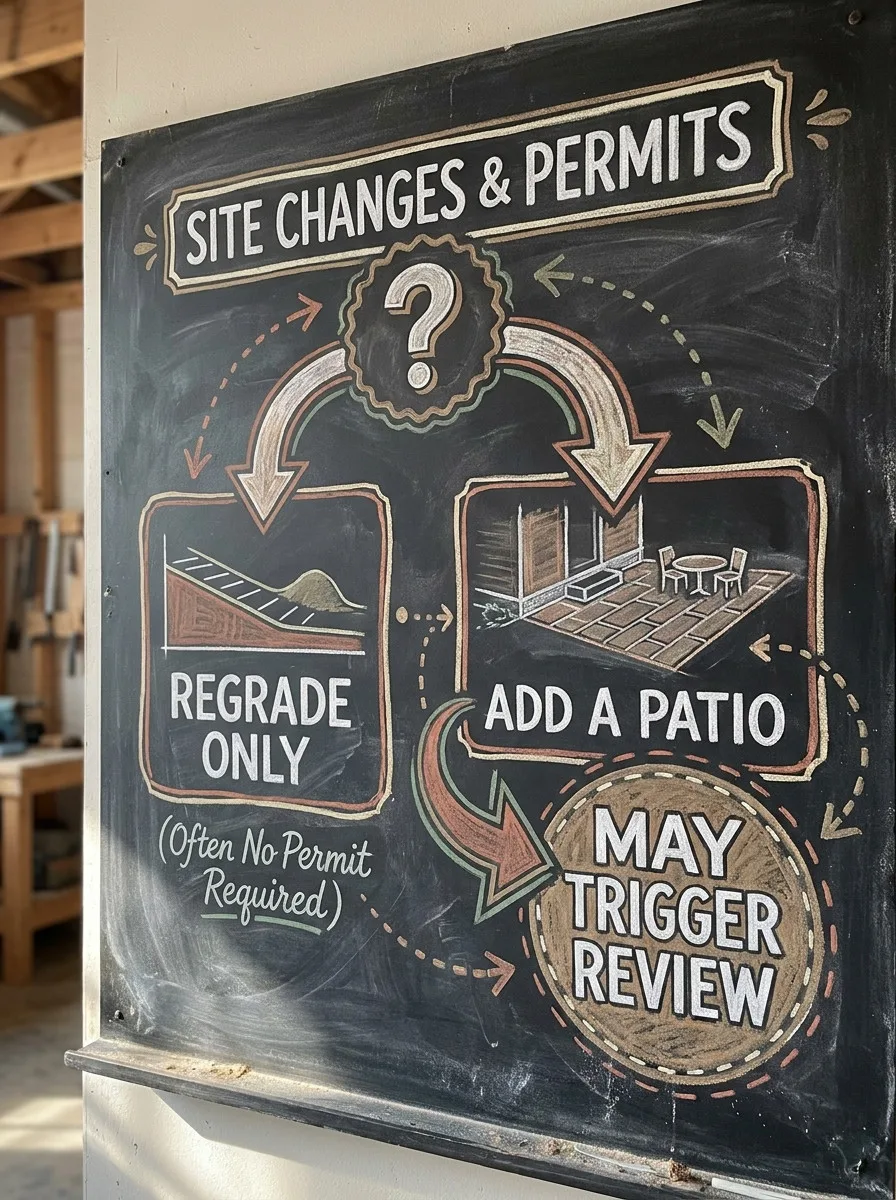
Possibly — and for a reason that catches people out. Mecklenburg's stormwater review triggers at 12,000 square feet of disturbance OR at any new built-upon area at all. Built-upon means hard surface: roof, driveway, patio, walkway. So the patio or concrete swale you add to solve ponding can itself trigger review, even though the regrade alone wouldn't.
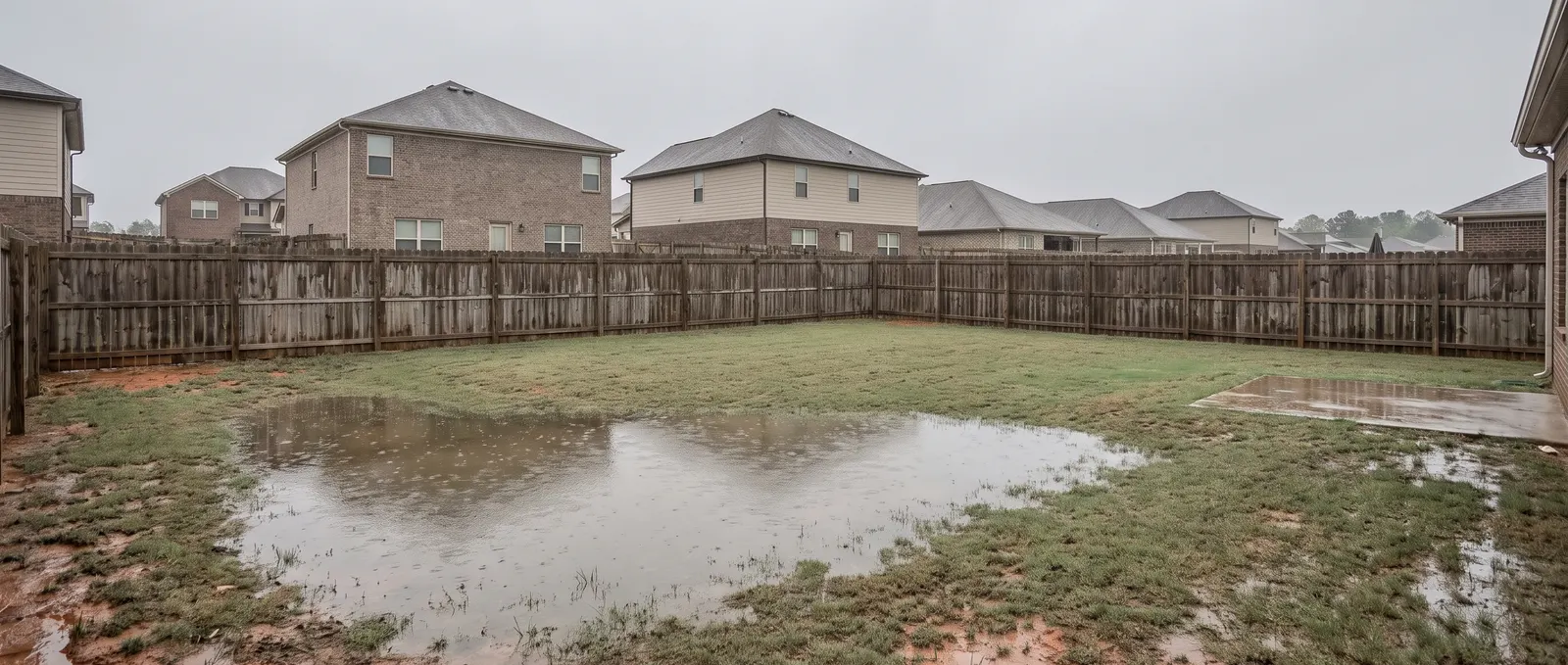
Standing water in a Charlotte back yard almost never means what homeowners assume it means.
The assumption is soil: this clay won’t drain. The clay is real — it’s the same Piedmont red clay under Raleigh and Greensboro — but it’s under your whole neighbourhood, and your neighbour’s yard drains. Soil is the constant. Something else is the variable.
That something is usually the finish grade, and it was set by whoever built the house.
This page is about diagnosis: the three things that actually cause ponding on a Charlotte lot, how to tell which one you have before you spend money, and the Mecklenburg rule that can turn a drainage fix into a permitted project.
For the solution side — how a French drain is designed for this clay and when it’s the wrong tool — see French drain installation in Charlotte. For thresholds, buffers, and the permit process in full, see the Mecklenburg County page.
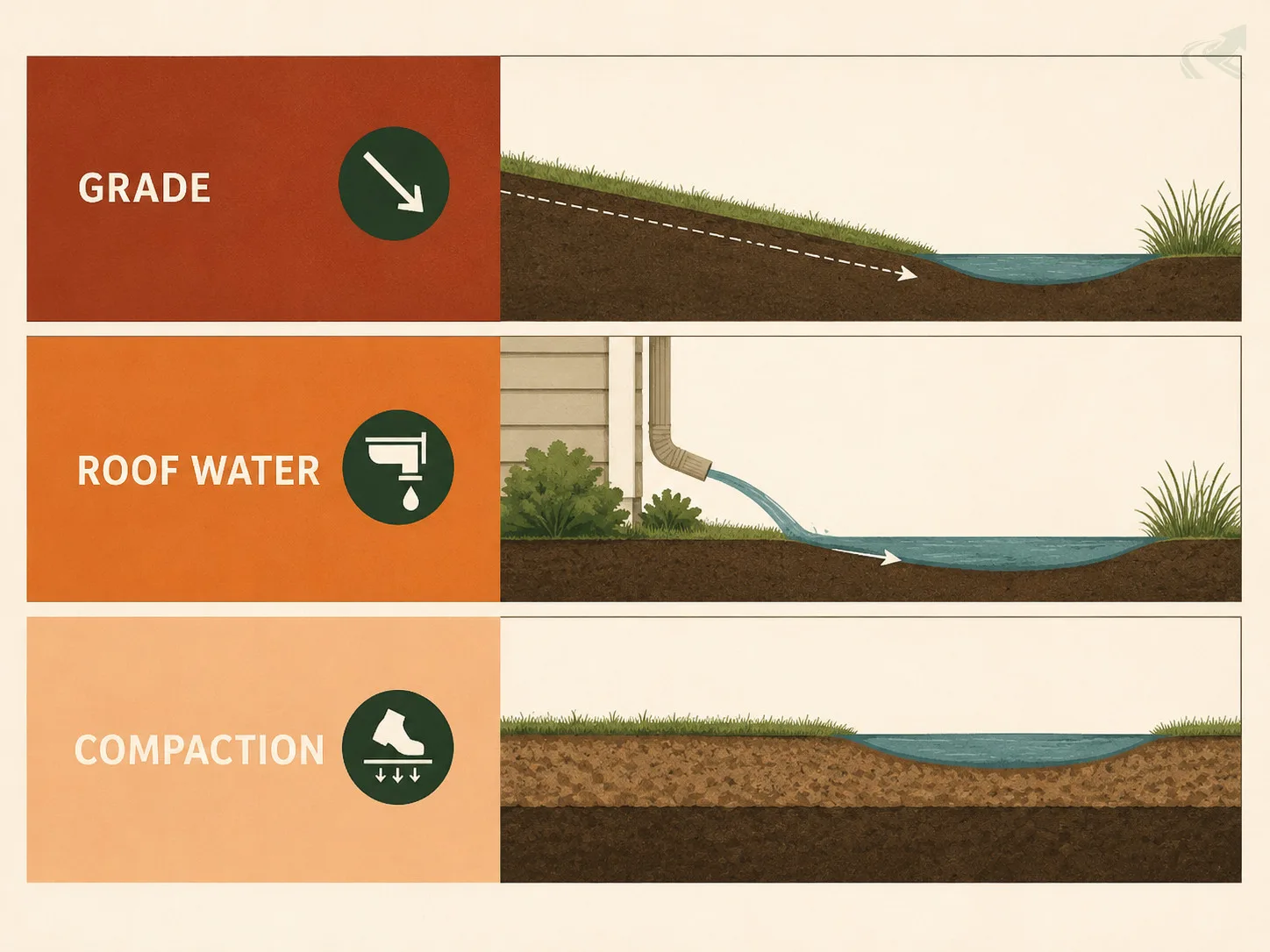
Three causes, and they need different fixes
Spending money before you know which one you have is how people end up with an expensive drain that doesn’t work.
| The three causes of a ponding Charlotte yard | What you'd see | What actually fixes it |
|---|---|---|
| Finish grade set to minimum spec | Water sits in a broad shallow area, often mid-yard or along a fence line, and drains slowly over a day or more | Regrading — reshaping the surface so water leaves. A buried pipe cannot fix a surface that points the wrong way |
| Roof water dumped beside the house | A wet patch that starts at a downspout and spreads, worst during rain and gone within hours | Extending downspout discharge well away from the foundation, to daylight or a pop-up emitter |
| Compacted subsoil from construction | A distinct hard area, often where equipment was parked or materials stacked, that stays wet long after the rest dries | Breaking the compaction and rebuilding topsoil — drainage hardware alone will not restore infiltration |
Finish grade set to minimum spec
- What you'd see
- Water sits in a broad shallow area, often mid-yard or along a fence line, and drains slowly over a day or more
- What actually fixes it
- Regrading — reshaping the surface so water leaves. A buried pipe cannot fix a surface that points the wrong way
Roof water dumped beside the house
- What you'd see
- A wet patch that starts at a downspout and spreads, worst during rain and gone within hours
- What actually fixes it
- Extending downspout discharge well away from the foundation, to daylight or a pop-up emitter
Compacted subsoil from construction
- What you'd see
- A distinct hard area, often where equipment was parked or materials stacked, that stays wet long after the rest dries
- What actually fixes it
- Breaking the compaction and rebuilding topsoil — drainage hardware alone will not restore infiltration
The order matters. Surface grade first, roof water second, compaction third. A French drain installed under a yard whose grade still runs toward the house is a very expensive way to keep the same problem.
Why Charlotte subdivision lots pond by design
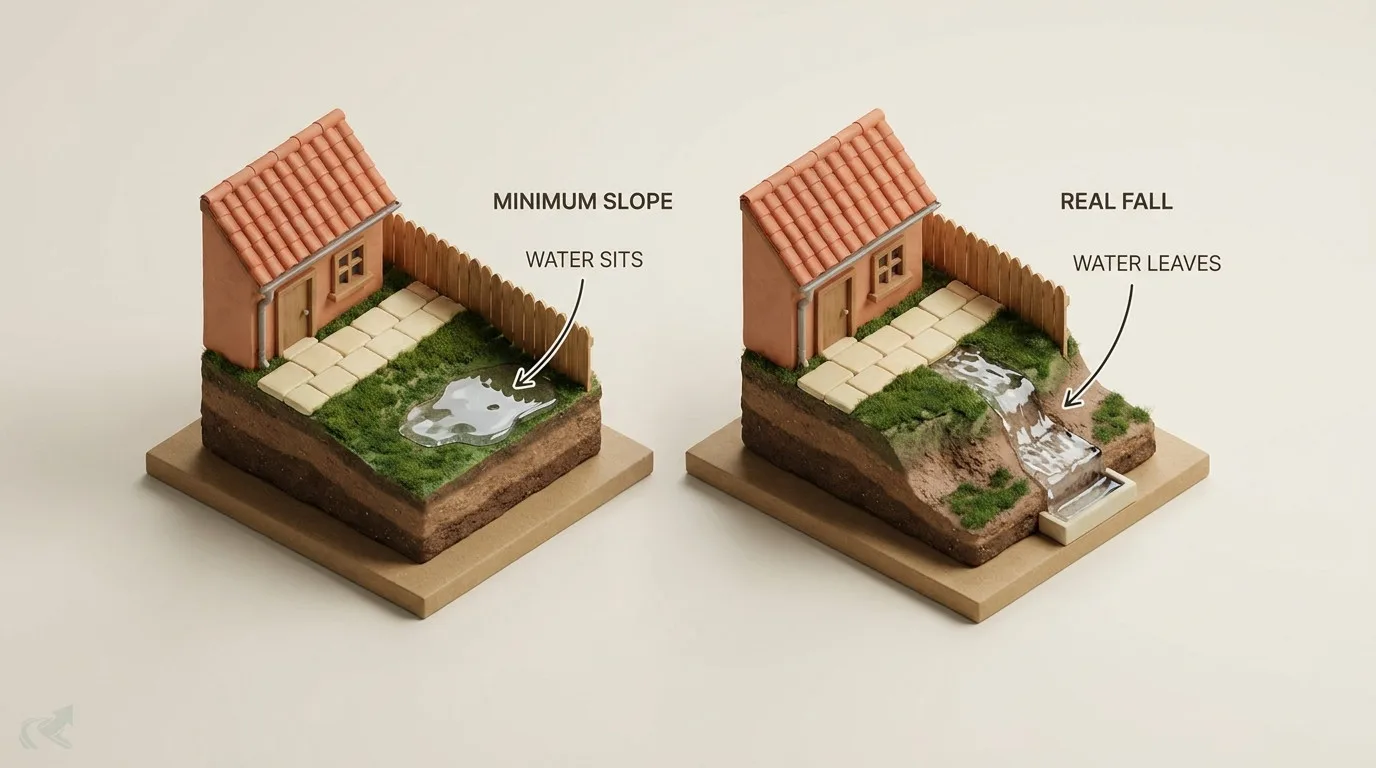
A production grade is built to pass inspection, and inspection is a lower bar than good drainage.
Charlotte has been one of the fastest-growing metros in the Southeast for years, and fast growth means production building — many similar homes, built to a schedule, on lots shaped by the same crew in the same week. That process is not careless, but it is optimised for throughput.
The finish grade gets set to the minimum slope the plan calls for. On paper that moves water. In a real storm, on clay that has already absorbed what little it can, a minimum slope moves water slowly — and slowly is what ponding looks like.
Three things stack on top of that:
The lots are small and flat. Less fall across the lot means less margin for error in the grade.
The clay was compacted during construction. Heavy equipment on wet Piedmont clay produces a dense layer that takes years to recover naturally. Water that would once have soaked in now sits.
Landscaping came after. Sod, beds, and edging placed on top of a marginal grade can block the little fall that existed.
None of this makes the builder negligent, and none of it means you have no recourse. If the yard has never drained since handover, that is worth raising — holding a builder accountable for drainage covers what is reasonable to ask and when.
The Mecklenburg rule that surprises people
Fixing drainage can trigger stormwater review — not because of the digging, but because of what you build.
Mecklenburg County’s stormwater requirements trigger at 12,000 square feet of land disturbance, which most back-yard projects will not approach. But there is a second trigger with no acreage floor at all: any new built-upon area.
Built-upon area means hard surface — roof, driveway, patio, walkway. And the practical consequence is genuinely counterintuitive:
The regrade that fixes your drainage may need nothing. The patio, concrete swale, or paved path you add as part of the same project can trigger review on its own.
That is not a reason to avoid the fix. It is a reason to ask the question before the quote is signed, so the scope and the permit are decided together rather than discovered halfway through. A contractor who works in Mecklenburg regularly will know this; one who does not may quote the work as though only acreage mattered.
Full thresholds, stream-buffer rules, and the process are on the Mecklenburg County page. Confirm current figures with the county before relying on them.
What to ask before you hire
One question separates a diagnosis from a sales pitch.
Ask: “What is causing the water to sit here, and how did you determine that?”
A contractor who has diagnosed the lot will talk about fall — where the high point is, where the water is trying to go, and what is stopping it. They may shoot grades, or walk the yard during or right after rain.
A contractor who leads with a product (“you need a French drain”) before answering that question is selling hardware, not solving drainage. Sometimes a French drain is exactly right. It should still be the conclusion, not the opening.
Two more worth asking:
- “Where does the water go once it leaves my yard?” Every drainage system needs an outlet. A system that moves water twenty feet and stops has relocated the problem.
- “Does anything in this scope add hard surface?” That is the built-upon-area question above, asked in the contractor’s language.
Verify the licence before any of this matters — how to check an NC contractor licence takes about two minutes.
What this page does not cover
Design specifics for French drains in Charlotte clay — trench section, stone, fabric, and where they fail — are on French drain installation in Charlotte. Permit thresholds, stream buffers, and the application process are on the Mecklenburg County page. The general diagnostic method, independent of location, is at standing water in your yard.
From our directory
Verified drainage contractors near Charlotte
Every listing is cross-checked against the NC Licensing Board public record before it appears. Pick your city:
Or browse the full NC contractor directory.