
The scheduling question homeowners keep asking
Where does grading fit in the NC construction build sequence?
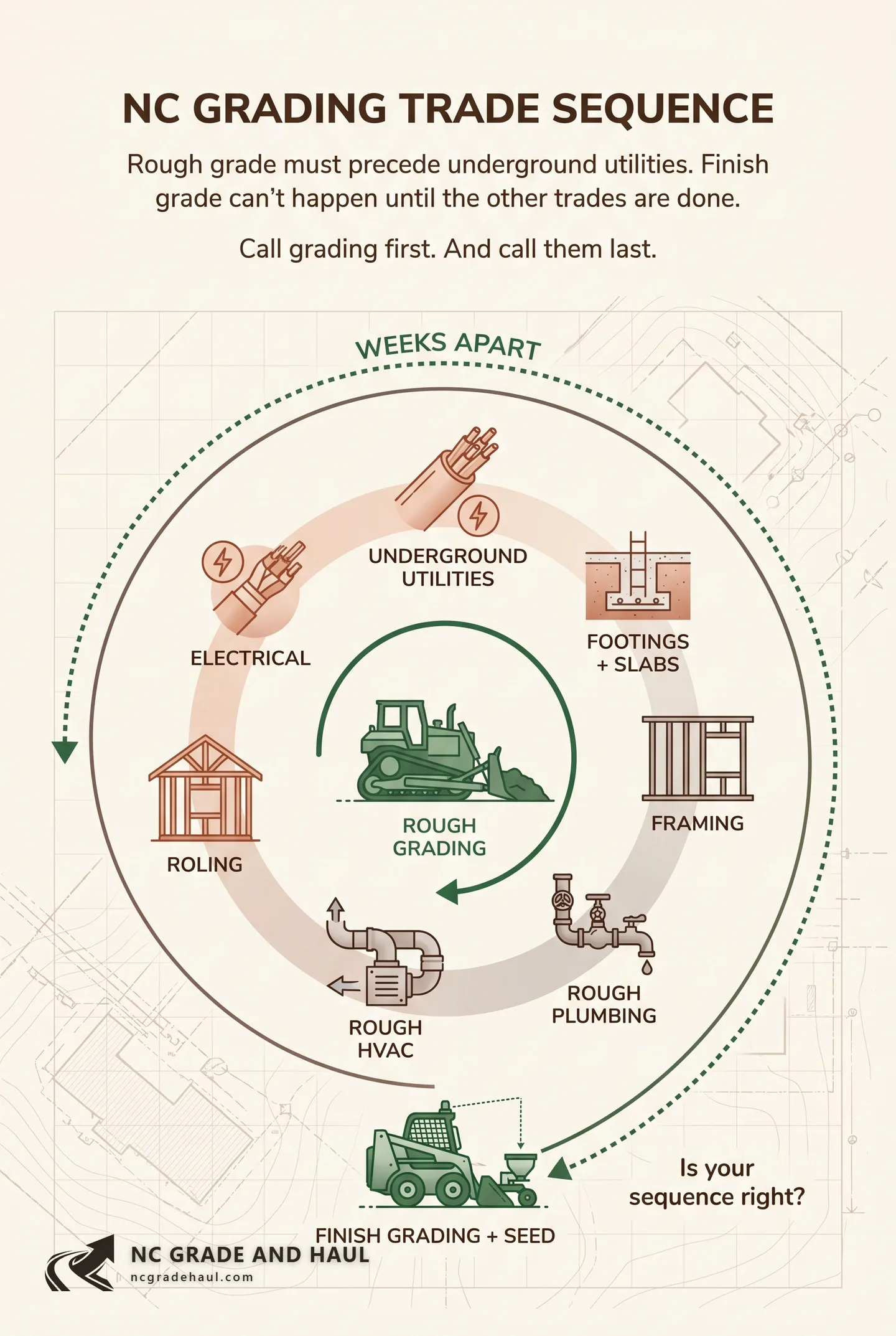
Grading happens at three points: (1) rough grade before the foundation pour, (2) utility trenching coordination during construction, and (3) finish grade after all underground utilities are complete. If your project has a delayed finish grade, ask specifically: what utility work is still incomplete -- and when is it scheduled to finish?
Is my finish grade delay legitimate or is the contractor dodging follow-up work?
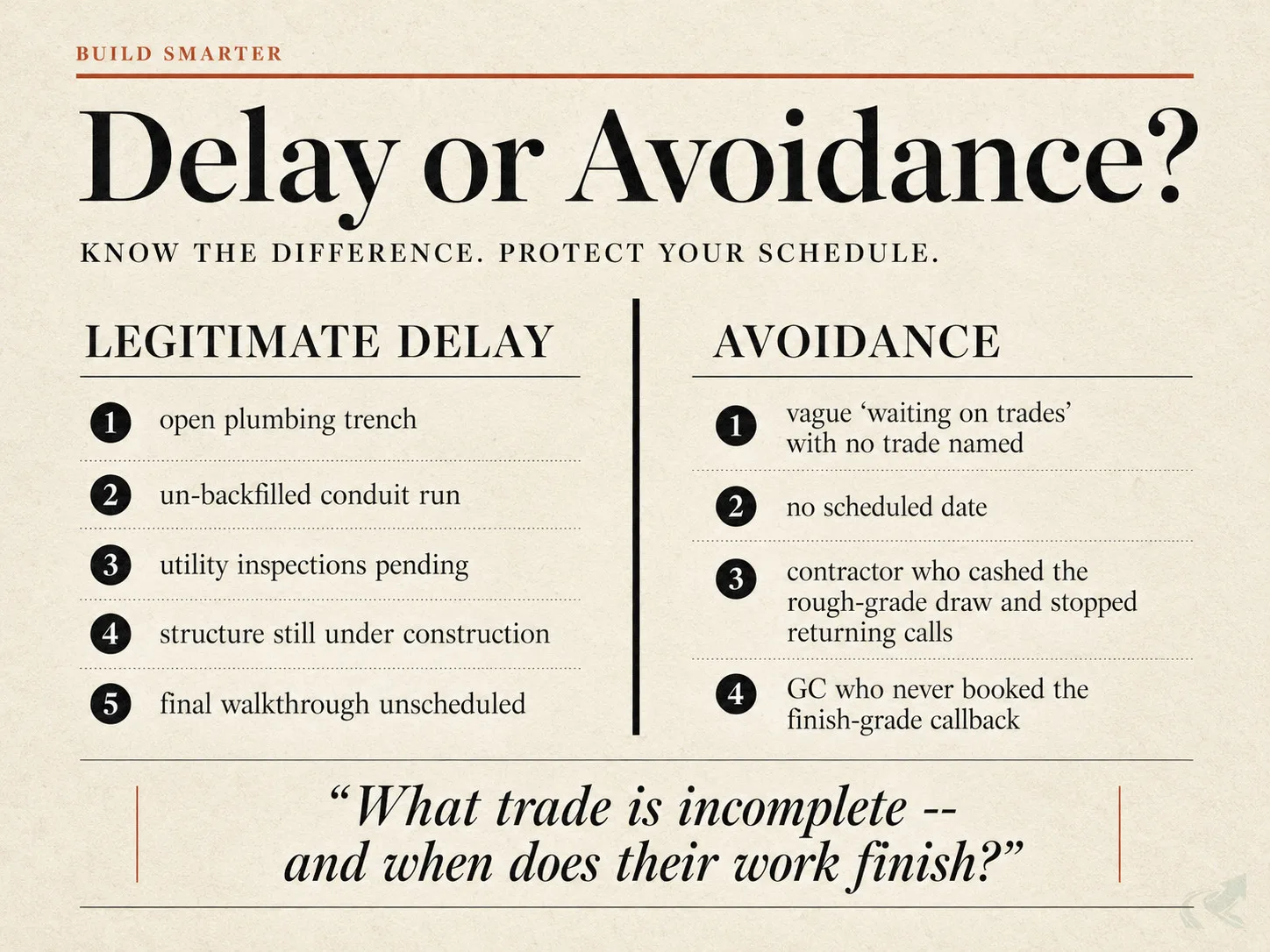
A legitimate delay ties to a specific incomplete utility -- open plumbing trench, un-backfilled electric conduit, or a final walkthrough not yet done. Avoidance looks different: vague answers, no scheduled date, and a grading contractor who stopped returning calls after the rough grade check cleared.
The most common question a hears from an owner-builder mid-project: “Why haven’t they finished grading yet?”
The most common answer: “We’re waiting on other trades.”
That answer is sometimes true, sometimes an excuse, and almost always under-explained. This page maps out when grading shows up on a North Carolina build — and what “waiting on other trades” should actually mean when it comes out of someone’s mouth.
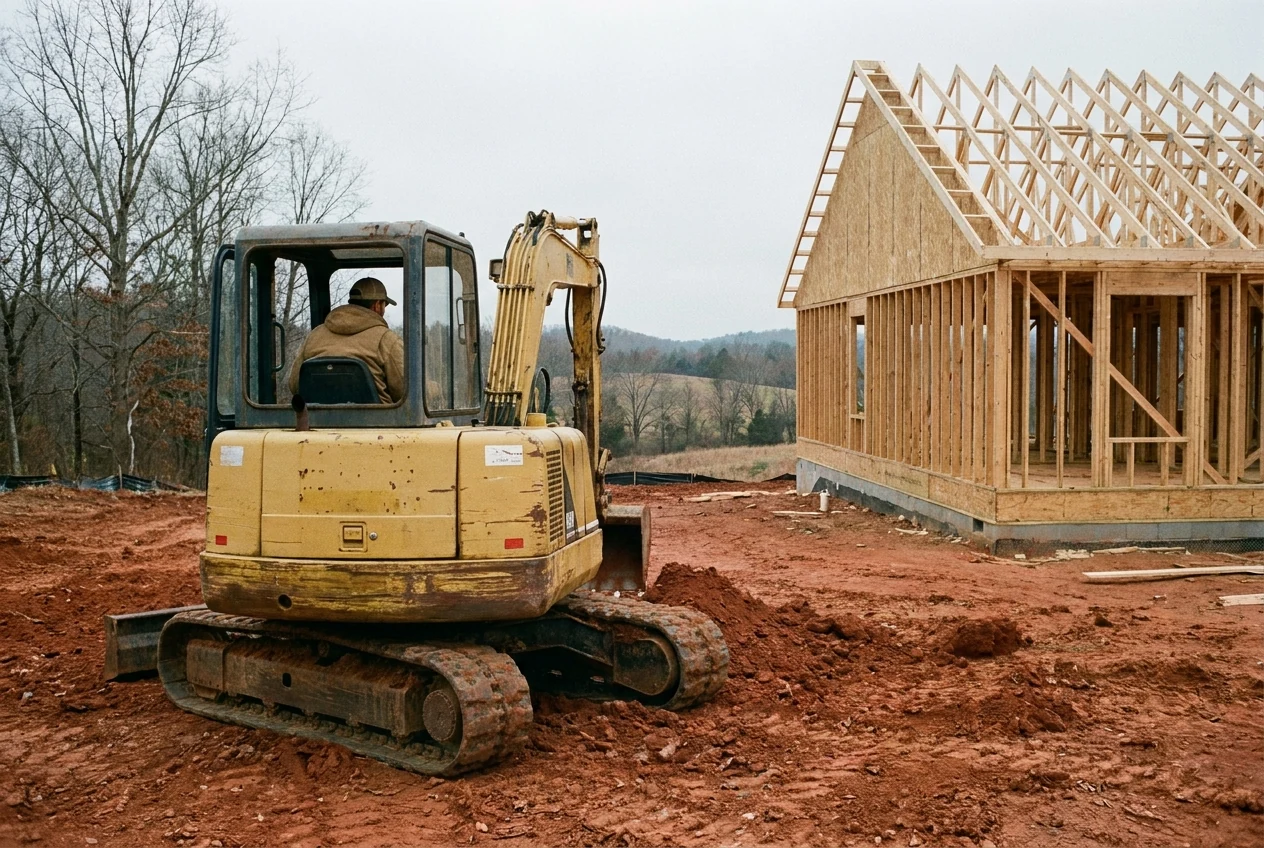
The Three Times Grading Shows Up on a Build
Grading is not a one-visit job. Most projects require three distinct grading visits at different phases.
That surprises a lot of homeowners who think “the grader came, did their thing, done.” On any job involving a foundation, utilities, or drainage improvement, there are three separate moments where the grading contractor shows up:
- Rough grade — before the foundation pour. Establishes pad elevation and positive drainage away from the building envelope — the building pad preparation in NC sequence follows from here.
- Utility accommodation — during construction. The grading contractor often cuts utility trenches for plumbing and electric runs, then coordinates backfill after pipe and conduit are set.
- Finish grade — after all underground utilities are complete. Final shaping of slopes, swales, and drainage that will receive landscaping or seeding.
If a project produces one invoice and one visit, someone skipped a phase — evaluating grading quotes that include both phases shows what a properly scoped bid covers. That is worth asking about.
The distinction between rough and finish work is covered in detail at rough and finish grading in the NC construction sequence. This page focuses specifically on trade coordination — who goes first, who waits on who, and why it matters for your timeline.
Before the Foundation
Rough grading happens before any concrete pours — this is non-negotiable.
The rough grade establishes the building pad at the correct elevation. That elevation determines where the foundation sits relative to the drainage plane. If rough grading is skipped or done wrong, the foundation team is working off an incorrect grade, and correcting it after the pour is expensive.
Rough grade scope in North Carolina typically includes:
- Land clearing in NC for construction — stripping topsoil from the building footprint
- Cutting and filling to bring the pad to design elevation
- Installing controls (silt fence, construction entrance) per the land-disturbance permit
- Establishing positive drainage away from the footprint at roughly 2% slope minimum
The grading contractor coordinates directly with the foundation sub on this phase. The foundation team should be the one calling the grader, not the other way around. If nobody has confirmed a rough-grade date with the grader before the foundation crew shows up, expect a delay.
Grading appears at three distinct points. The third visit — finish grade — cannot happen until the second has been fully resolved.
During Construction — Utility Trenching
The grading contractor often cuts the utility trenches — and that creates a sequencing dependency with plumbing and electric.
After the foundation is poured, the site needs trenches for underground plumbing (water service, sewer lateral, any septic runs) and electric conduit. In most North Carolina residential builds, the grading contractor cuts these trenches because they have the equipment already on-site and positioned.
The trench-and-backfill cycle looks like this:
- Grader opens trenches to the depth and alignment specified by the plumbing and electrical subs
- Plumbing sub installs pipe and rough inspection is completed
- Electrical sub installs conduit
- Grader returns to backfill — in lifts, with proper compaction, not one dump-and-done fill
This phase is where sequencing breaks most often. The grading contractor can’t backfill until both subs have completed their rough-ins and inspections have cleared. That wait is legitimate. What’s not legitimate: nobody called the grader to tell them the inspections passed, so the backfill visit never got scheduled.
NC erosion control rules also stay active through this phase — see NC erosion control silt fence context for what gets maintained between grading visits.
Finish Grade — Why It Waits, and When That’s Wrong
Finish grading cannot happen until all underground utilities are complete and backfilled. After that, delay is a scheduling failure, not a sequencing requirement.
This is the phase that stalls most often, and where the legitimate/illegitimate distinction matters most.
Legitimate reasons for finish grade delay:
- Open plumbing trench or un-backfilled conduit run still on-site
- Final utility inspections not yet passed
- Structure not complete (rain events during active framing can scour a finish grade before it stabilizes)
- Final walkthrough not yet scheduled — a GC-driven gate, not a grading issue
Illegitimate reasons that often sound legitimate:
- “We’re waiting on other trades” with no specific trade named and no date given
- A grading contractor who completed rough grade, cashed the draw, and has deprioritized return visits for paying jobs elsewhere
- A GC who hasn’t actively scheduled the finish grade callback — it won’t happen automatically
The tell: ask for a specific answer to a specific question. “What trade is incomplete, and when does their work finish?” If the answer is vague, the delay is not sequencing — it’s avoidance.
The difference between residential and commercial timelines on this point is real — sequencing differences between residential and commercial grading covers why commercial projects tend to have tighter finish-grade coordination.
Who’s at Fault When Sequencing Breaks Down
GC coordination responsibility is the key variable. When sequencing fails, the most common cause is that nobody owned the callback schedule.
In North Carolina residential construction, the GC is responsible for trade coordination. That means:
- Confirming with the grading contractor that rough grade is complete and acceptable before the foundation crew shows up
- Calling the grader to schedule the trench-cut phase before utilities subs mobilize
- Scheduling the finish grade callback with a hard date once final utilities pass inspection
The grading contractor is responsible for showing up when called. But if nobody calls, showing up is unlikely.
What to document if you’re an owner-builder:
- Written confirmation from the GC of the finish grade date tied to a specific milestone (“7 days after final utility inspection approval”)
- The grading contractor’s direct contact — not just the GC’s relay — so you can verify the callback is actually scheduled
- An itemized quote that separates rough grade and finish grade as line items, so you can confirm both are in scope and in budget
When to escalate: if finish grade has been pending more than 30 days after final utility inspections passed and you have no firm date, that’s not a sequencing issue — that’s a contractual one. Put the request in writing to the GC and request a response within 5 business days.
Find a grading operator in North Carolina for sequencing — the NCGH directory lists verified contractors with license status confirmed against the NC Licensing Board.