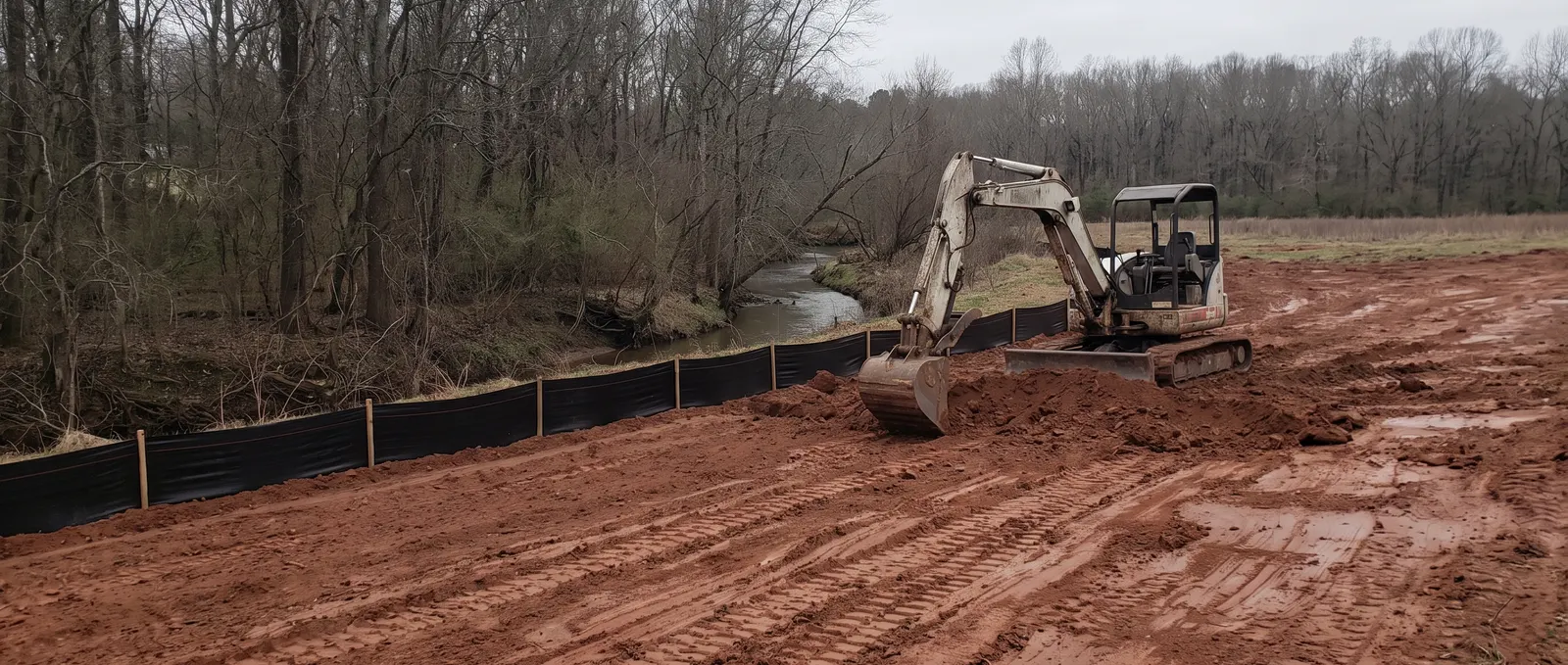
Two things Greensboro homeowners ask first
Does my Greensboro grading project need a permit?
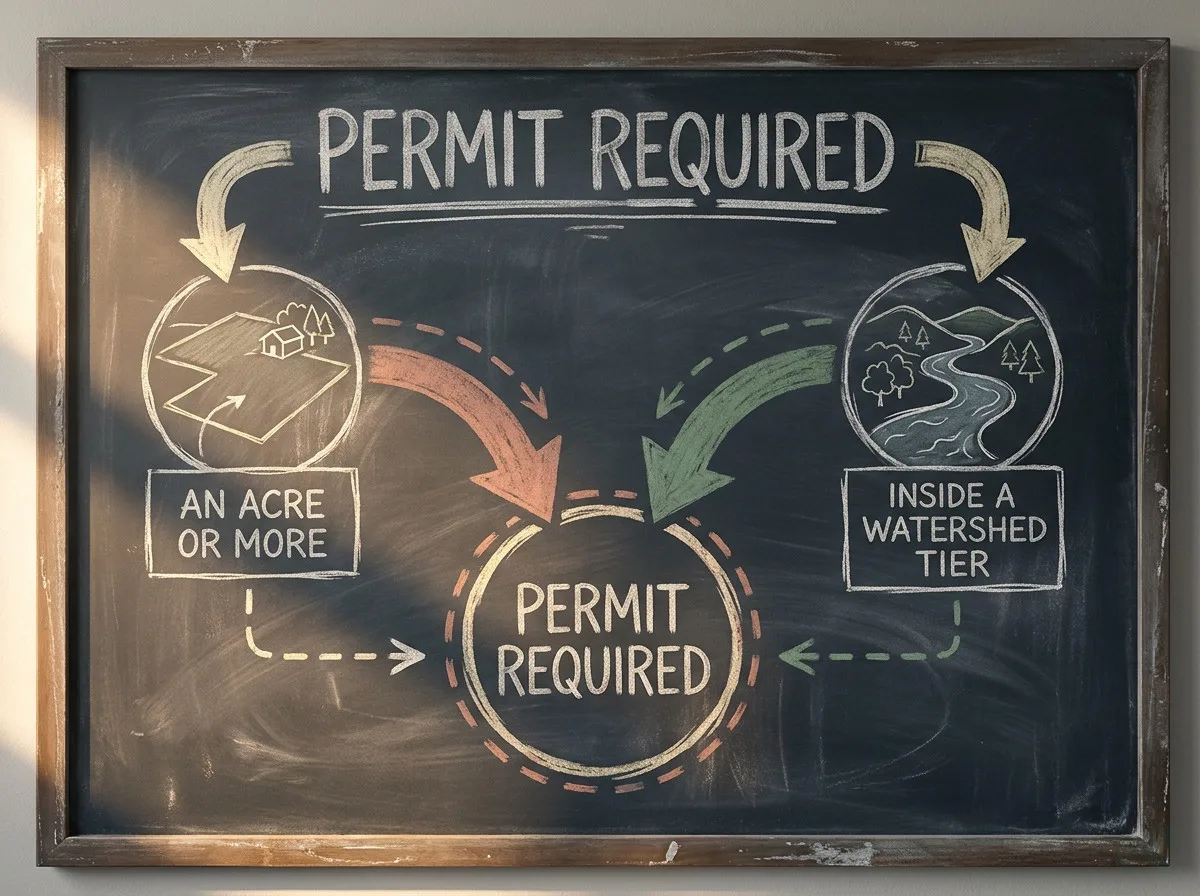
Ask two questions, not one. How big is the job — an acre or more triggers a permit anywhere. And where is the lot — inside Tier 1 or Tier 2 of a Watershed Critical Area, Guilford requires a grading permit regardless of size. Much of the Triad drains to drinking-water reservoirs, so location can decide it even when acreage wouldn't.
What separates a real Greensboro grading quote from a cheap one?
Whether the contractor checked your watershed tier before pricing. A quote built on acreage alone may be missing a permit the job actually needs — and the person who didn't check is the same person who won't have planned for erosion control or the surety. Ask what tier your lot is in and watch how confidently it's answered.
Most places, hiring a grading contractor starts with scope and price. In Guilford County there’s a question that comes before both, and it decides whether the job needs a permit at all.
Not how big is it — where is it.
Guilford requires a grading permit at one acre of disturbance like everywhere in North Carolina. But inside Tier 1 or Tier 2 of a Watershed Critical Area, a permit is required regardless of size. The Triad drinks from its own reservoirs, and the rules follow the water rather than the acreage.
That single fact is also the sharpest hiring filter available to you. A contractor who works Guilford regularly checks the tier before quoting. One who doesn’t know the question exists is telling you something useful about how often they work here.
This page covers what the work involves on Piedmont red clay, what belongs in a complete quote, and how to check the person quoting it.
For thresholds, buffers, surety, and the process in full, see the Guilford County page. For regional context, see earthwork in the Triad.
What a Greensboro grading contractor actually does
Four scopes, priced very differently.
| Common Greensboro grading scopes | What it involves | What drives the cost |
|---|---|---|
| Drainage correction on clay | Reshaping the surface so water leaves, and carrying it to an outlet that works | Finding the outlet. Dense red clay won't absorb it, so the water has to be taken somewhere |
| New-home pad preparation | Cutting and compacting a level pad, then setting finish grade around it | Lot size, material moved, and whether fill is imported |
| Driveway grading | Grade and crown, base stone, and shedding water off the surface | Length, base depth, and whether the existing base can be reused |
| Lot clearing and rough grading | Clearing vegetation and stumps, shaping ground to a workable contour | Disposal, and whether the lot is inside a protected watershed area |
Drainage correction on clay
- What it involves
- Reshaping the surface so water leaves, and carrying it to an outlet that works
- What drives the cost
- Finding the outlet. Dense red clay won't absorb it, so the water has to be taken somewhere
New-home pad preparation
- What it involves
- Cutting and compacting a level pad, then setting finish grade around it
- What drives the cost
- Lot size, material moved, and whether fill is imported
Driveway grading
- What it involves
- Grade and crown, base stone, and shedding water off the surface
- What drives the cost
- Length, base depth, and whether the existing base can be reused
Lot clearing and rough grading
- What it involves
- Clearing vegetation and stumps, shaping ground to a workable contour
- What drives the cost
- Disposal, and whether the lot is inside a protected watershed area
The last row is where Greensboro differs from the rest of the Piedmont. On a lot inside a Watershed Critical Area, clearing that would be routine elsewhere may require a permit, erosion control, and a surety before anything moves.
The watershed question, and why it’s a hiring test
Location can require a permit that acreage never would.
Guilford’s grading permit has two independent triggers:
Size. One acre or more of disturbance — the statewide rule, including non-contiguous work that’s part of a larger common plan.
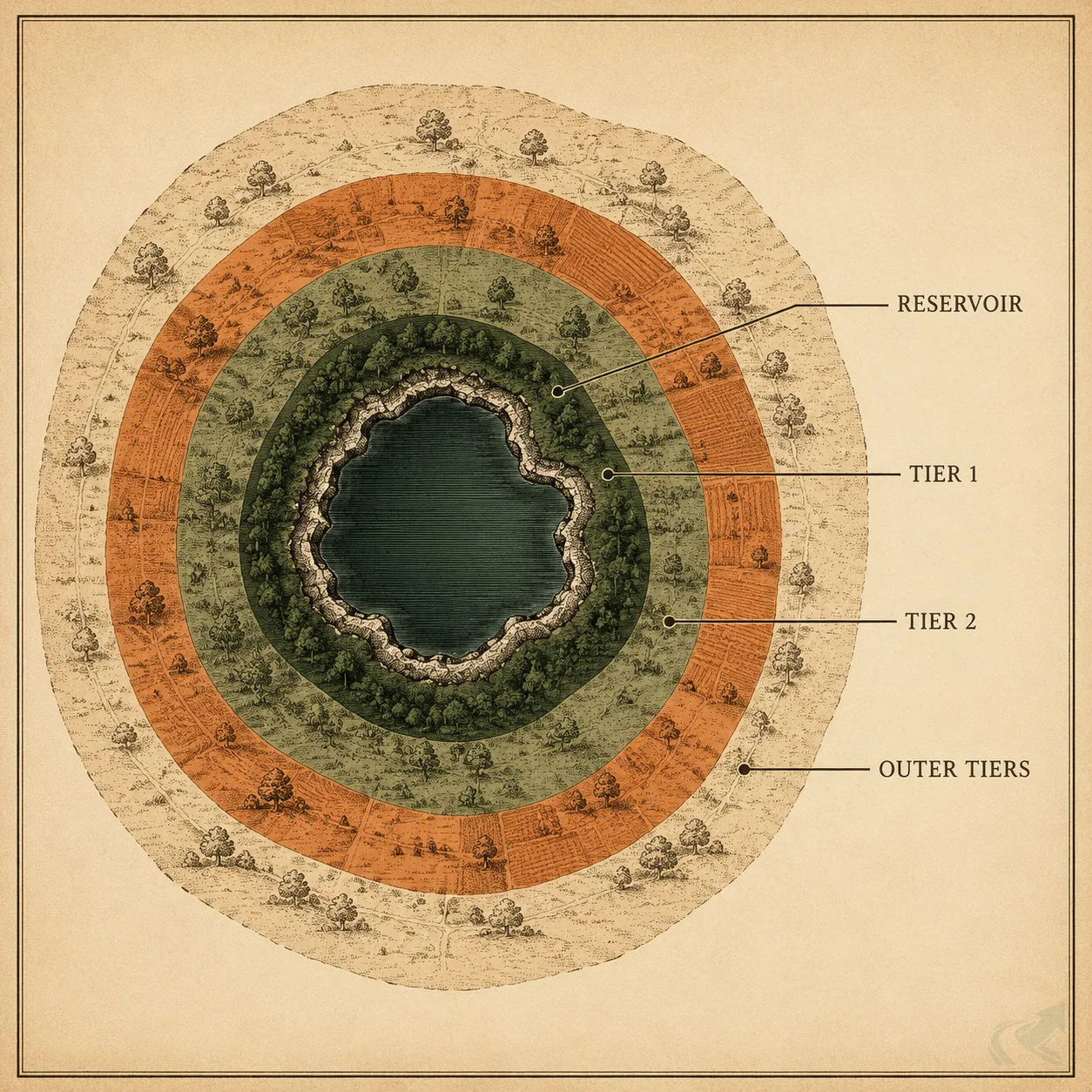
Location. Inside Tier 1 or Tier 2 of a Watershed Critical Area, a permit is required regardless of size. There are four tiers, set by distance from a reservoir’s normal pool elevation. Randleman Lake is a Class-IV critical water supply watershed with protected riparian buffers measured from the water itself — and the lake and its dam sit in neighbouring Randolph County, where the same reservoir is protected by a minimum-lot-size rule instead of a permit tier.
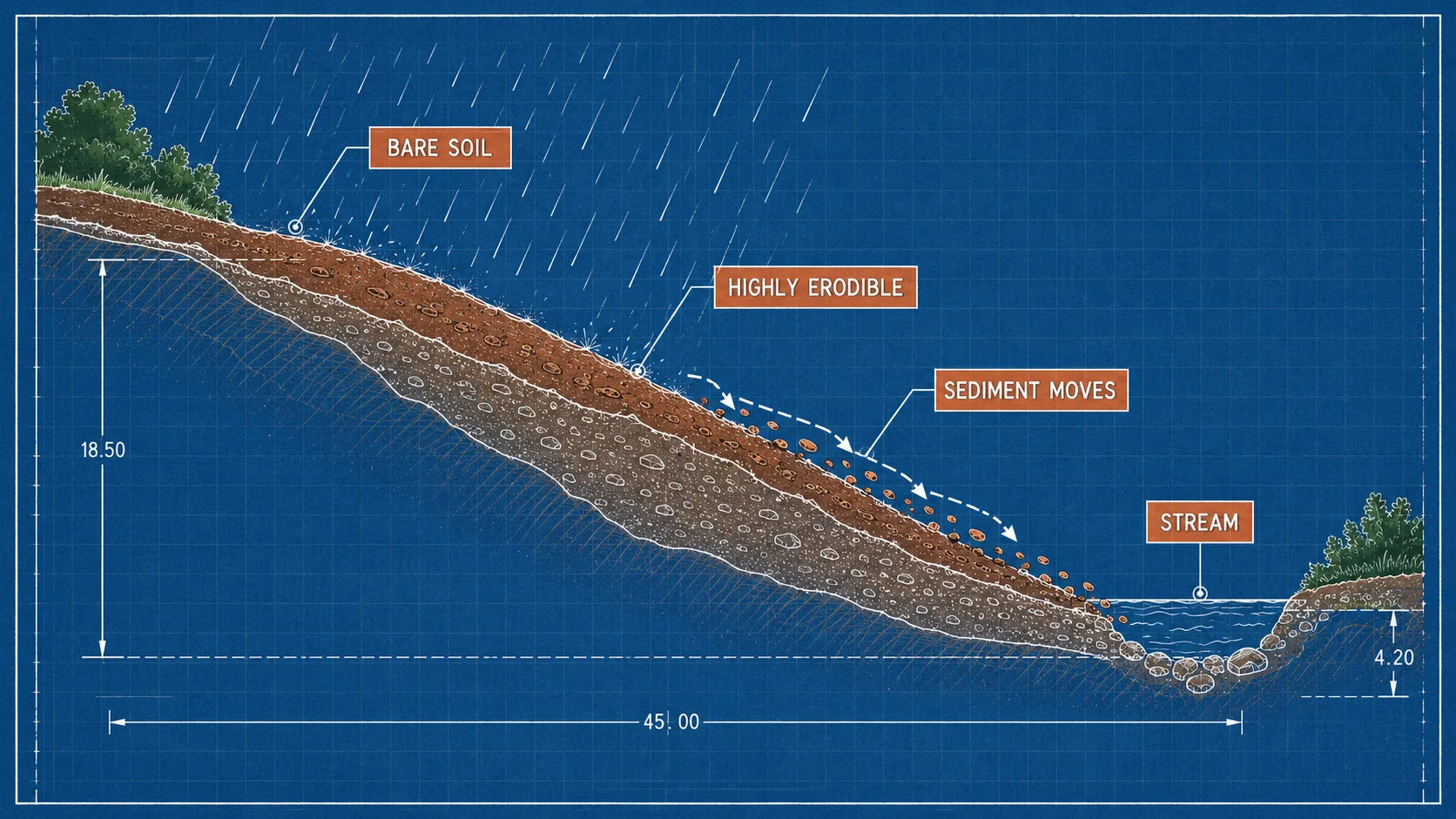
There’s a third trigger most people never hear about: highly erodible soil — a k factor above 0.36 — inside a Watershed Critical Area requires an erosion and sedimentation control plan. A soil-survey number, deciding a permit.
Why this is the hiring test. Ask a contractor: “What Watershed Critical Area tier is my lot in, and how did you check?”
Someone who works Guilford regularly will know how to look it up and will have done it before quoting. Someone who answers “you’re under an acre, you’re fine” has quoted the statewide rule on a county where the statewide rule is only half the answer — and the same gap will show up in what they budgeted for erosion control and surety.
Tiers, buffer widths, surety amounts, and contacts are on the Guilford County page. Confirm your tier with the county before you break ground.
What a complete quote includes
- The watershed tier, and what it implies for permitting. See above — this is the local one.
- The outlet. Where drainage water ends up, and whether that’s legal. On red clay, this is the project.
- Erosion control. Silt fence, inlet protection, and stabilisation aren’t optional inside a regulated area, and they aren’t free.
- Ground cover restoration. Does the price end at bare clay or at established cover? The most common invisible gap between two quotes.
- Spoil. Excavated clay is heavy and has to go somewhere. Hauling is a line item; spreading it changes your grade.
Checking the contractor
Licence. Verify against the NC Licensing Board record itself — how to check an NC contractor licence takes about two minutes. The threshold is $40,000; above that a general contractor licence is required.
Insurance, from the agent. Sent by the insurer and naming you — not a PDF forwarded by the contractor.
Recent Guilford work. Two jobs in the past year, nearby. An operator who works the county regularly will have them, and will already know the tier question.
Patterns worth walking away from are at contractor red flags.
What this page does not cover
Permit tiers, buffer widths, surety, fees, and process are on the Guilford County page. For a drainage-specific problem, French drains in Greensboro covers design and failure modes, and yard drainage in Guilford County covers diagnosis. Regional context is at earthwork in the Triad. The statewide hiring guide is finding a grading contractor in NC.
From our directory
Verified grading contractors near Greensboro
Every listing is cross-checked against the NC Licensing Board public record before it appears. Pick your city:
Or browse the full NC contractor directory.