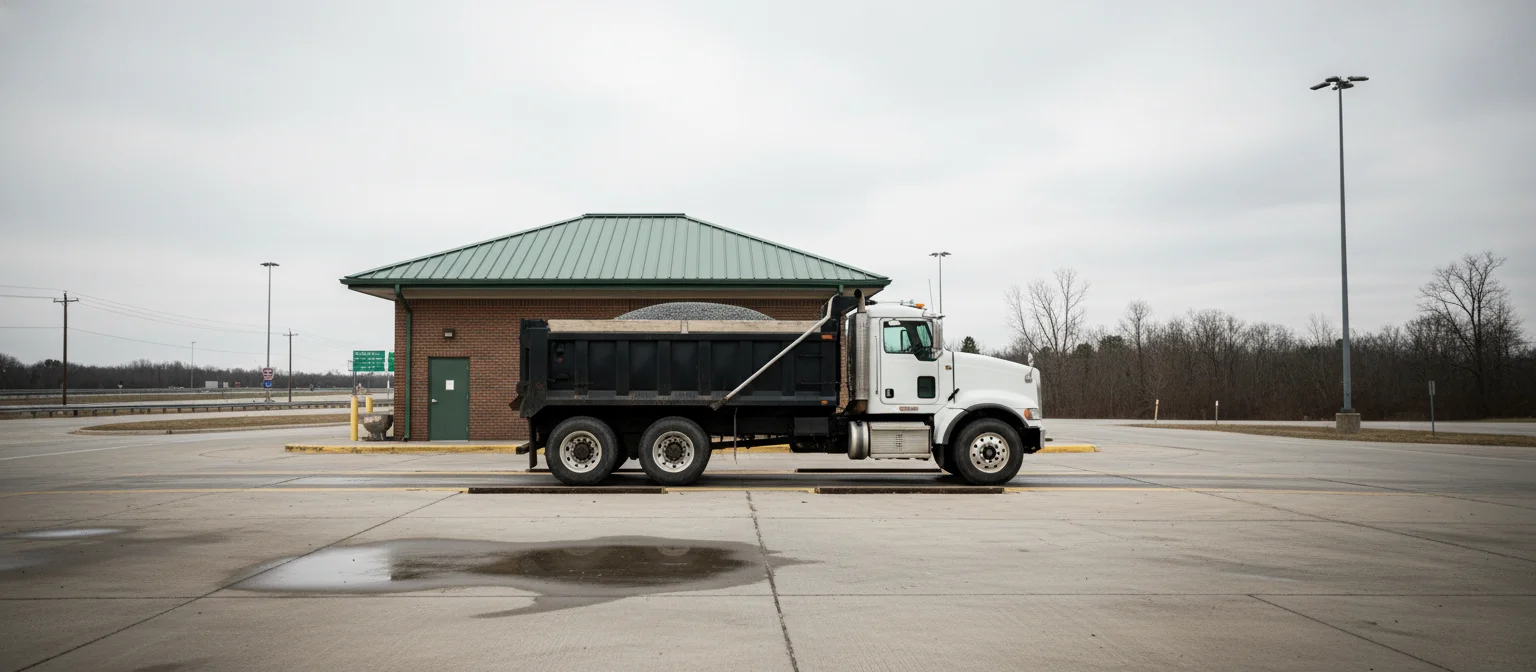
Two questions homeowners ask about hauling fees
What NC regulations apply to material hauling, and do they actually affect my delivery cost?
Yes -- two main categories. NCDOT weight limits determine how much each truck can legally carry per trip. More axles means a heavier legal load means fewer trips. Fewer trips means lower cost per ton delivered. A hauler who sizes the right truck for your road is quoting a legitimate configuration, not padding the trip count.
What is a 'traffic control' fee on a hauling quote, and is it real?
It depends on your road and the delivery setup. Traffic control is required when trucks back across active traffic, block a travel lane, or create sight-line hazards at a driveway apron. A flagperson or cones-and-signage setup is a real cost -- typically $25-$50/hour for a flagperson. If the quote itemizes it, ask what specific condition triggers it at your address.
Most hauling quotes have line items that look like filler: “permit fee,” “traffic control,” “fuel surcharge.” Sometimes they are padding. But two categories of North Carolina regulation create real, verifiable costs on every over-the-road material delivery — and if you know what they are, you can check a quote against them.
Those two categories are weight limits and traffic control requirements. Both are law. Both are enforced. Both show up in itemized hauling quotes for legitimate reasons.
NCDOT Weight Limits — How They Work
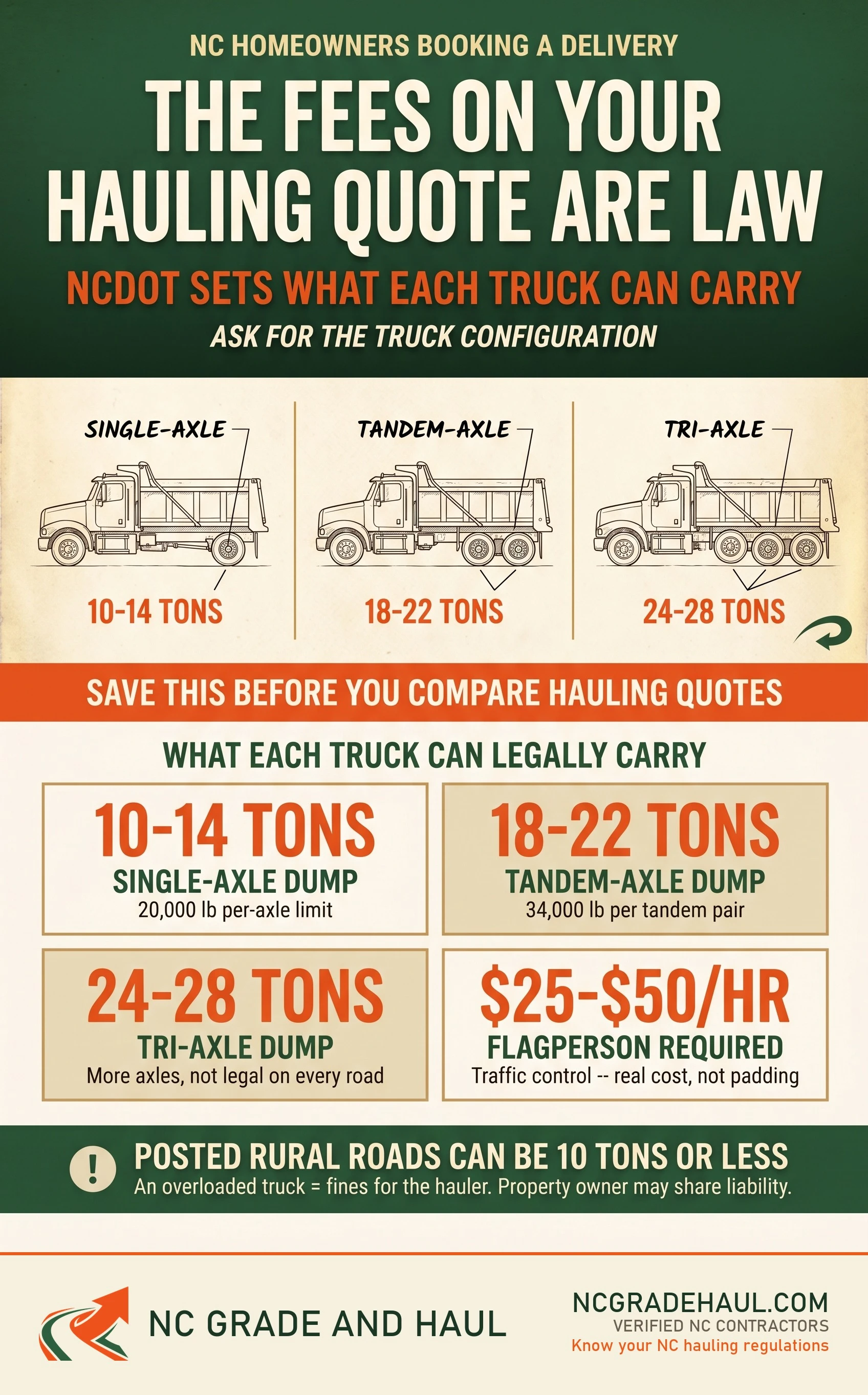
NCDOT sets weight limits by truck configuration. Under NC GS 20-118, a single-axle truck is capped at 20,000 lbs on that axle; a tandem-axle group at 38,000 lbs; and gross vehicle weight at 80,000 lbs. (Interstate highways apply the federal 34,000-lb tandem limit — but residential grading and hauling runs on state and secondary roads, where the 38,000-lb NC limit governs.)
North Carolina law ties legal payload to axle count and spacing, not just total truck weight. The more axles a truck has, the more weight it can legally spread across the road surface — and the more material it can carry per trip.
Here’s what that means for your delivery: a hauler who sends the right truck configuration for your road access is not padding trip counts. They are pricing the legal load. A hauler who ignores weight limits is pricing an illegal load — and if that truck gets weighed at a port-of-entry scale or flagged on a posted road, the hauler faces fines and you potentially face liability as the property owner.
Spring weight restrictions tighten the limit further. North Carolina restricts heavy loads on secondary roads from roughly January through April each year. Unpaved and low-traffic SR-designated routes are the most common targets. If your delivery falls in that window on a rural road, the hauler may need to reduce the payload per trip or delay the haul. That restriction is not invented — it is an NCDOT rule that protects road surfaces during the frost-thaw cycle in NC’s Piedmont and mountain counties.
See the full breakdown of axle limits and NC GS 20-118 weight schedules at NCDOT dump truck weight limits.
Truck Configurations and What Each Can Carry
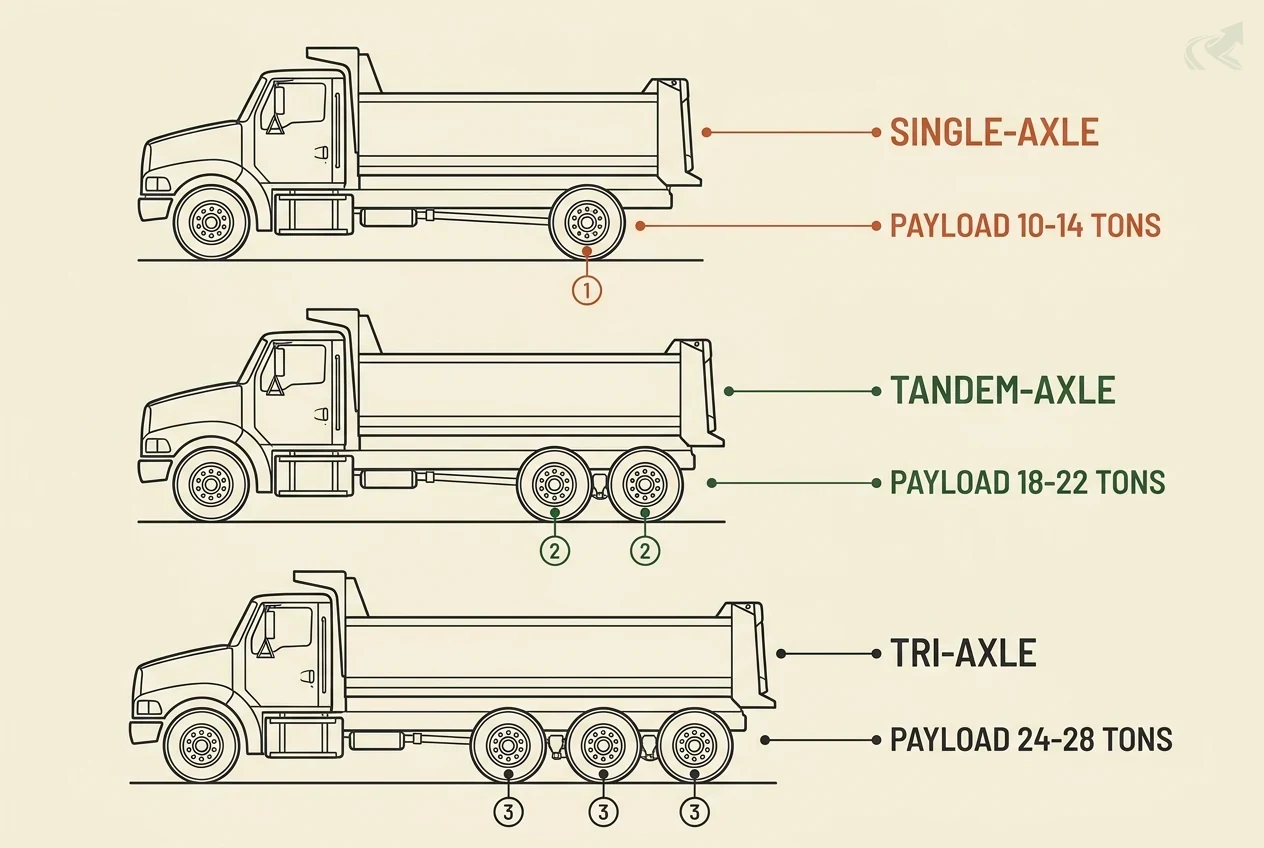
A standard single-axle dump truck carries roughly 10-14 tons. A tandem-axle carries 18-22 tons. A tri-axle carries 24-28 tons. More axles means a heavier legal load means fewer trips per job.
The configuration you need depends on two things: the volume of material and the access at your property. A tri-axle can carry 50% more per trip than a tandem — but a tri-axle also weighs more empty, is longer, and cannot turn around in tight residential driveways.
Here’s the math on a 30-ton gravel job: a tandem-axle needs two trips at 18-22 tons each; a tri-axle covers it in one. The tri-axle saves a trip but only if your driveway can handle the turning radius and the road can handle the axle weight. If your road has a posted weight limit, the tri-axle may not be the legal option regardless of what the truck can carry.
When reviewing a hauling quote, ask the contractor to state the truck configuration and confirm it is accessible for your property. A quote that doesn’t specify truck type cannot be compared against another quote that does.
| Truck configuration | NC weight limit (approx.) | Typical payload |
|---|---|---|
| Single-axle dump | 20,000 lbs per axle | 10-14 tons |
| Tandem-axle dump | 38,000 lbs per tandem group | 18-22 tons |
| Tri-axle dump | Additional rear axle added | 24-28 tons |
| Tractor-trailer transfer | Multi-axle configuration | 28-34 tons |
Figures above are working estimates based on NC GS 20-118 axle schedules and industry payload norms. Actual legal payload varies by truck setup, axle spacing, and posted road conditions. Confirm with your hauler.
Oversize and Overweight Permits
NCDOT allows haulers to apply for overweight permits that authorize loads above the standard limits — for specific loads, specific routes, and specific dates. Permit fees on hauling quotes are real NCDOT costs.
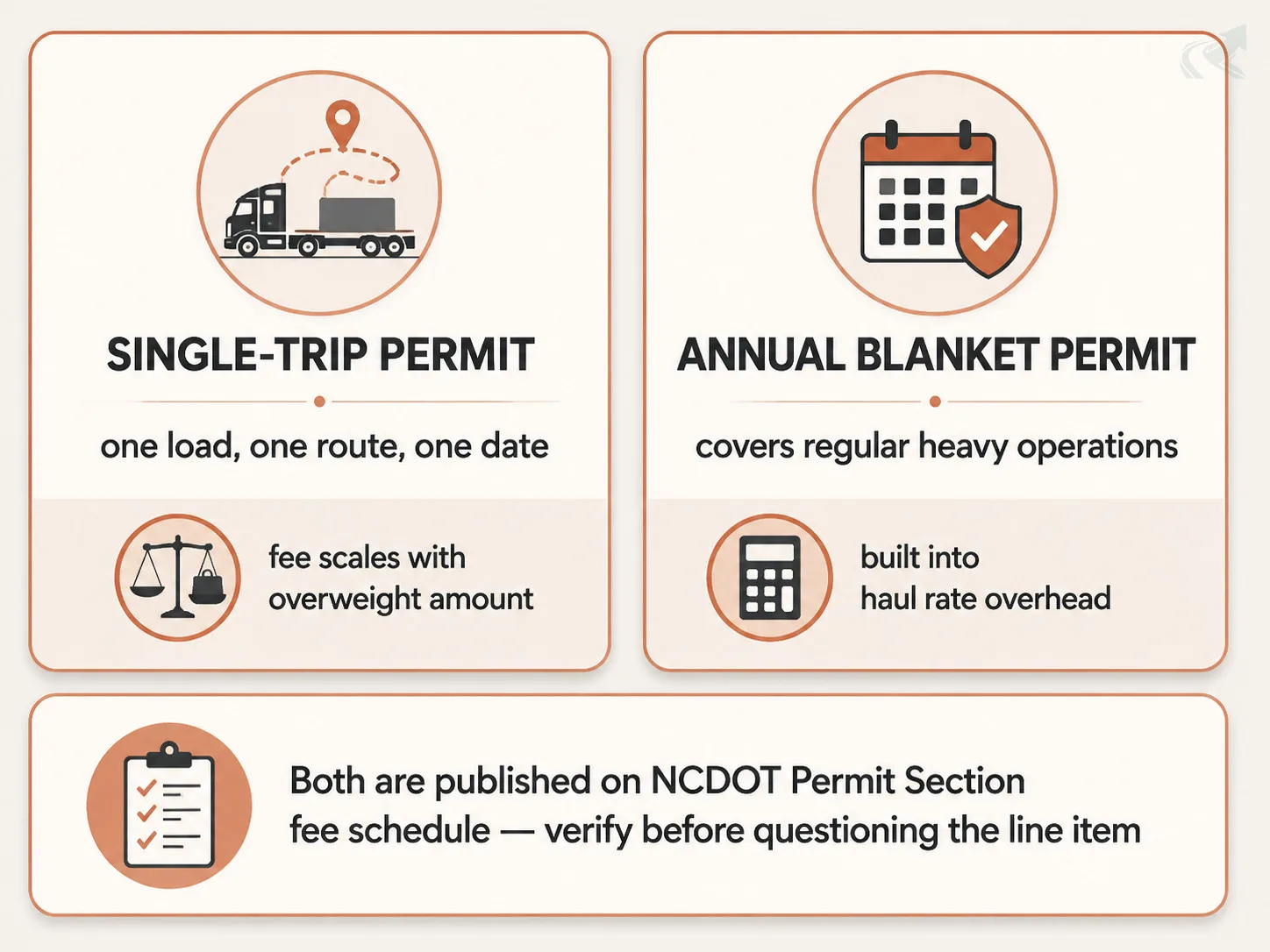
Two types of permits come up in NC hauling work.
Single-trip overweight permits authorize one load on a named route for a stated date. They’re used for large equipment moves, heavy machinery deliveries, and oversized structural loads that can’t be broken down. NCDOT charges a fee per permit, and that fee scales with how much the load exceeds the standard limit.
Annual blanket permits cover a carrier’s regular operations above standard weight limits without requiring a permit for every trip. Carriers who haul heavy regularly will often hold blanket permits. The permit cost is built into their operating overhead and passed through in the haul rate — it’s not padding, it’s a regulatory operating cost.
When a hauler cites “permit fees” in a quote, ask whether it’s a single-trip permit or an annual blanket being prorated. Both are legitimate. The fee schedule is published by NCDOT’s Permit Section. You can look it up to verify the fee range against what you’re being quoted. For more detail on when permits apply to your delivery, see NCDOT hauling regulation reference.
Traffic Control Requirements
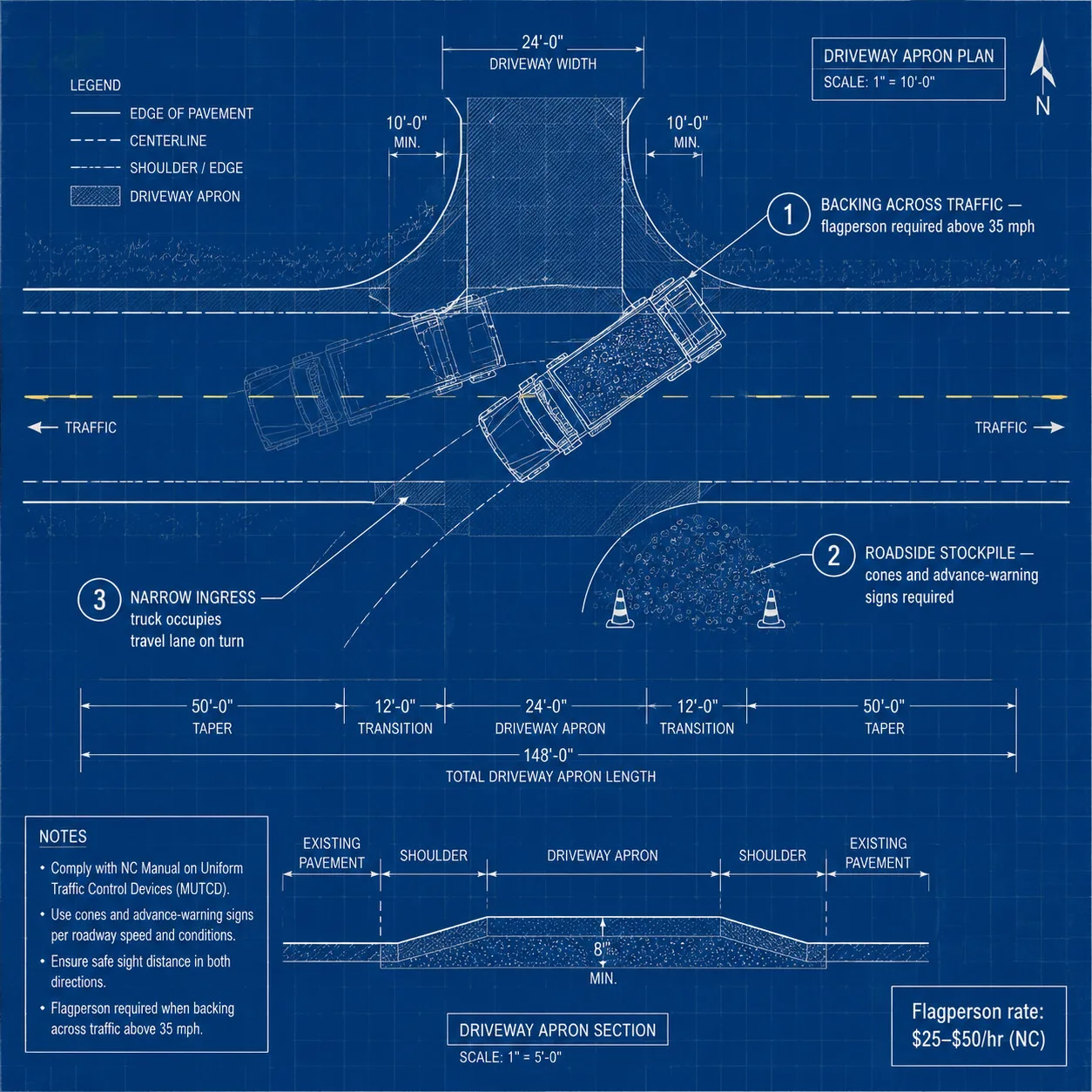
Traffic control is required when hauling operations encroach on a travel lane, create sight-line hazards at driveways, or involve backing trucks across active traffic. Specific requirements depend on road class and standards as adopted by NCDOT.
What “traffic control” looks like on a residential job depends on how trucks access the property. Backing a loaded tandem across a 45-mph state road without a spotter is a liability event. A flagperson at the driveway apron or a set of cones and advance-warning signs are standard mitigation.
Here’s when it’s typically required in North Carolina:
- Trucks backing across active traffic — flagperson required when line-of-sight is blocked or traffic speeds are above 35 mph
- Roadside stockpile operations — signs and cones required when material is placed adjacent to the travel lane
- Subdivision deliveries with narrow ingress — when the truck must briefly occupy part of the travel lane to complete the turn
When it’s optional, some contractors include it voluntarily as a professional-liability protection. That’s not padding — a $35/hour flagperson is cheaper than a claim from a fender-bender on the apron.
Cost range: a flagperson in North Carolina typically runs $25-$50 per hour. A lane-closure setup with advance warning signs adds more. For a delivery that takes two hours, the traffic control line item on your quote should be in the $50-$100 range or it needs explanation either way.
See the full requirements at lane closures and spotters for NC roadside hauling.
Posted Road Limits on Secondary and Rural Roads
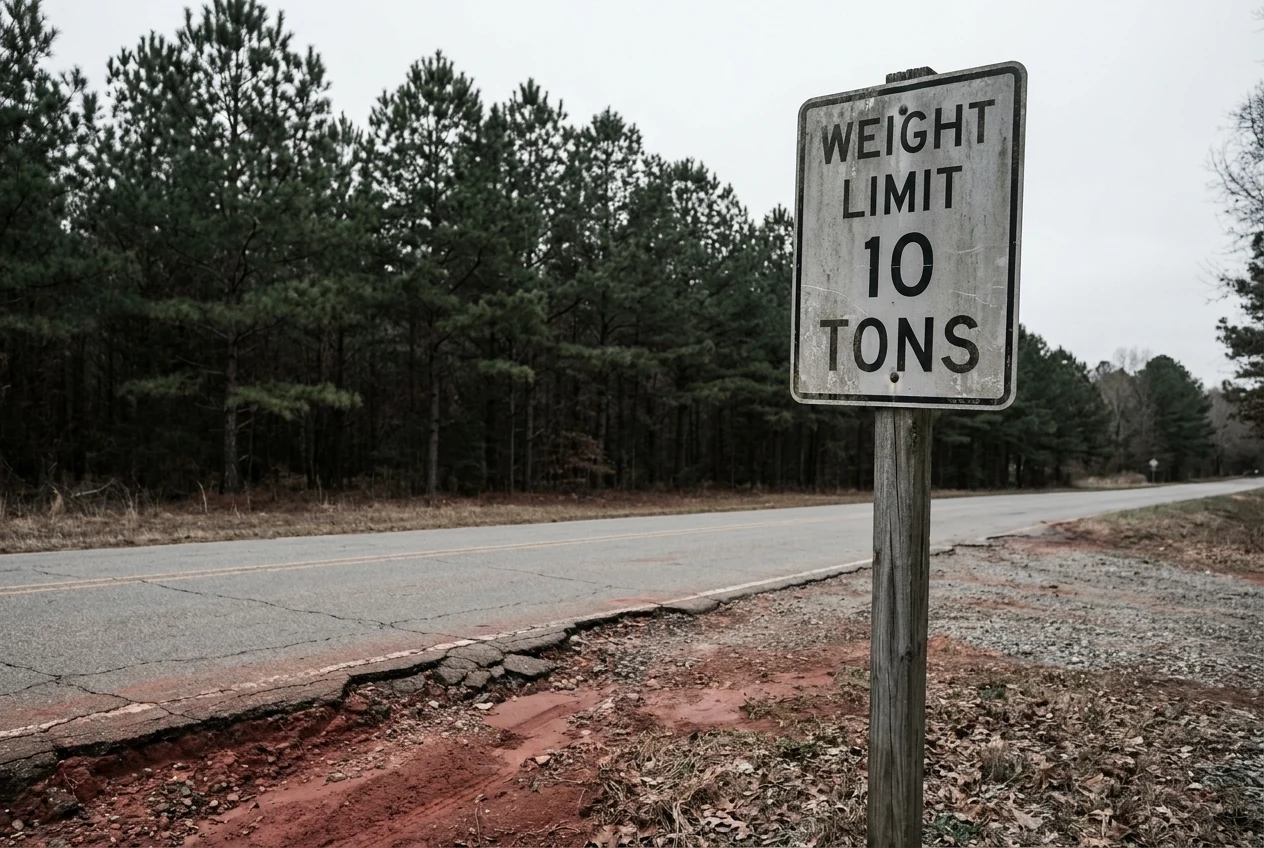
Rural secondary roads (SR-designated routes) in NC often have posted weight limits lower than the statewide maximum. Haulers using overloaded trucks on these roads face real fines — and the property owner may also carry liability.
This is the detail that matters most for rural NC properties — including rural Guilford, Chatham, Alamance, and Randolph County addresses that sit on SR routes. Most county roads serving rural properties are SR-designated. Some have posted limits of 10 tons or less.
Here’s what to ask before scheduling delivery: “What truck configuration are you sending, and is my road a posted-weight road?” A hauler who knows your county’s roads will have already checked. A hauler who hasn’t checked is asking you to trust that the road can handle it.
NC GS 20-118.1 gives NCDOT authority to post lower limits on specific road sections and to enforce those limits with fines. The enforcement mechanism is real — weigh stations exist, and local law enforcement can spot-check trucks on complaint-driven routes. If a hauler sends an overloaded truck down your posted road and gets ticketed, the fine lands on the hauler. But the property owner who directed the delivery can share exposure in a damage claim if the road surface is damaged.
The safest ask: request the hauler’s confirmation in writing that the truck configuration complies with the posted limits on your access road. A professional hauler will not balk at that request.
What to Look for in a Hauling Quote
Permit fees, trip counts tied to truck configuration, and traffic control line items are all legitimate regulatory costs. A vague “fuel surcharge” may or may not be — ask what it is based on before agreeing.
A hauling quote for NC material delivery should include:
- Truck type and configuration — single-axle, tandem-axle, or tri-axle. Without this, you cannot evaluate the trip count.
- Trip count — derived from the truck’s legal payload and your volume order. Three trips at 20 tons = 60 tons. Ask if the math is visible.
- Permit fees — if present, ask whether single-trip or annual blanket. Both legitimate. Ask for the NCDOT fee schedule reference if you want to verify.
- Traffic control — if present, ask what specific condition triggers it at your address. “Required by NCDOT for backing across Route 62” is a real answer. “Standard on all deliveries” is not.
- Fuel surcharge — this one deserves scrutiny. A surcharge indexed to the DOE weekly retail diesel price is legitimate and verifiable. A flat add-on with no stated basis is worth asking about.
Red flag: a quote that omits truck type, trip count, and any regulatory line items. That quote may be pricing an illegal load configuration or a truck that will not legally fit your road. An itemized quote with regulatory costs is the one you can evaluate. A round-number quote with no breakdown is the one you cannot.
For help finding a hauler who gives you that itemization, use the NC grading and hauling contractor directory.
Common Mistakes
-
Not asking what truck configuration is coming before the truck shows up. If your driveway can’t handle a tandem-axle truck’s turning radius or a tri-axle’s weight, you need to know before wheels hit the apron.
-
Assuming all permit fees are padding. Overweight and oversize permits are real NCDOT fees with a published schedule. A hauler citing permit costs can be verified against that schedule. Start there before assuming markup.
-
Not checking whether your road has a posted weight limit. If the hauler sends a loaded tandem over a posted 10-ton secondary road, the hauler faces fines and the property owner may carry liability for any road surface damage. The posted limit is public information — look it up or ask the hauler for confirmation in writing.
-
Comparing quotes without confirming truck type. A lower-priced quote may be pricing a smaller truck with more trips. A higher quote may be pricing a tri-axle with one trip. Neither is automatically better — but you cannot compare them without knowing the configuration.
Before You Schedule Delivery — Four Questions
Copy and use this before booking any NC material delivery:
- What truck configuration are you sending (single-axle, tandem, tri-axle)?
- Is my road and driveway accessible for that truck size and weight?
- Are any overweight or oversize permits required for this delivery?
- Is traffic control required at my address — and if so, who provides it and at what cost?
A hauler who knows your county’s roads will answer all four without hesitation. These are not trick questions. They are the questions that separate a professional hauler from one who is guessing.
When you are ready to find a hauler who can give you a specific, itemized answer: hire an NC hauling operator.