
Before you call a contractor
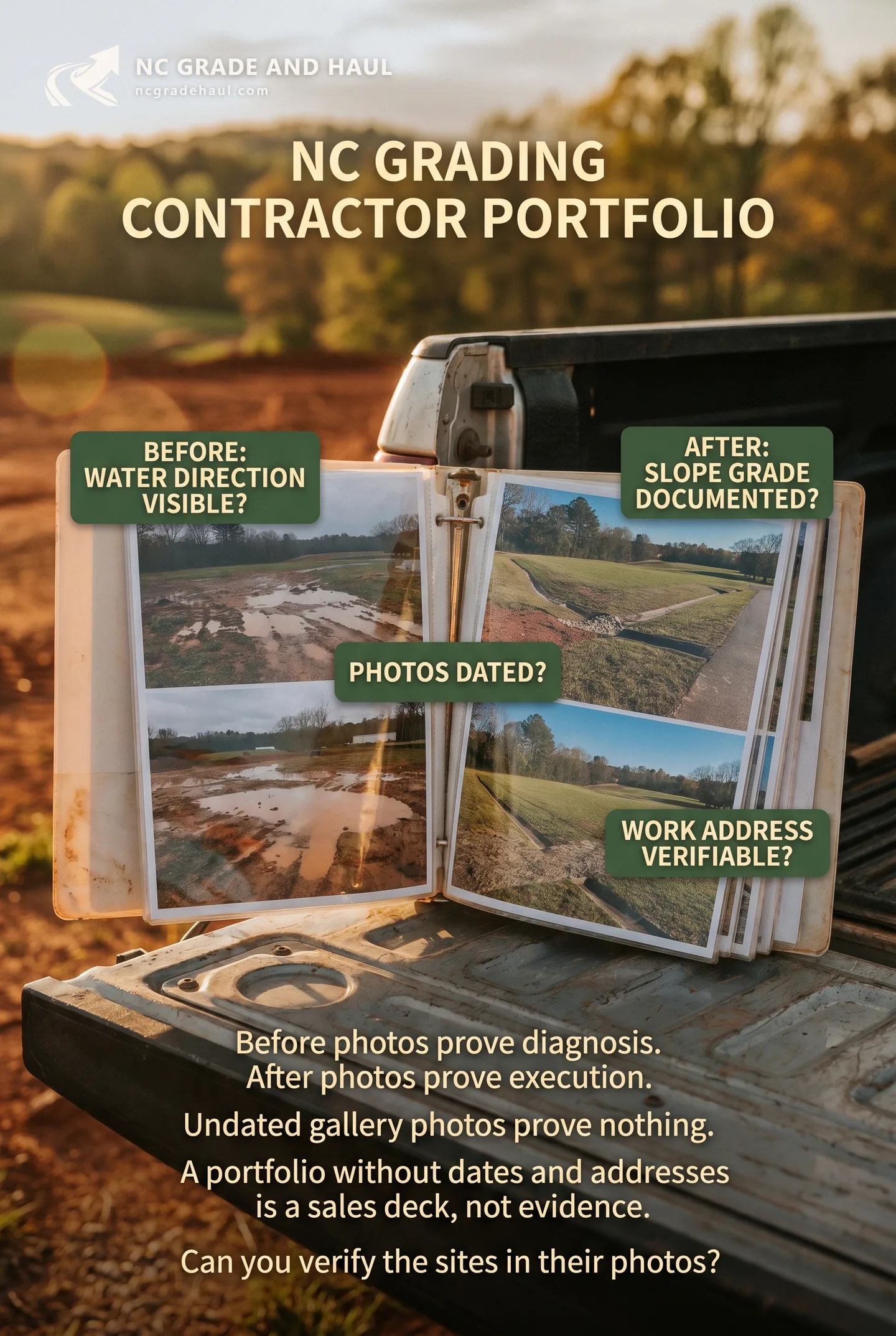
What should I look for in a grading contractor's photo portfolio?
Three things: before-conditions documentation (standing water, slope issues, erosion), during-installation photos showing the drainage system components, and after-rain performance photos showing water moving correctly. Aesthetics don't tell you if the drainage works.
What's a red flag in a grading portfolio?
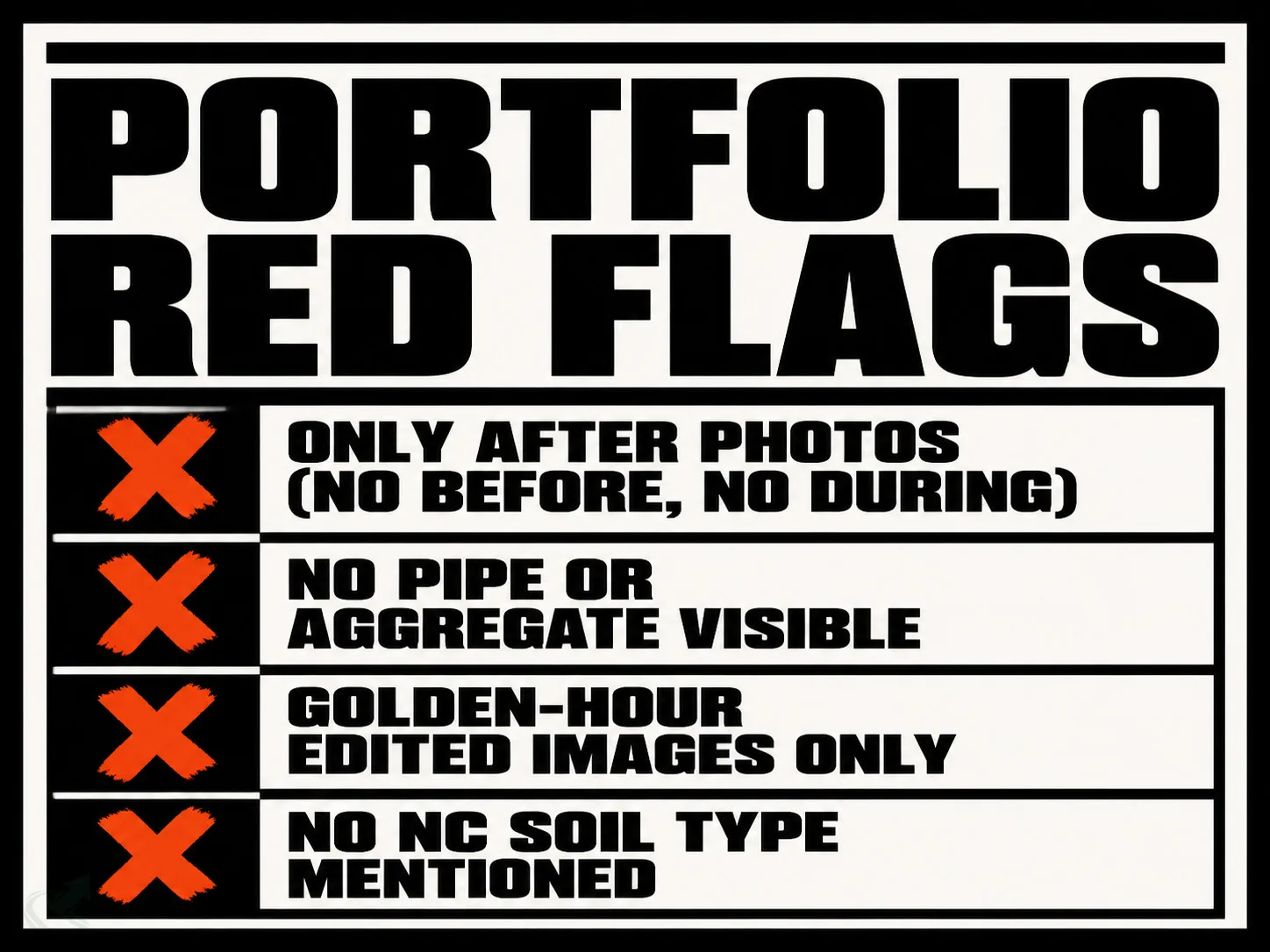
Only 'after' photos -- no before, no during, no post-rain. Any contractor can show a completed, sodded yard. Showing what the problem looked like before and how it performs after rain requires actual confidence in the work.
The Three-Phase Documentation Standard
Portfolios that document three phases — before, during, after — give you real information. One-phase portfolios give you aesthetics.
Before-conditions documentation: Photos of the problem as-found. Standing water at the foundation. An eroded driveway with a washout channel. A yard with a defined low spot where water collects. The more specific the problem documentation, the more likely the contractor understood what they were actually fixing.
During-installation photos: The drainage system itself, before backfill. A French drain trench with pipe and aggregate visible. Compaction layers on a driveway base. A silt fence installed before grading begins. These photos prove the system was built correctly — not just that the yard looks fine afterward.
Post-rain performance documentation: Dated photos showing water flowing correctly after the first significant rain. Water moving away from the foundation. Downspout discharge reaching the intended drainage destination. No new pooling where the old low spot was.
The three-phase standard is the rain-check photos as contractor trust signal formalized into portfolio documentation. A contractor who tracks post-rain performance in writing will show it in their portfolio.
| One-Phase Portfolio | Three-Phase Portfolio | |
|---|---|---|
| Before documentation | Missing | Conditions as-found: pooling, erosion, slope failures |
| During installation photos | Missing | Pipe in trench, aggregate type, silt fence, compaction |
| Post-rain performance | Missing | Dated water-flow photos after first significant rain |
| NC-specific context | Often absent | Soil type, drainage destination, aggregate specified |
| What it tells you | The yard looks finished | The drainage system works |
What Good Drainage Photos Show in NC Clay
In North Carolina Piedmont clay, good drainage photos show water moving — not just a finished grade. Clay doesn’t drain easily; the photos should show where the water actually goes.
Drainage destination visible: A French drain installation photo should show where the pipe daylights — the exit point where water leaves the system. A photo showing only the trench tells you a hole was dug. It doesn’t tell you where the water goes after a heavy rain.
Compaction evidence: Driveway and pad grading photos should show the compaction process — typically a plate compactor or roller working the base material in lifts. On larger pads, a proof-roll (a loaded dump truck driven across the grade to identify soft spots) is sometimes documented with photos or included in the contractor’s process notes.
Clay-appropriate aggregate: NC drainage systems should show the aggregate type used. #57 stone (1-inch nominal) and #67 stone (3/4-inch nominal) are the standard choices for French drain pipe trenches in North Carolina — both drain well in Piedmont clay. Pea gravel is sometimes used for surface applications but compacts more easily in a pipe trench and performs differently over time.
Grade slope visible: A photo taken with a level or a reference stake at the foundation shows slope. An aerial shot of a finished, sodded yard tells you the surface looks even. Those are different pieces of information.
Portfolio photos that prove the work vs photos that just look good
Comparison. Three-phase documentation: Before photo showing the standing-water problem; During photo of pipe in the trench with #67 stone; Post-rain photo of water flowing to the daylight point; Evidence the contractor understood the problem. Aesthetics only: A single 'after' photo of a finished green yard; No pipe, aggregate, or catch basins visible; Golden-hour or edited images, no working-day shots; Tells you the surface is flat, nothing about drainage.
- Before photo showing the standing-water problem
- During photo of pipe in the trench with #67 stone
- Post-rain photo of water flowing to the daylight point
- Evidence the contractor understood the problem
- A single 'after' photo of a finished green yard
- No pipe, aggregate, or catch basins visible
- Golden-hour or edited images, no working-day shots
- Tells you the surface is flat, nothing about drainage
In NC clay, a portfolio should show where the water goes -- a finished lawn alone is not drainage evidence.
See the French drain project gallery NC for examples of how aggregate, pipe placement, and daylight points are documented in NC drainage work.
Red Flags in a Contractor Portfolio
Red flags in a portfolio are things that should be present but aren’t — missing before photos, missing drainage system components, and exclusively golden-hour or edited images.
-
Only “after” photos. Any contractor can show a finished, sodded yard. The “before” conditions are where the contractor demonstrates they understood the problem — not just that they could grade a surface flat.
-
No drainage system visible. A yard drainage portfolio with no photos of pipe, aggregate, or catch basins may mean the solution was surface regrading only. In North Carolina Piedmont clay, surface regrading without subsurface drainage frequently does not address root causes — water comes back after the next heavy rain.
-
Golden-hour or heavily saturated images only. Professionally lit photos look compelling and tell you nothing about drainage performance. The working-day photos — flat light, muddy boots, pipe in the trench — are the ones that contain evidence.
-
No NC-specific context. A portfolio showing projects across multiple states or regions may indicate the contractor doesn’t specialize in NC clay conditions. Piedmont drainage failures have specific characteristics that aren’t universal.
Compare to the yard drainage project gallery for documented NC Piedmont projects that show before-conditions and post-rain performance.
How to Ask for References That Match Your Job
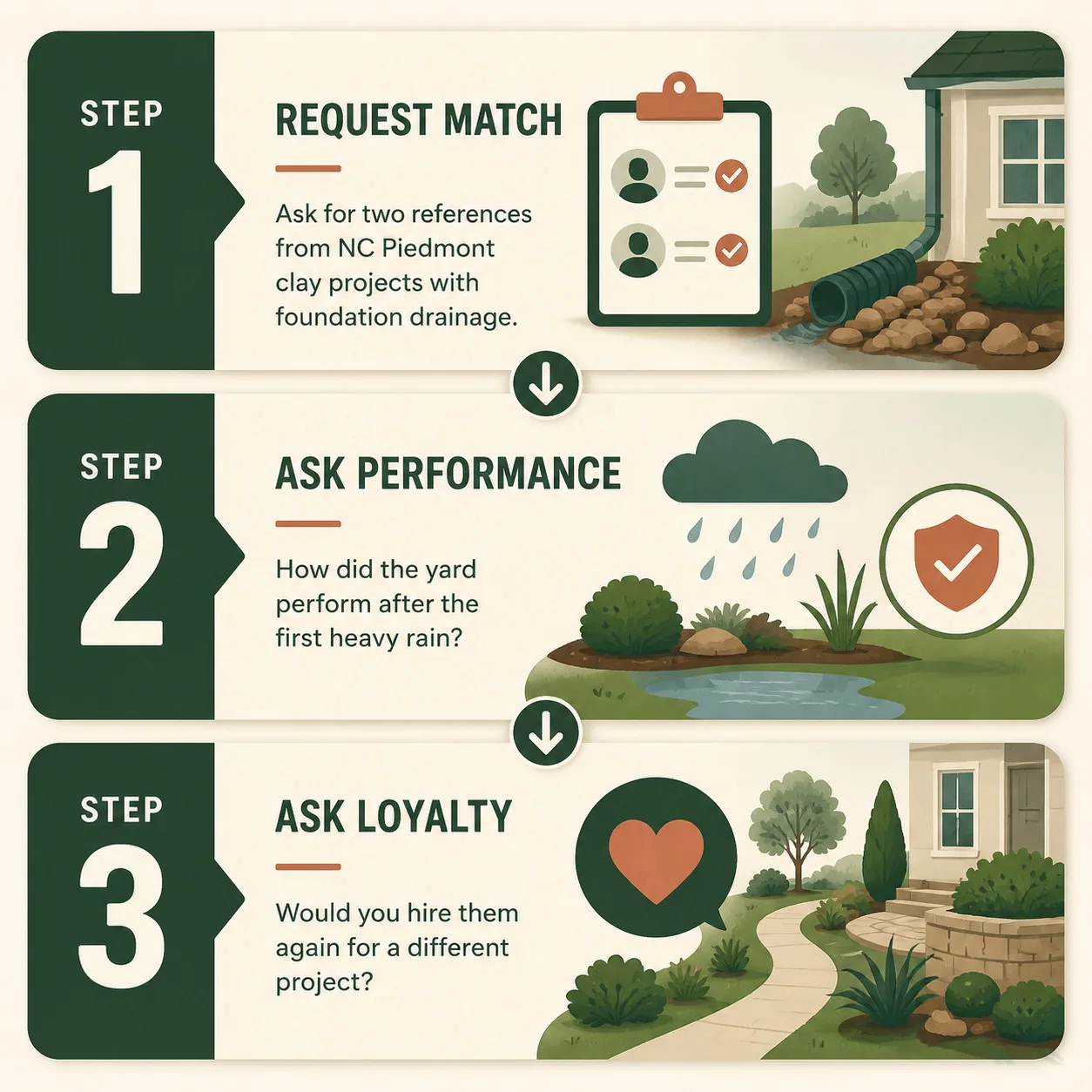
Ask for two or three references from projects with the same soil type and same drainage problem as yours — not the contractor’s best-looking recent projects.
The specific request:
“Can you give me two references from projects in North Carolina Piedmont clay where you fixed standing water within 15 feet of the foundation?”
Why specificity matters: a contractor with excellent work in sandy-soil Coastal Plain counties may not have experience with the specific drainage failure modes of Piedmont clay subdivisions. The two regions behave very differently under the same rainfall.
What to ask the references:
- “How did the yard perform after the first heavy rain?”
- “Did the contractor come back for a rain-check visit?”
- “Would you hire them again for a different drainage project?”
The third question produces the most honest answer. The first question tells you whether the drainage performed. The second tells you whether why trustworthy graders document their work — that post-installation check — was part of the contractor’s standard process.
Common Mistakes When Evaluating a Portfolio
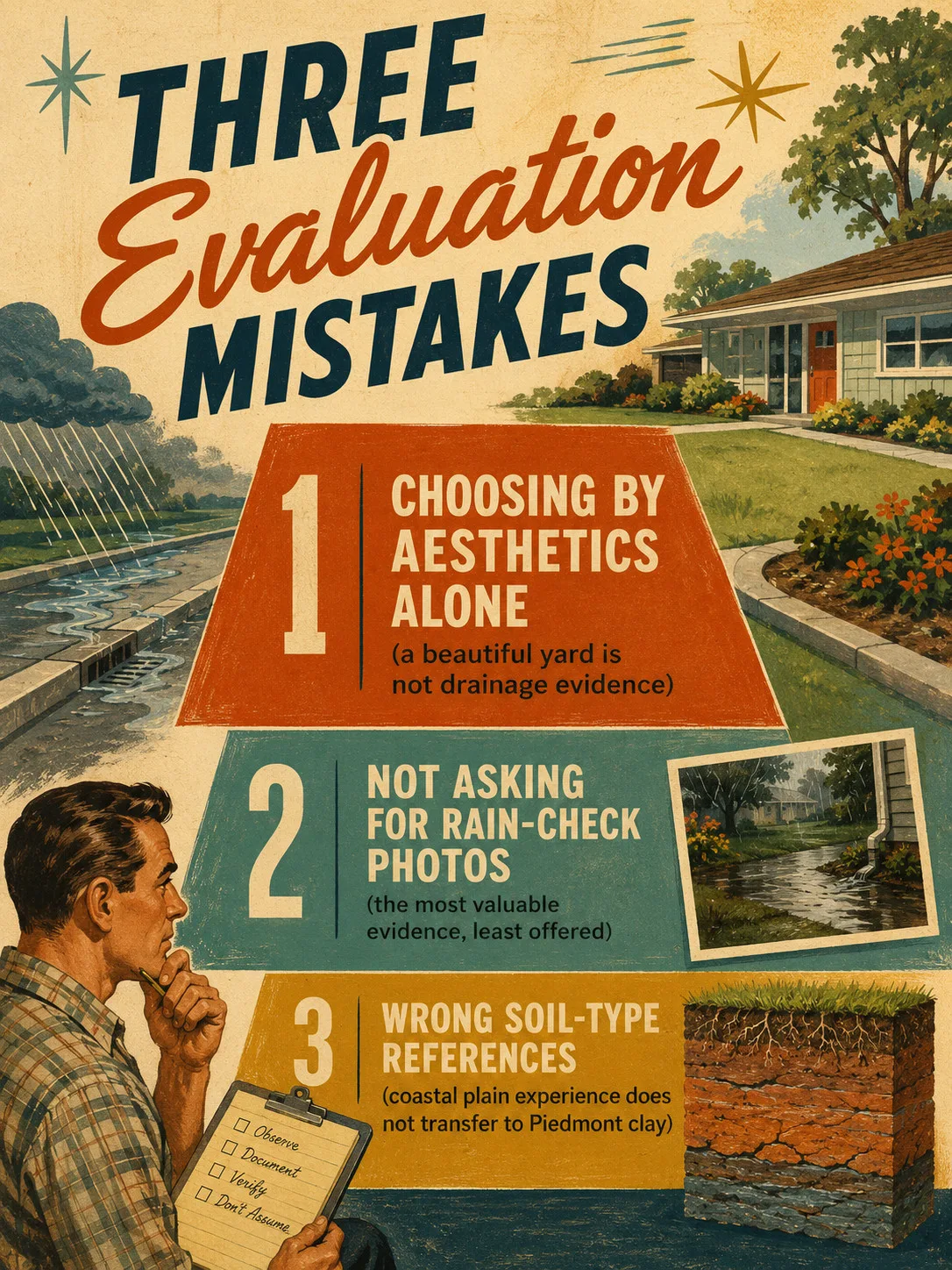
These mistakes show up consistently when homeowners choose a contractor based on portfolio photos alone.
-
Choosing based on aesthetics alone. A beautiful finished yard doesn’t confirm the drainage performs. Before photos and post-rain photos are the evidence. Finished lawn photos are aesthetics.
-
Not asking for rain-check documentation. Rain-check photos are the most valuable portfolio evidence and the least commonly offered. Asking for them directly identifies which contractors track performance after installation.
-
Not requesting references from similar soil-type projects. A contractor’s best coastal-plain driveway grading project photos NC is not evidence for Piedmont clay competence. Drainage behavior in these regions is different enough that experience in one doesn’t transfer directly to the other.
NCGH Project Gallery
The NC Grade and Haul project gallery is organized by service type. Each documented project includes the county, soil type, problem as-found, and the solution installed — so you can filter for projects that match your situation rather than browsing by aesthetics.
Foundation drainage project gallery — documented NC foundation drainage projects with before-conditions and post-rain performance photos.
Yard drainage project gallery — standing water and low-spot drainage projects in NC Piedmont clay.
French drain project gallery NC — French drain installations showing pipe placement, aggregate type, and daylight point documentation.
New projects are added monthly as verification batches complete. If the gallery is sparse when you’re reading this, the contractor search below is the faster path to verified NC grading contractors with documented project history.
Hire a grading operator in North Carolina and request an itemized quote with the project photos you’ve seen here as reference.