If you’re hiring a grading, drainage, or hauling contractor in NC, you’re entering a market with real licensing gaps, opaque pricing, and contractors ranging from professionals carrying million-dollar bonds down to a guy with a pickup and a bucket. This hub exists to level the information asymmetry.
The homeowner is hiring someone whose industry they don’t understand. The contractor knows that. Every page linked from here is a lever that shifts a piece of that asymmetry back.
Everything here is practical: the vetting framework, the red flags, the licensing thresholds, the builder-dispute playbook. Nothing aspirational.
Start Here — Pick Your Situation
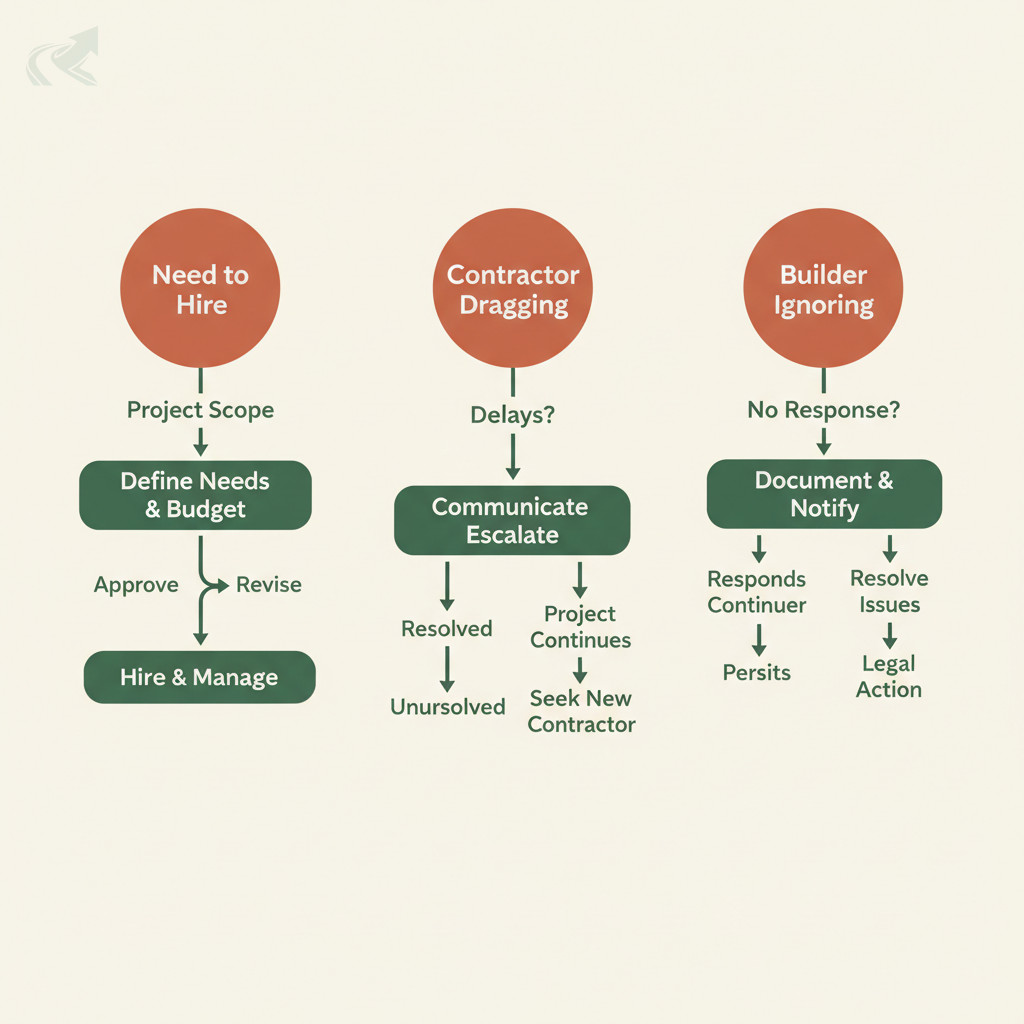
Three paths cover almost every homeowner who lands on this hub.
1. I need to hire someone and I don’t know where to start. Open the NC grading contractor vetting hub — it walks the 10-question framework that exposes whether a contractor knows NC clay, NC code, and NC drainage. Pair it with NC contractor licensing thresholds & how to verify so you know which license number to ask for before the first call.
2. I have two or three quotes and I can’t tell who’s right. Start at how to evaluate three quotes for the scoring framework. Then read itemized quote vs lump-sum bid to understand why the cheap quote is almost always missing line items. If the spread between bids is 2x or more, the bid-spread guide explains what’s usually hiding inside the gap.
3. My builder’s work is failing and they’re ignoring me. Go straight to NC builder accountability playbook — the four-lever playbook (warranty letter, certification letter, NCLBGC complaint, civil escalation). The NC builder certification letter guide is the lever most homeowners don’t know exists; a single engineer-signed page can change a builder’s posture overnight. The Triangle production-builder pattern covers one of the most common failure shapes in Wake and Johnston counties — same yard symptoms, same minimum-grade shortcut, same warranty-desk runaround.
If your situation falls between two of these — you have one quote and want a second opinion, or you have a builder issue but also need a new contractor to actually fix the work — start at situation 2. Quote evaluation is the connective tissue between the other two paths.
The Hub’s Sub-Pages
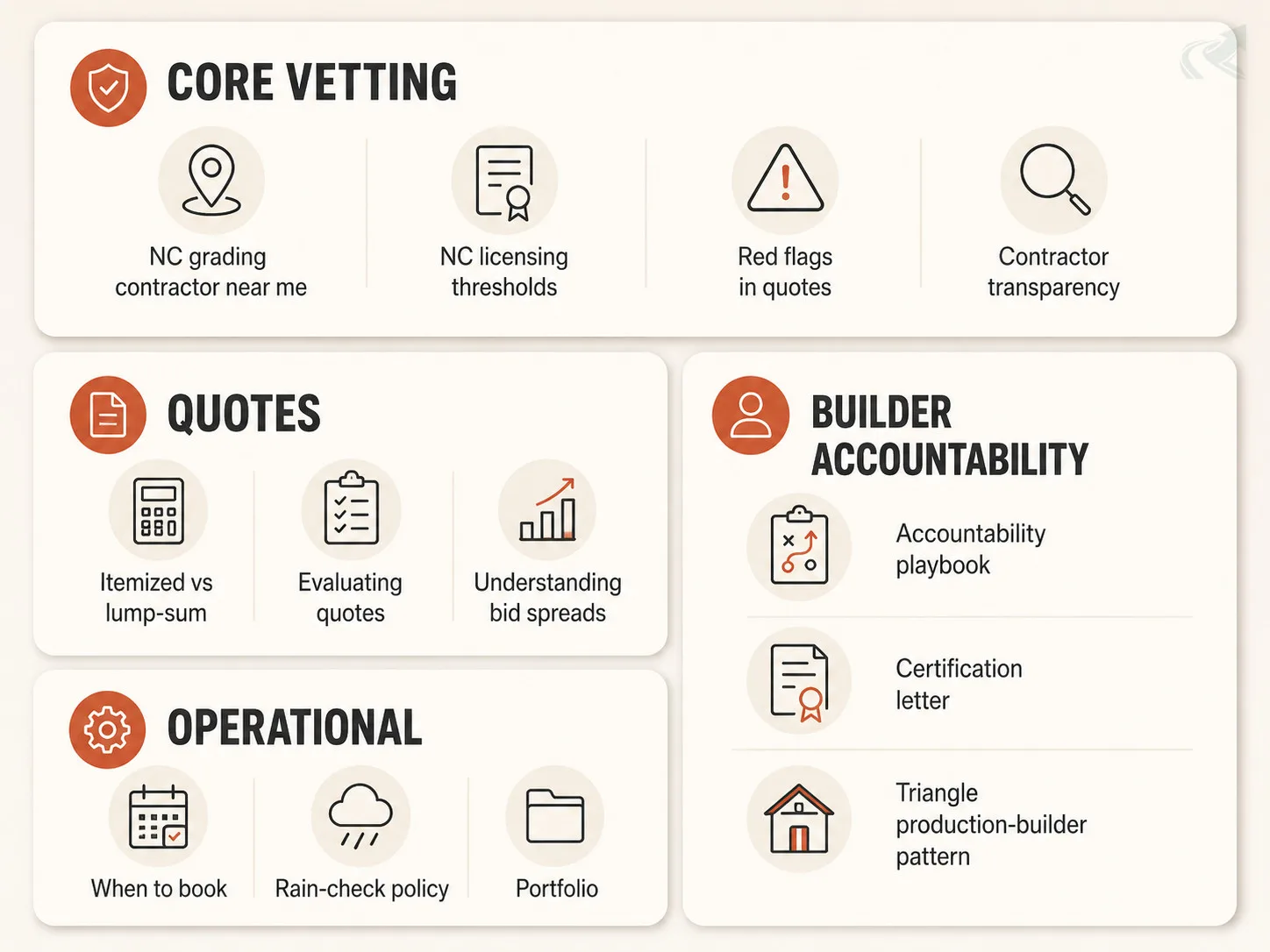
Grouped by job — vetting, quotes, builder accountability, and operational logistics.
Core vetting
- NC grading contractor near me — the 10-question vetting framework, NC-specific.
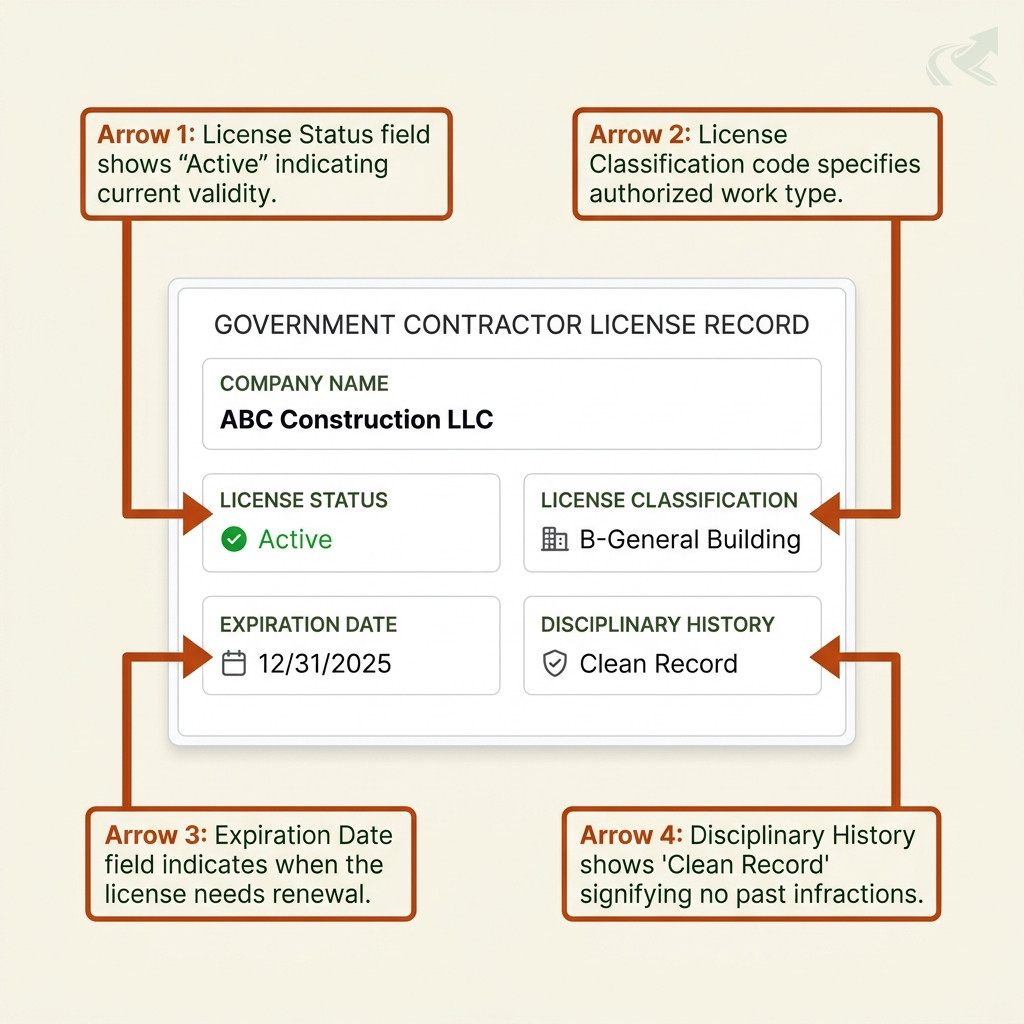
- NC contractor licensing thresholds & how to verify — the $40,000 rule (raised from $30k in 2023), specialty classifications, and how to read a license-board record.
- Red flags in NC contractor quotes — the 12 patterns that mean “next contractor.”
- Contractor transparency in NC quotes — what a contractor should be willing to put in writing before deposit.
Quotes
- Itemized quote vs lump-sum bid — why a one-line “$14,000 grading” quote is unusable and what to demand instead.
- Evaluating grading quotes — scoring framework that surfaces apples-to-oranges scope mismatches.
- Understanding bid spreads in NC grading — what a 2x or 3x gap between bids usually means in NC residential work.
Builder accountability
- NC builder accountability playbook — the four-lever escalation playbook.
- NC builder certification letter guide — the engineer-signed document that forces a builder back on site.
- NC builder disputes: the Triangle production-builder pattern — how minimum-grade lots fail in Wake, Johnston, and Harnett, and the escalation path that works.
Operational
- When to book — calendar realities for grading work in NC.
- Rain-check policy — how a real contractor handles a rained-out dig day.
- Portfolio — what to ask to see, and what a real portfolio looks like.
NC Licensing in 60 Seconds
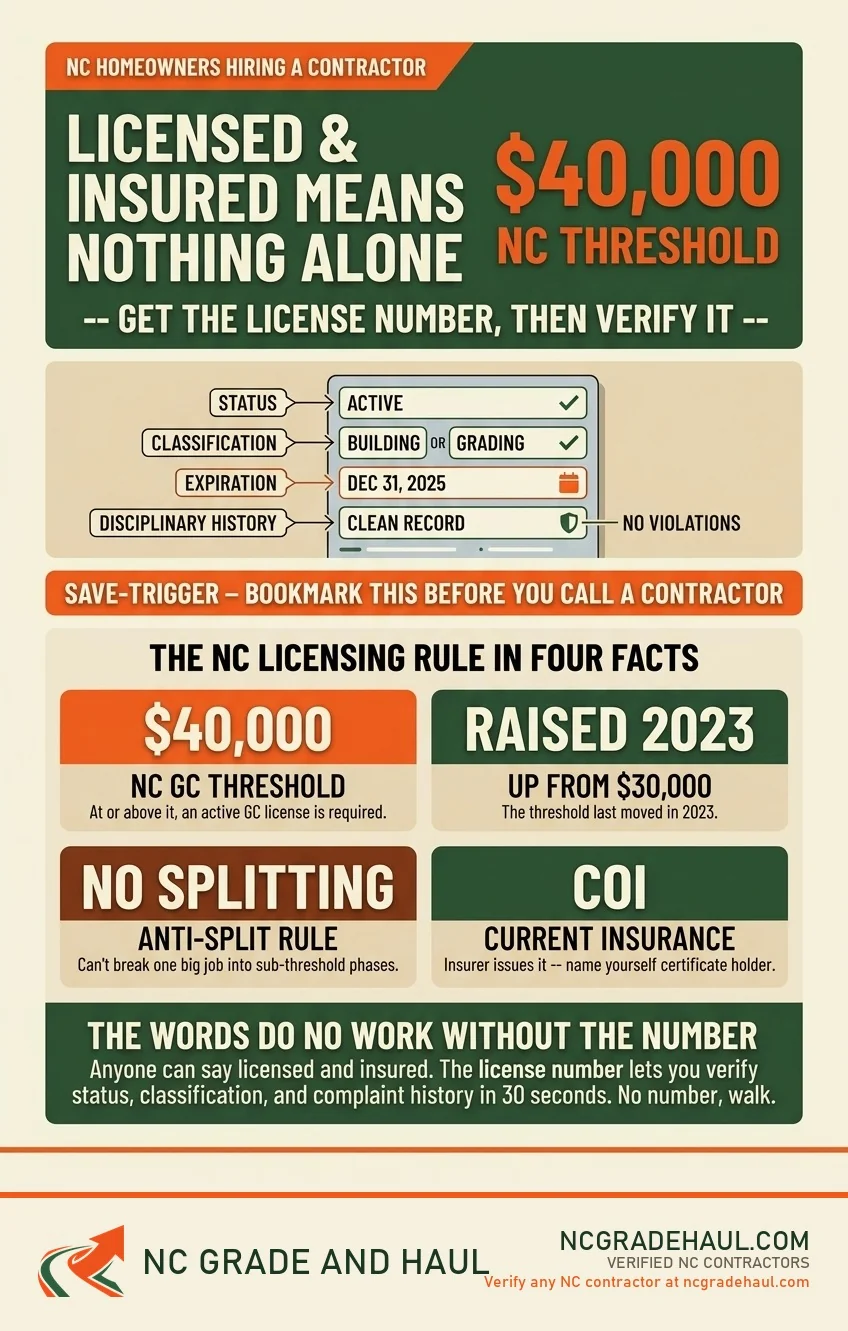
$40,000 is the NC threshold (raised from $30k in 2023). Below it, no general contractor license is required by state law. At or above it, the contractor must hold an active NC general contractor license in the right classification.
That single rule is responsible for more homeowner confusion than any other line in NC contractor law. Three things to know:
- The $40,000 threshold is per project, not per phase. A contractor cannot legally split a $90,000 grading job into three $30,000 phases to dodge the license requirement. That’s a violation, and it’s enforceable.
- The license has a specialty classification. A general contractor licensed in “Building” is not licensed for highway grading. The classification on the license has to actually cover the work — grading, highway, public utilities, residential. The license number tells you which one.
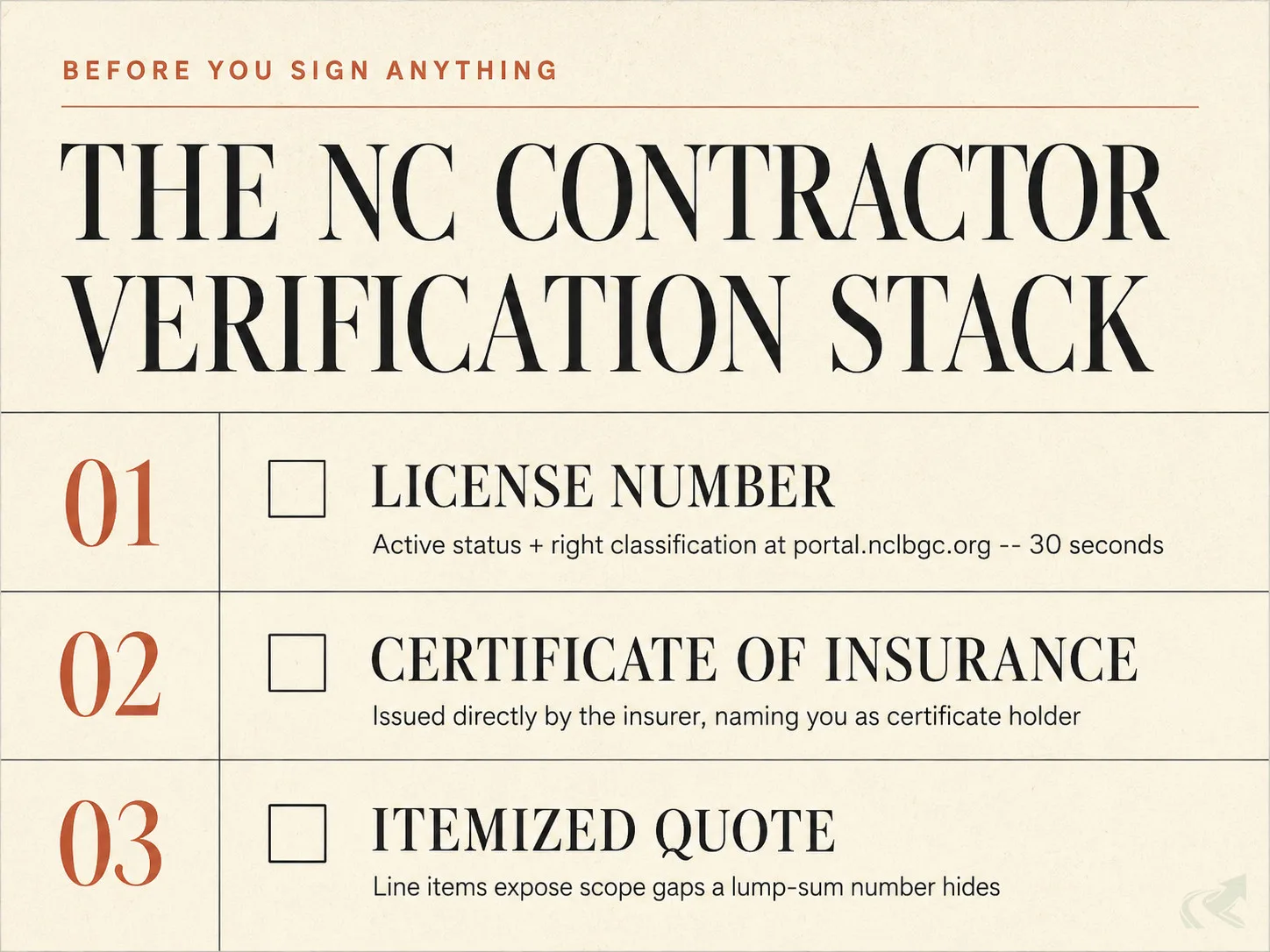
- “Licensed and insured” is meaningless without the number. Anyone can say it. The license number lets you verify it on the NC Licensing Board portal in 30 seconds — active status, classification, qualifying party, complaint history. If a contractor won’t give you the number, the words aren’t doing any work.
- Insurance is its own check. A license doesn’t prove the contractor carries general liability today. Ask for a current COI naming you as certificate holder; the insurer issues it directly, not the contractor. A photocopy of last year’s policy isn’t proof of anything.
Full breakdown — including how to read a license record, what an inactive status means, and how specialty classifications map to scopes — at the NC contractor licensing page.