
Two questions homeowners ask
My contractor ordered 5 yards -- the ticket says 7.1 tons. Is that right?
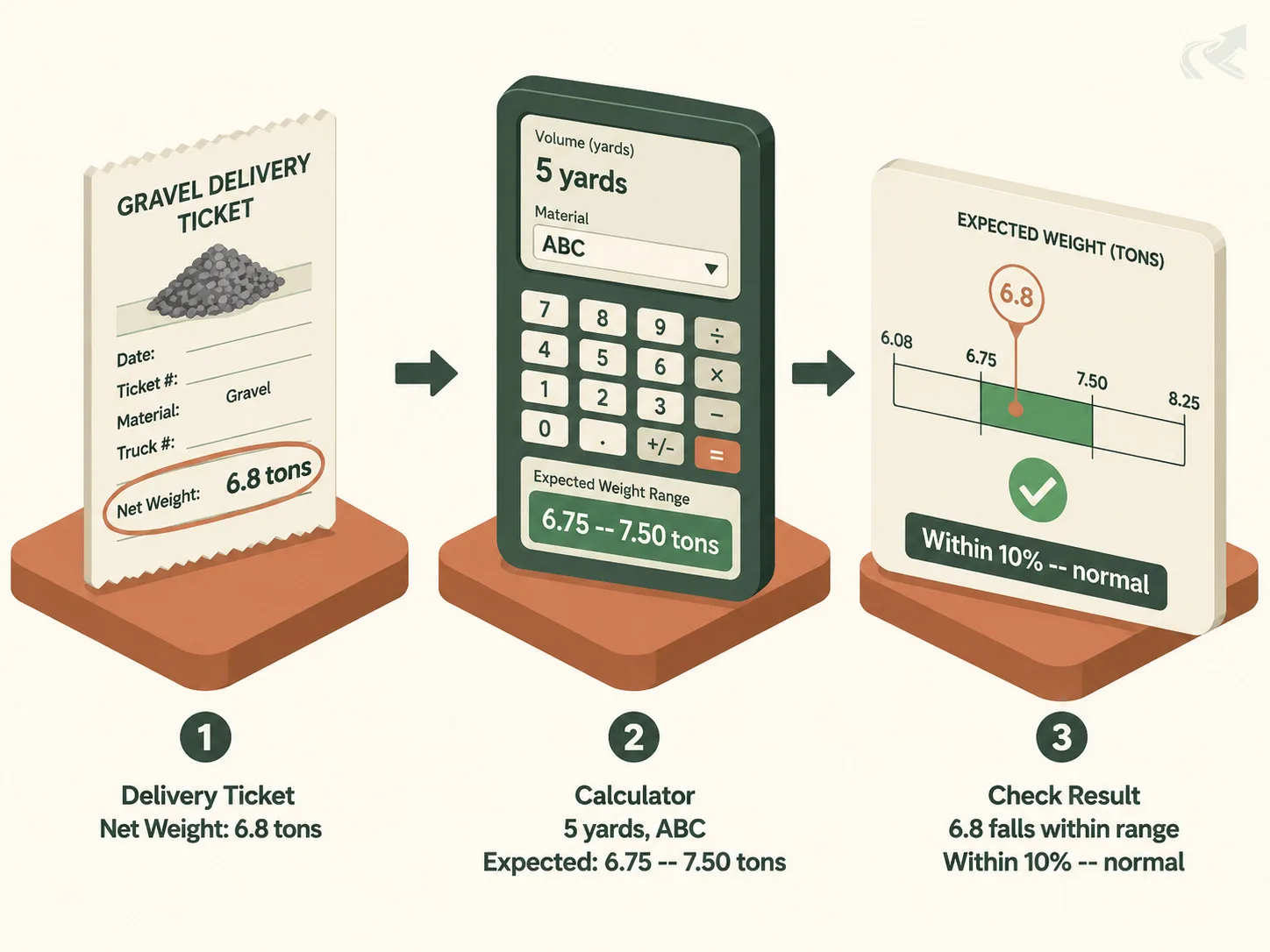
For ABC gravel, 5 yards should weigh approximately 6.75-7.5 tons. A ticket at 7.1 tons is within the expected range. Use the converter below to run your specific numbers.
Why does the weight vary from what I expected?
Moisture content and quarry-specific particle size affect the weight at the scale. A 10% variance from the midpoint estimate is normal. A gap larger than that is worth a call to your supplier.
Yards-to-Tons Converter
Enter your quantity and material to see the expected weight range.
Converted quantity
Ticket verdict
Delivery ticket summary line
Copied!Material density varies by quarry source, particle size, and moisture content at time of delivery. This converter uses NC-typical density ranges. A ticket that falls more than 10% outside the estimated range is worth a call to your supplier. These are field estimates -- not contract numbers.
Why Yards and Tons Are Different Numbers
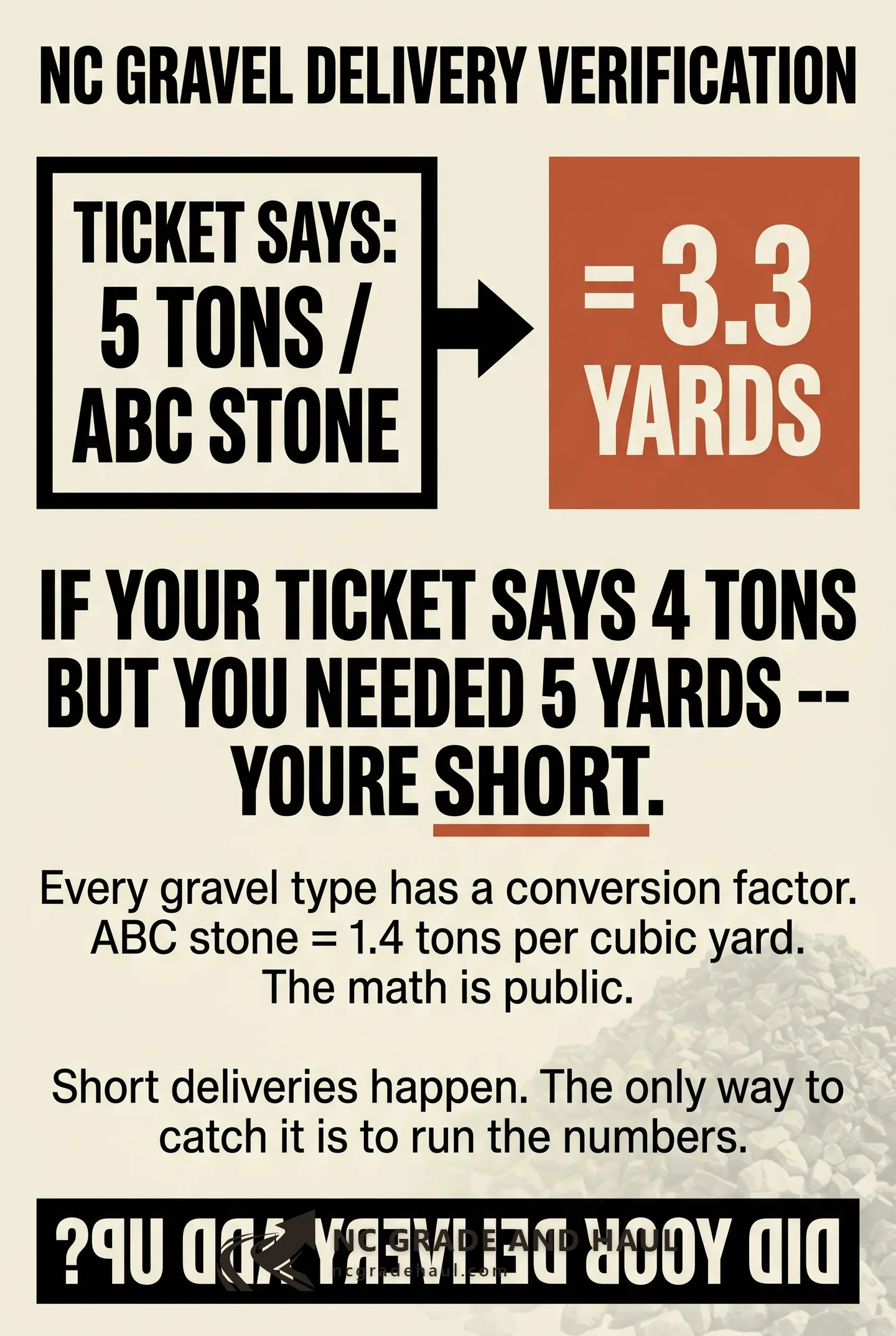
Yards measure volume. Tons measure weight. The conversion depends on the material.
A cubic yard is a fixed box — 3 feet by 3 feet by 3 feet, 27 cubic feet of space. What that box weighs depends entirely on what’s inside it. gravel packs dense and wet clay-bound fines add mass. Washed #57 stone drains fast but has more air between particles.
Contractors typically quote jobs in cubic yards because that’s what fills a space. Quarries bill in tons because that’s what the truck scale reads at the gate. Both numbers are correct — they just measure different things. The homeowner holding a gravel delivery ticket sees tons; the quote said yards. Nothing changed. The conversion is the answer.
This is the single most common source of “did I get shorted?” calls in NC hauling. You probably weren’t shorted. Run the converter above and check.
How to Read a Delivery Ticket
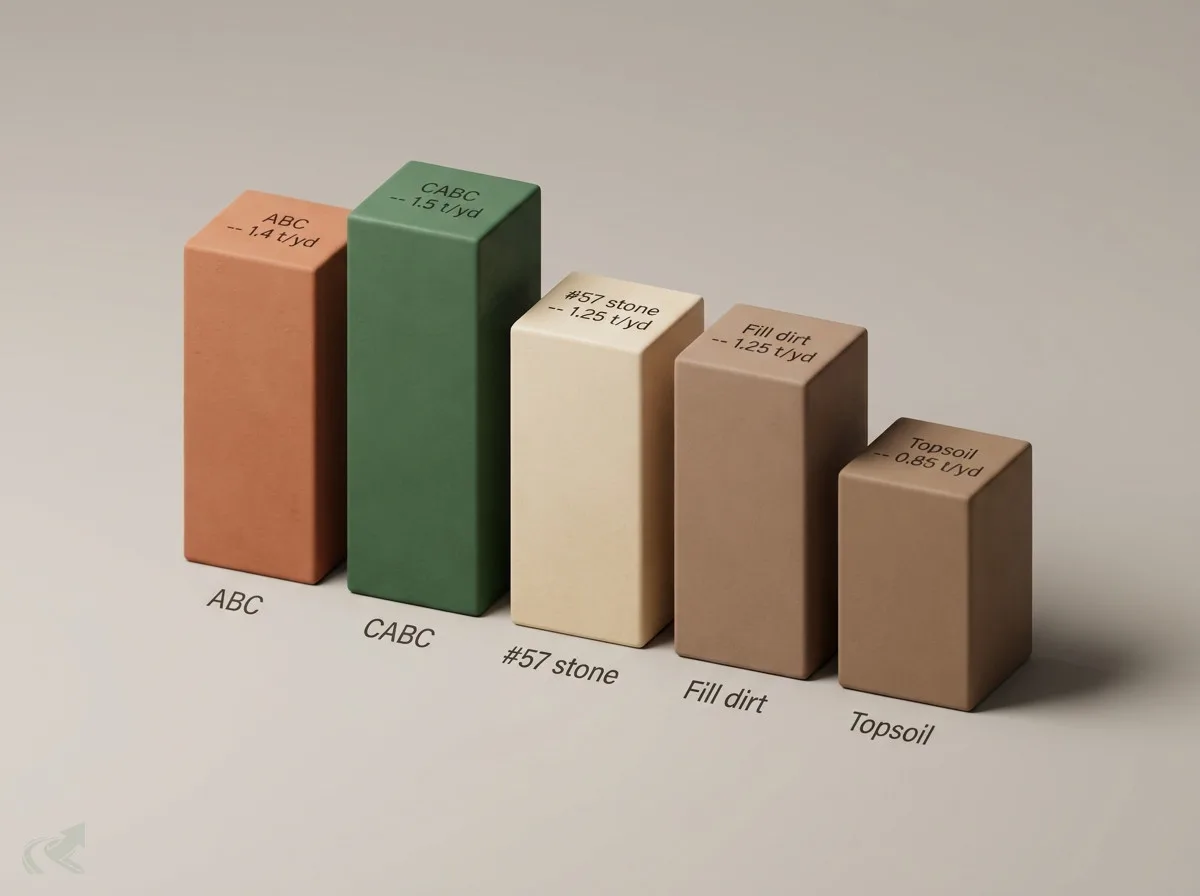
The ticket shows three things worth verifying: material type, net weight in tons, and sometimes the quarry of origin.
Walk through it line by line when the truck pulls away:
- Material name: Should match what your contractor spec’d. “ABC 57” is not the same as “#57 stone” — one is base course, one is drainage stone. Confirm the spec before the truck rolls, not after.
- Net weight (tons): This is what the quarry scale measured at load-out. It is the most reliable number on the ticket — scale readings are regulated.
- Quantity in yards (if listed): Cross-check against the converter using the actual material on the ticket. A 10% variance from the midpoint estimate is normal across different quarries and moisture levels.
If something looks off, ask for the quarry scale ticket. A legitimate contractor can produce it; refusal to do so is a recognized warning sign in a grading bid. The quarry scale ticket is the original record of what left their facility — it is not the same as the delivery receipt the driver hands you.
For the full picture on how yards-vs-tons pricing works in North Carolina, the yards vs tons trust content using the gravel converter covers the math, the common pricing confusion, and what to put in writing before material is ordered.
Short-Load Red Flags
Short loads are rare but real. Here’s what actually looks wrong — versus what just looks confusing.
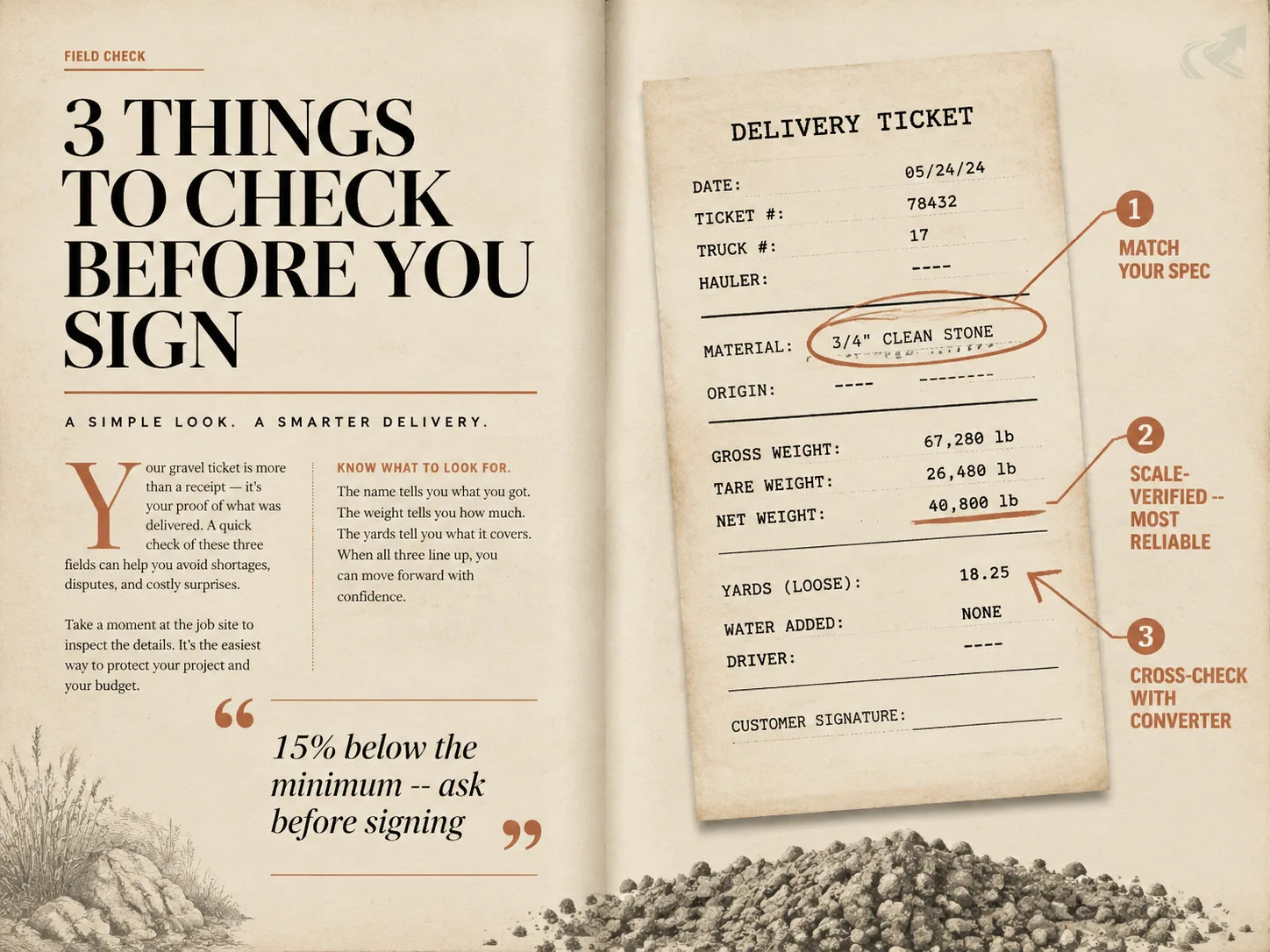
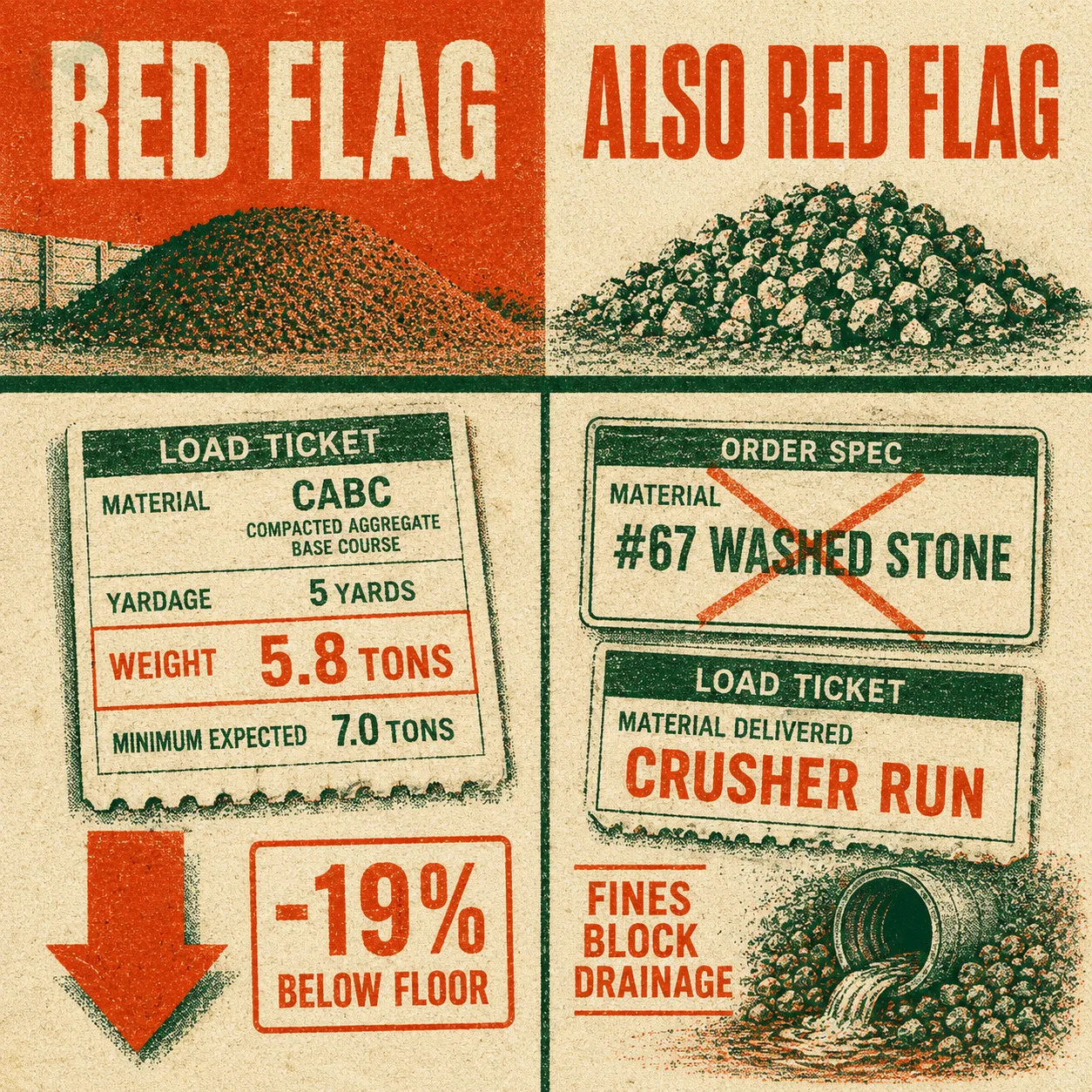
A ticket significantly below the low end of the expected range — more than 15% under the minimum — is the clearest signal. The converter gives you that floor. If 5 yards of should weigh at minimum 7.0 tons and the ticket shows 5.8 tons, ask before signing.
Substituted material is the other pattern. You ordered #67 washed stone and the ticket says “crusher run” — that is not the same material. Crusher run has fines that block drainage. Verify the spec on the ticket matches the spec on your quote.
Neither of these situations requires a legal confrontation. Ask the contractor for the quarry scale ticket. A straightforward supplier hands it over without a second thought.
Planning an upcoming delivery? Get an itemized quote from a verified NC grading and hauling contractor that shows material, weight, and haul cost as separate line items before the truck is ordered.
More material and equipment context at the NC grading equipment hub including dump trucks and the NC grading and drainage calculators hub.