
A contractor told Latoya her proposed driveway would come in at 18% grade and that was “probably at the limit.” He didn’t explain which limit — NCDOT? Building code? His own preference?
The confusion is common because there are two different questions bundled into “is my driveway too steep.” One is regulatory: what does require at the driveway approach? The other is practical: what steepness can actually be made stable and safe for long-term use?
This page separates those two questions and gives you the vocabulary to have a precise conversation with any driveway grading contractor in NC.
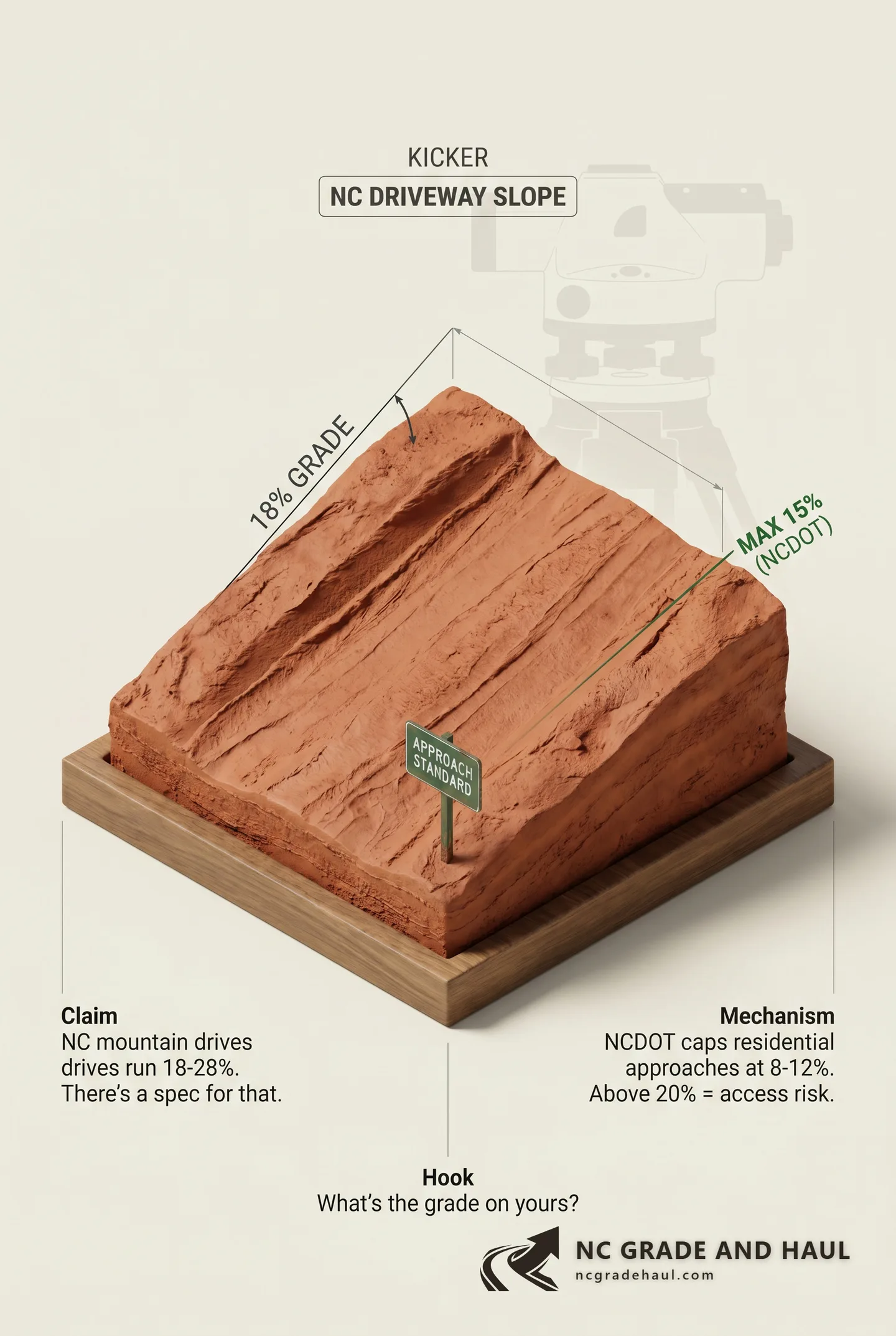
The NCDOT Approach Grade Limit
NCDOT regulates the grade at the driveway approach — the transition from the public road to your private driveway — not the grade of the driveway itself beyond the right-of-way.
The approach is the short section where your driveway connects to the road. It typically includes a culvert (in rural NC) or curb cut (in subdivisions) and the first 15-50 feet of transition.
NCDOT requirements at the approach, drawn from the NCDOT Policy on Street and Driveway Access (Chapter 7, Section D — Driveway Profile):
- Maximum grade within the right-of-way: the NCDOT Policy states the grade of a driveway within the right-of-way, beyond the shoulder, should not exceed plus or minus 10 percent. (The Policy phrases this for commercial driveways; private single-family residences typically do not require an NCDOT permit at all, but the same profile principles are what districts apply.)
- Slope-away at the shoulder: the first stretch of driveway, across the shoulder, must slope away from the highway at a rate matching the shoulder slope — not less than 1/4 inch per foot nor greater than 1 inch per foot (roughly 2% to 8%). This is the transition that keeps water off the road and prevents a hump or depression in the shoulder.
- Sight distance: not a grade limit, but grade changes near the road can affect whether your approach meets sight-distance compliance — a separate NCDOT check.
What this means for an 18% driveway: if the stretch across the shoulder and within the right-of-way meets the profile requirements — shoulder-matching slope-away, then no steeper than 10 percent within the right-of-way — the 18% grade on the private portion beyond is not an NCDOT issue. The right-of-way portion is regulated. The private driveway grade is not, though practical limits still apply. Where special circumstances require steeper grades within the right-of-way, NCDOT may approve a deviation on a case-by-case basis.
The “limit” Latoya’s contractor mentioned was probably the right-of-way profile requirement, not a statewide grade maximum. Those are not the same thing.
Practical Slope Limits — Gravel vs Asphalt vs Concrete
Gravel driveway grading in NC can function at higher grades with proper drainage management. Asphalt becomes problematic above 10-12% without special surface treatment. Concrete is the most capable surface at steep grades but requires rough finishing for traction.
Gravel vs asphalt on a 15% driveway slope
Comparison. Gravel with water bars: Functions at grades above 15% with proper drainage; Water bars intercept sheet flow every 50-100 ft; Crusher run aggregate locks better above 20% in WNC; High maintenance if water bars are skipped; Ice hazard above 20% in mountain counties. Standard asphalt: Ideal performance up to 10-12% grade; Becomes slippery when wet above 10-12%; Textured or grooved surface improves traction; Not recommended above 15% without special engineering; No NC statute sets a residential asphalt grade maximum.
- Functions at grades above 15% with proper drainage
- Water bars intercept sheet flow every 50-100 ft
- Crusher run aggregate locks better above 20% in WNC
- High maintenance if water bars are skipped
- Ice hazard above 20% in mountain counties
- Ideal performance up to 10-12% grade
- Becomes slippery when wet above 10-12%
- Textured or grooved surface improves traction
- Not recommended above 15% without special engineering
- No NC statute sets a residential asphalt grade maximum
Concrete is the most capable surface above 15% but requires rough surface finishing for traction. These thresholds are field-practice ranges, not NCDOT or building-code requirements.
Grade thresholds by surface type (these are field-practice ranges from contractor experience and published engineering references, not NCDOT or building-code requirements):
| Grade range | Gravel | Asphalt | Concrete | Notes |
|---|---|---|---|---|
| 0-8% | Ideal | Ideal | Ideal | All surfaces perform normally |
| 8-12% | Good with drainage | Manageable | Good | Gravel needs water bars above 10% |
| 12-15% | Needs water bars + crown | Marginal | Good | Asphalt needs surface treatment for traction |
| 15-20% | Requires drainage engineering | Not recommended | Requires rough surface finish | Gravel drainage management is critical |
| 20%+ | High maintenance, ice hazard | Not recommended | May require textured steps | WNC mountain-specific design required |
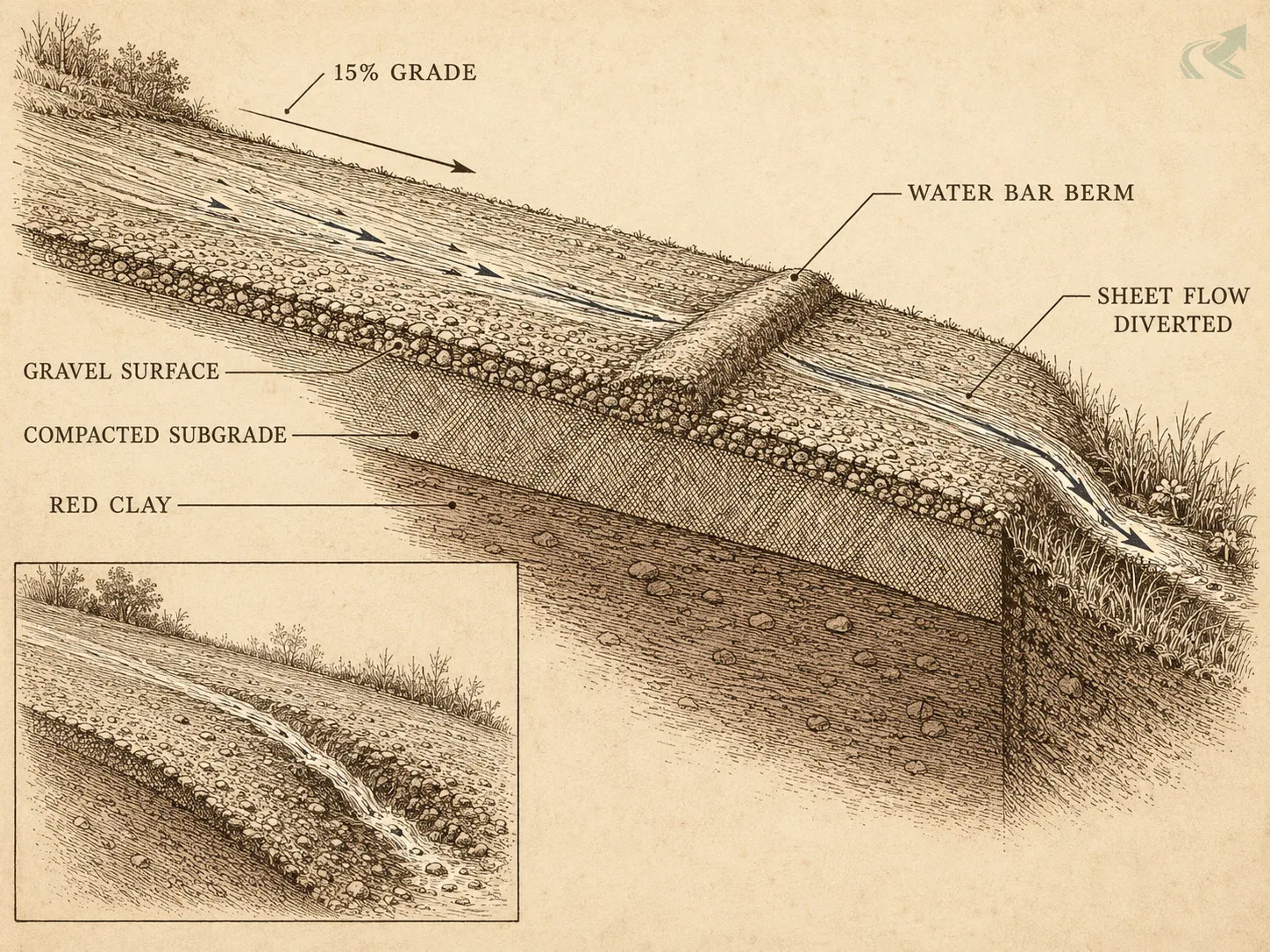
Gravel at steep grades. On grades above 10%, water accelerates down the driveway surface and carries gravel with it. Water bars — shallow compacted berms angled across the drive at 30-45 degrees — intercept sheet flow at regular intervals and redirect it off the driveway edge before it gains destructive velocity. Spacing varies with grade: closer together on steeper grades, farther apart on gentler ones. Field practice in NC typically runs 50-100 feet between bars on grades above 10%, with steeper sections requiring the shorter interval. Without water bars, gravel migrates downhill after every storm.
Asphalt at steep grades. Standard asphalt becomes slippery when wet above 10-12% grade. Asphalt driveway grading and overlay prep can include textured or grooved surface treatment that improves traction, but adds cost. Above 15%, asphalt in wet conditions is a vehicular hazard — not recommended without special surface engineering. These thresholds reflect contractor field practice and published pavement-engineering guidance; no NC statute or NCDOT rule sets a residential driveway asphalt grade maximum.
WNC context. Mountain driveways in Buncombe, Henderson, and Rutherford counties routinely exceed 15%. North Carolina contractors working WNC use water bars, turnouts, and switchback design rather than trying to grade straight down a steep slope. Crusher run — a more angular aggregate that locks better under load — is often used in place of standard gravel on WNC grades above 15%.
A 15% gravel driveway with water bars vs without
Comparison. Water bars at regular intervals: Shallow berms angled across the drive at 30-45 degrees; Each bar intercepts sheet flow and diverts it off the edge; Water never gains destructive velocity; Gravel surface stays intact through wet seasons. No water management: Water channels straight down the running surface; Velocity builds and strips gravel from the center; Deep rut channels cut into the drive; Refill cycle repeats after every storm.
- Shallow berms angled across the drive at 30-45 degrees
- Each bar intercepts sheet flow and diverts it off the edge
- Water never gains destructive velocity
- Gravel surface stays intact through wet seasons
- Water channels straight down the running surface
- Velocity builds and strips gravel from the center
- Deep rut channels cut into the drive
- Refill cycle repeats after every storm
On any NC grade above 10%, unmanaged water -- not the slope itself -- is what destroys a gravel driveway.
Cross-Slope and Drainage Slope — Two Different Things
The grade along the driveway (longitudinal slope) determines how fast water runs. The cross-slope (crown) determines where water goes laterally. Both must be managed — and on steep grades, failing either one causes erosion damage.
Definitions that matter:
- Longitudinal slope: the grade along the length of the driveway — the “hill.” When someone says “my driveway is 15%,” this is what they mean.
- Cross-slope (crown): the side-to-side pitch across the driveway width. A proper crown sheds water toward both edges rather than letting it channel down the center — the same driveway crowning technique used to shape gravel and compacted driveways throughout NC. Standard crown is 2% per side.
- Cross-drainage: water that reaches the driveway edge has to go somewhere — a ditch, a swale, or off the property edge. Without a designed outlet, edge water builds up and undercuts the driveway fill from below.
On a 5% driveway, crown alone handles most of the work. Longitudinal drainage velocity is manageable. On a 15% driveway, crown sheds water to the edges at high velocity. Without cross-drainage outlets at regular intervals, that edge water erodes the shoulder and the driveway narrows over time.
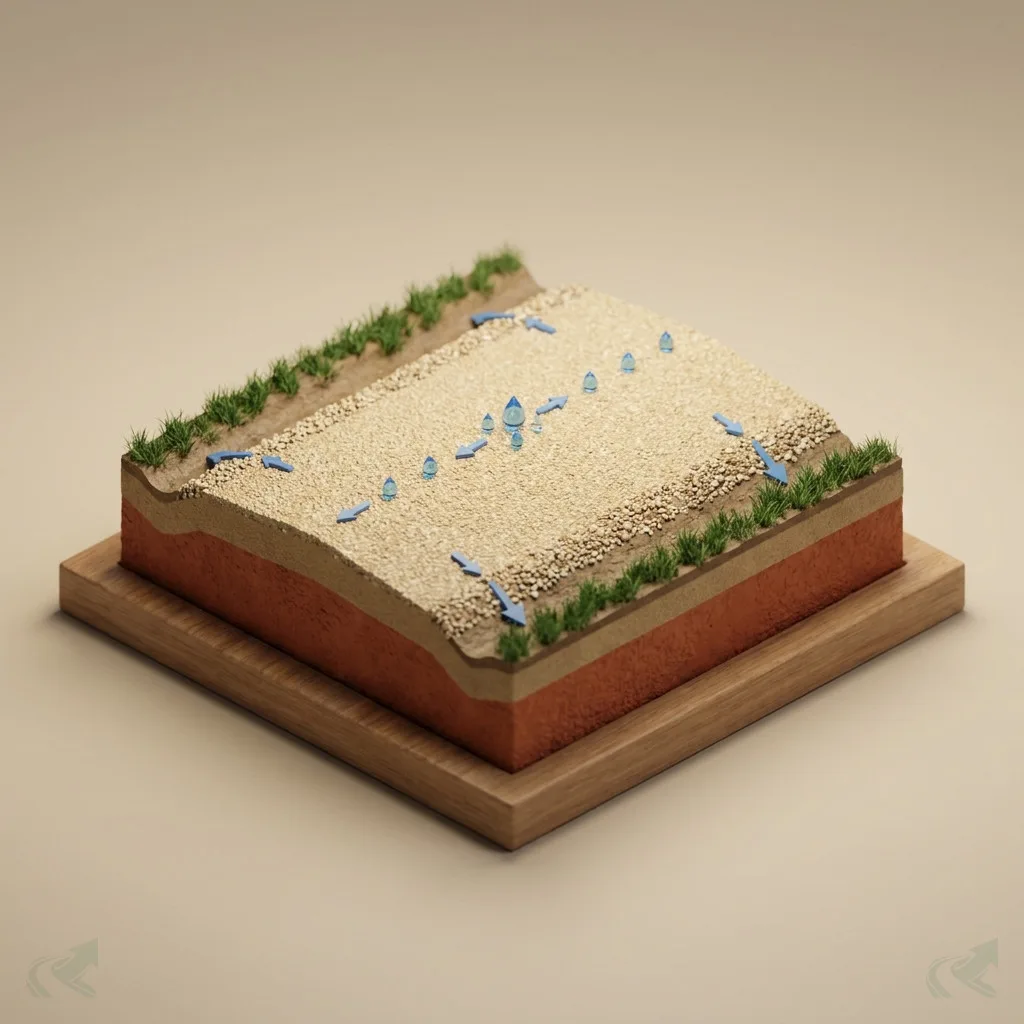
At the NCDOT approach, the Policy on Street and Driveway Access requires the first stretch of driveway to slope away from the highway surface at a rate matching the shoulder slope — not less than 1/4 inch per foot nor greater than 1 inch per foot. The intent is to keep water off the road and avoid creating a hump or depression in the shoulder area. This slope-away requirement is separate from the right-of-way grade limit — a contractor can meet the 10 percent grade requirement and still fail the shoulder slope-away.
WNC Mountain Driveways — Steep-Grade Specific
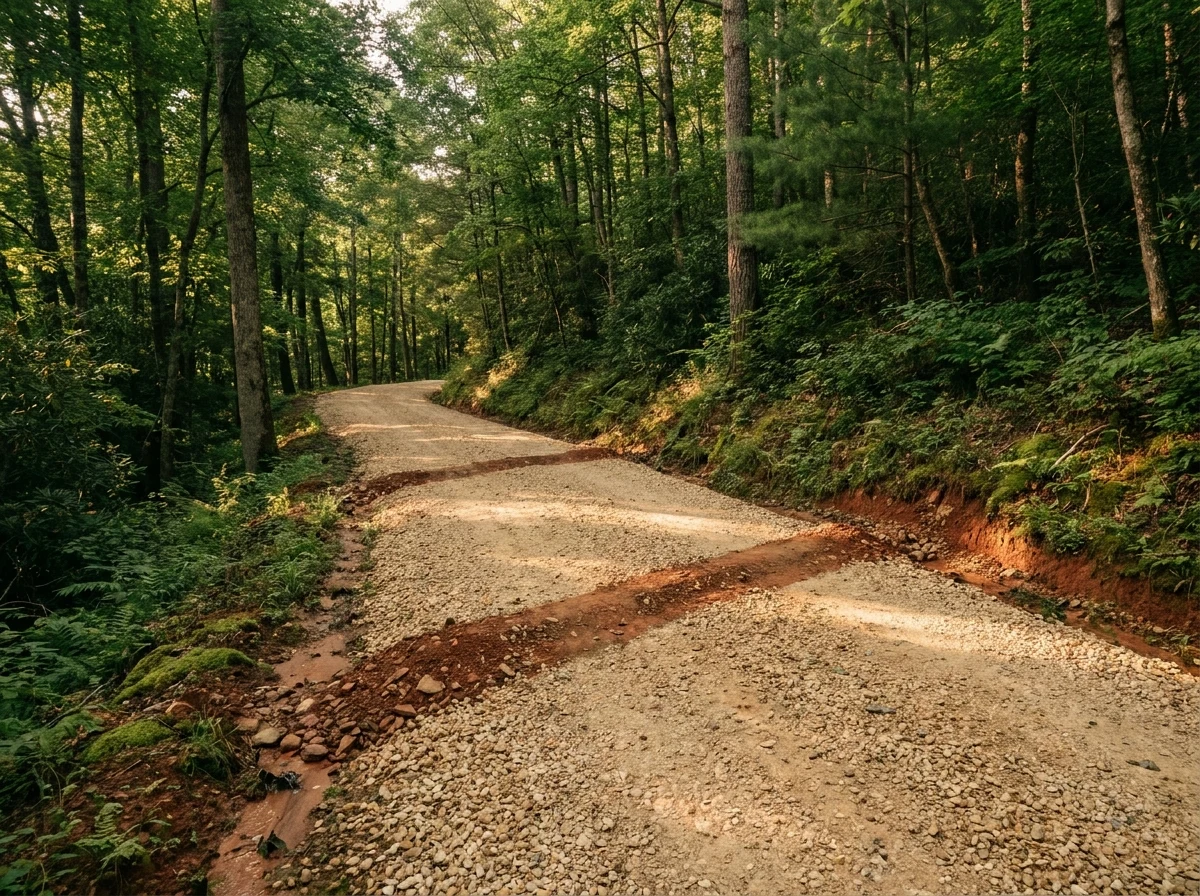
WNC mountain driveways over 15% grade require a different approach than Piedmont driveways — water bars, turnouts, and surface hardening rather than conventional crown-and-compaction.
The steep-grade toolkit used by NC mountain contractors:
- Water bars: shallow berms angled across the driveway at 30-45 degrees from horizontal, installed at regular intervals on grades above 10% — closer together as grade increases. Each bar redirects sheet flow off the drive before it gains destructive velocity. The most cost-effective erosion control tool on a steep grade.
- Turnouts (water diverters): a harder surface version of a water bar — a shallow channel across the drive that intercepts water and routes it to a side outlet. More durable than a dirt water bar. More expensive. Used on high-traffic sections where vehicle load would degrade a simple berm.
- Surface hardening with crusher run: standard gravel is not always adequate above 20% in WNC conditions. Crusher run uses larger, more angular aggregate that locks together under vehicle load and resists downhill migration better than round-stone gravel.
- Switchback design: on grades above 20-25% over long runs, a straight steep driveway becomes impractical regardless of surface. A switchback adds length but reduces the grade on any given run to something manageable for water control and winter access.
Helene damage note. Many WNC steep driveways that experienced Helene damage lost their water bar systems entirely — the flood event stripped the berms as well as the surface. Re-establishing water bars is as important as filling the washout channels. A driveway patched without water bars will rewash in the next heavy storm. See steep driveway damage from Hurricane Helene WNC and WNC mountain soil challenges for steep driveways.
Contractor Evaluation — Slope Questions to Ask
A contractor who bids a steep NC driveway without mentioning water bars or cross-drainage management hasn’t thought through what happens to that grade when it rains.
Steep-grade drainage is not an add-on. It’s part of the scope. If it isn’t in the bid, the driveway will fail — probably in the first wet season. That failure is expensive to repair and easy to prevent.
Ask before signing any contract:
- “What’s the grade of this driveway, and how does that change your water management approach?”
- “Are you planning water bars? How often — every 50 feet? 75 feet?”
- “What’s the cross-drainage outlet at the base of the grade?”
The answers matter less than whether the contractor knows the question. A contractor who looks at you blankly when you ask about water bars on a 15% grade is telling you something.
Copy-to-clipboard — use this on any quote call:
“What grade is this driveway, and what drainage management — water bars, cross-drainage — are you including in the scope?”
Use the same question across every contractor you call. The answers will differentiate them faster than anything else.
For help finding verified NC grading contractors who work steep grades, see hire a grading operator in North Carolina. For a full overview of what happens at the grading stage, see how driveway grading works in NC.
The slope isn’t the problem. Unmanaged water on a slope is the problem. Get an itemized quote that specifies the grade, the crown plan, and the water bar or cross-drainage scope. Any contractor bidding a North Carolina driveway above 10% grade without mentioning water management is planning to let you find out the hard way what happens when they skip it.