The Certification Letter — The One Document That Forces Your NC Builder to Commit to a Fix in Writing
Two questions homeowners ask about certification letters
What is a certification letter in a builder drainage dispute?
A written request asking the builder's warranty team to certify in writing that the as-built grading on your lot matches the approved drainage plan and meets North Carolina drainage standards. They either sign it -- which means they're committed to the standard -- or they don't, which tells you everything.
Does the certification letter actually work?
Yes -- because most warranty teams will not sign a false certification. The legal exposure for signing a fraudulent certification is larger than the cost of actually fixing the drainage. The letter creates leverage without requiring an attorney.
She was three warranty requests deep. The representative said the drainage “looks fine” based on photos. Bianca asked what standard they were using. The representative said she’d follow up. That was six weeks ago.
Her mother-in-law thinks she should let it go. Her father doesn’t understand why the builder won’t just fix it.
This is where the certification letter changes the conversation — for the builder AND for the family.
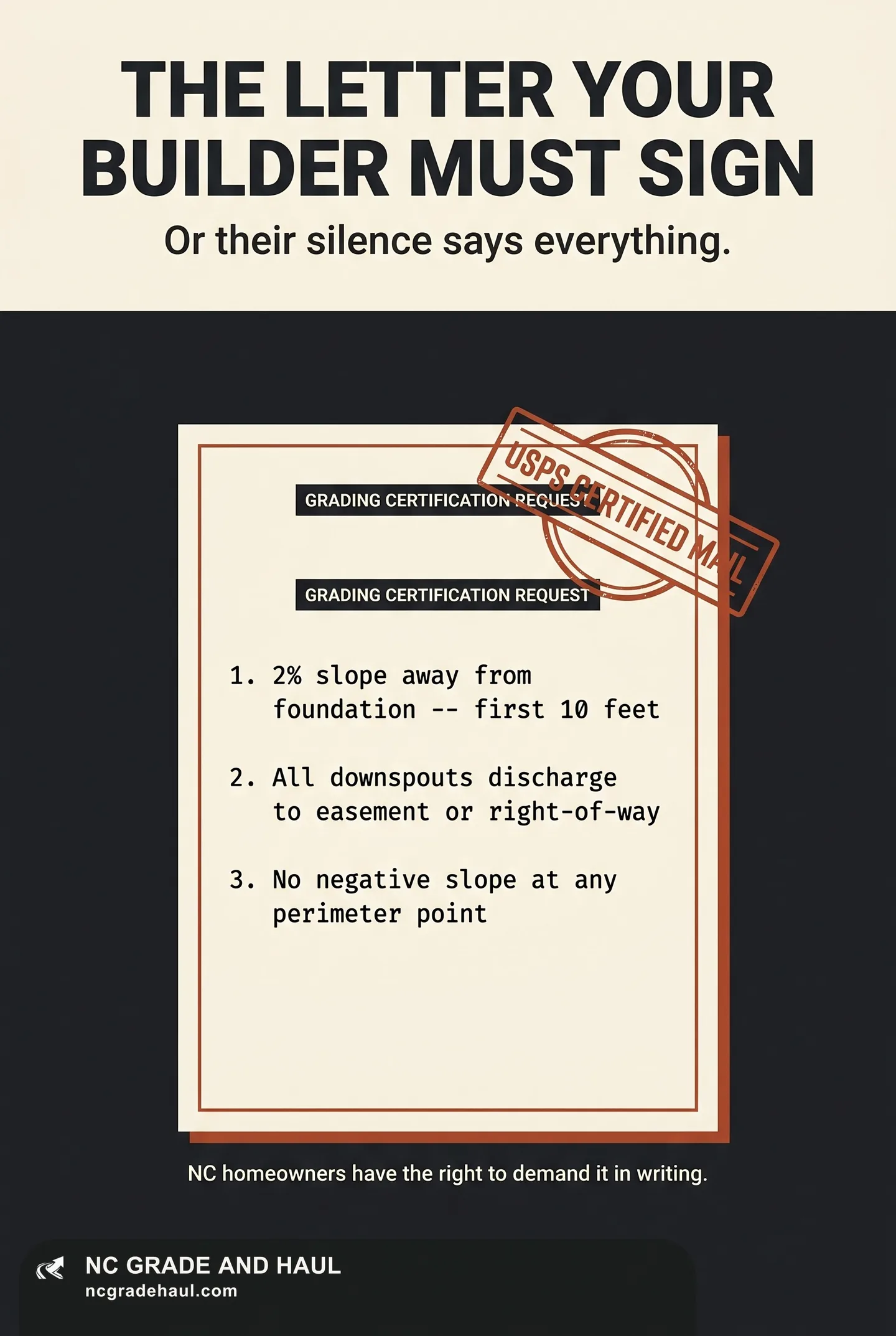
The grading certification letter, and the 3 lines it must contain. Save it before you close.
What the Certification Letter Actually Is
It’s a written request — not a legal filing, not an attorney letter — asking the builder’s warranty team to certify in writing that your lot’s grading meets the approved site plan’s foundation drainage specifications.
A certification letter is not complicated. You draft it yourself. You send it by certified mail and email. You set a reasonable response deadline.
What it contains:
Your lot address and the active warranty period reference
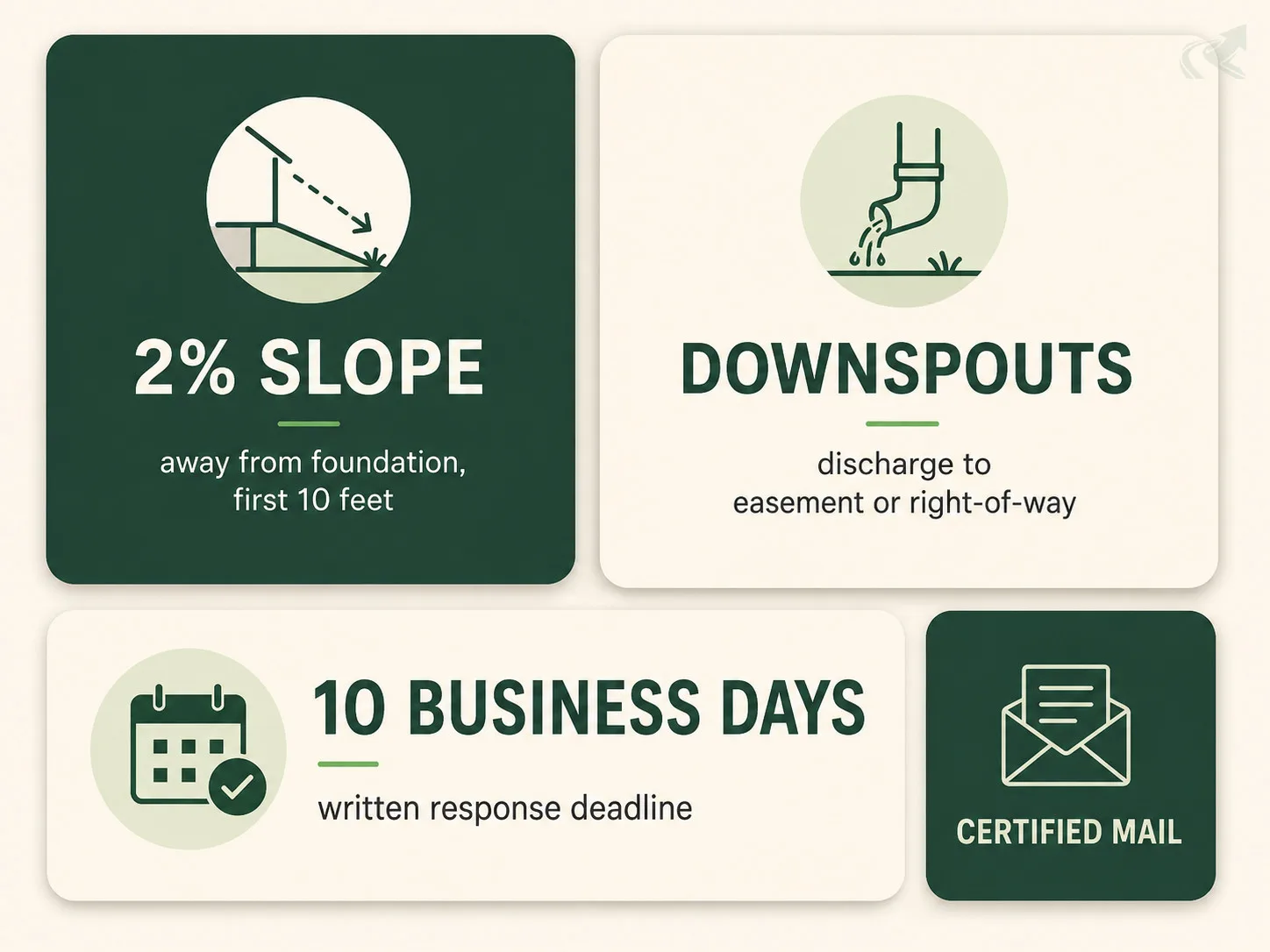
A request for written certification that the as-built slope at the foundation meets the approved site plan (minimum 2% slope away from the foundation for the first 10 feet)
A request confirming all downspout discharge points clear of the foundation and daylight to a designated yard drainage outlet or public right-of-way
A 10-business-day response deadline
What it does NOT have to be:
Written by an attorney
Legally formatted
Aggressive in tone
Polite and specific is more effective than adversarial. The goal is a written response — either a certification or a documented refusal.
Most warranty teams answer the phone. Most do not answer certified-mail requests asking them to put something specific in writing. That gap is your leverage.
The three lines your certification letter must contain — and the one delivery method that creates the paper trail.
How to Write One — The Language That Works
Keep it specific, factual, and time-stamped. Avoid emotional language. The goal is a written response — either a certification or a documented non-response.
Below is the full sample letter. Send it by certified mail AND email. Keep the email thread. Do not send via the builder’s online warranty portal — portals route to intake queues and rarely produce the paper trail that matters later.
Why This Document Matters to Your Family, Not Just the Builder
When family members dismiss contractor red flags like drainage problems as “normal new construction,” a certification letter request gives you something concrete to show them — a formal document the builder either answered or didn’t.
Bianca’s father says “these builders deal with this all the time, just wait.” Her mother-in-law says “are you sure it’s as bad as you think?” This is not unusual.
Standing water goes away between rainfalls. The problem doesn’t. People who don’t live in the house don’t see what Bianca sees after every rain event.
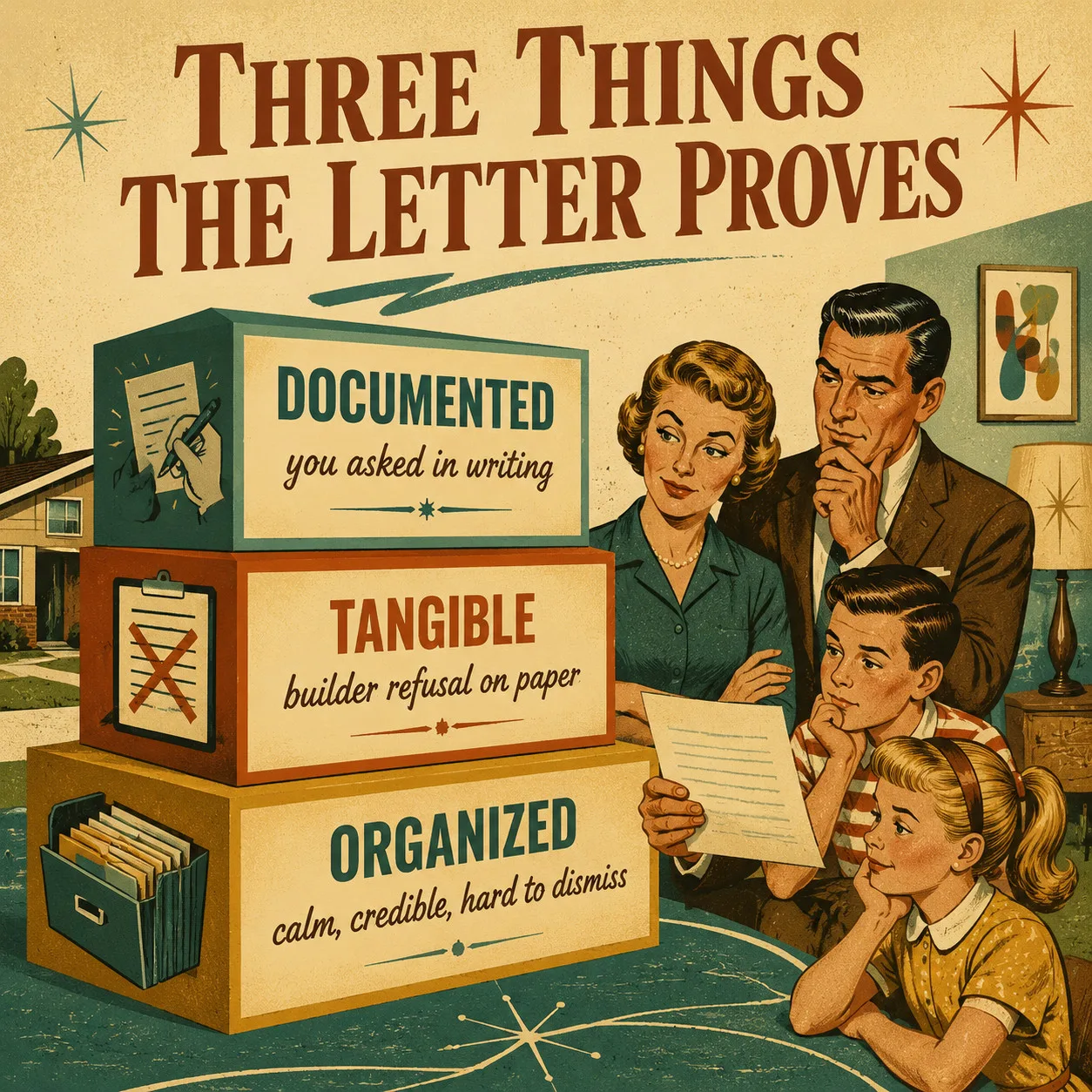
The certification letter does three things for the family-skeptic situation:
It documents that you tried the official channel. If the builder doesn’t respond, you have proof you asked and were ignored — in writing.
It makes the builder’s position tangible. A letter that says “we cannot certify your drainage meets spec” is harder to dismiss than a warranty-line rep saying “the drainage looks fine” on a call you didn’t record.
It signals you’re organized. Families often reconsider the “overreacting” framing when the homeowner can produce organized, calm documentation. The letter itself reads as reasonable.
You don’t need your family to understand drainage. You need them to see that you asked the builder a reasonable question in writing and got no answer. The letter is that.
The three things the letter does for a skeptical family — none of which require them to understand drainage.
What Happens If They Refuse to Sign
Refusal to provide written certification is itself a useful outcome — it documents that the builder will not confirm the drainage meets their own approved plan.
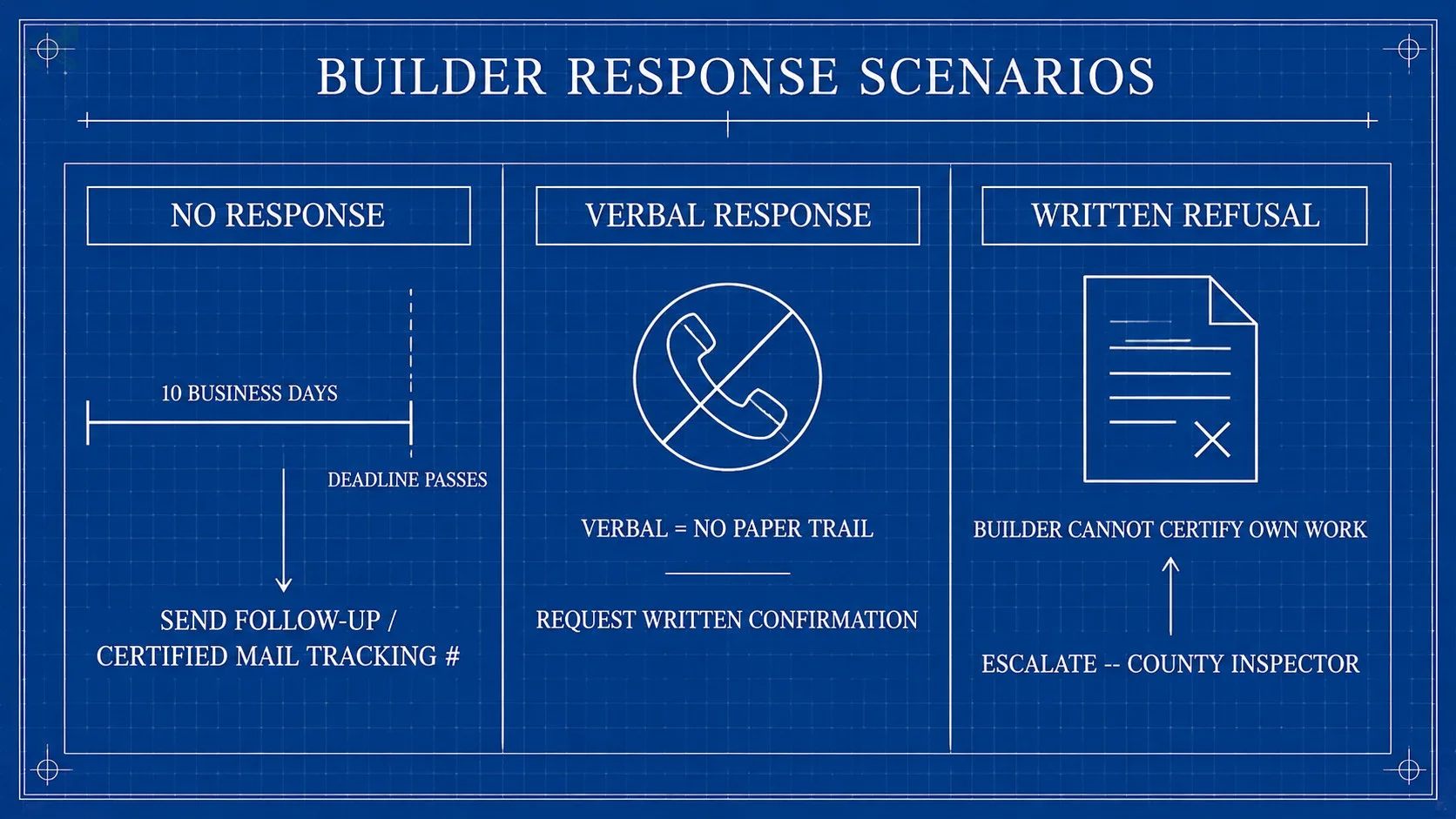
Three refusal scenarios, each with a next step:
They don’t respond:
Wait past the stated 10-business-day deadline. Then send a follow-up referencing the original letter by date and certified mail tracking number. Non-response is documented and can be referenced in a county inspector escalation. For the full escalation path, see warranty vs inspector when your builder disputes drainage.
They respond verbally:
Respond in writing: “Thank you for your call on [date]. Can you please confirm this in writing?” Verbal assurances are not certifications. A phone call you can’t replay is not a paper trail.
They refuse outright:
This is the clearest outcome. They have documented in writing that they will not certify their own work. Now escalate.
Three refusal scenarios — each one is a useful outcome. Non-response documents itself; a verbal response leads to a written follow-up request; a written refusal hands you the escalation.
What to Do While You Wait for Their Response
Document every rain event while the clock runs on their 10-business-day deadline.
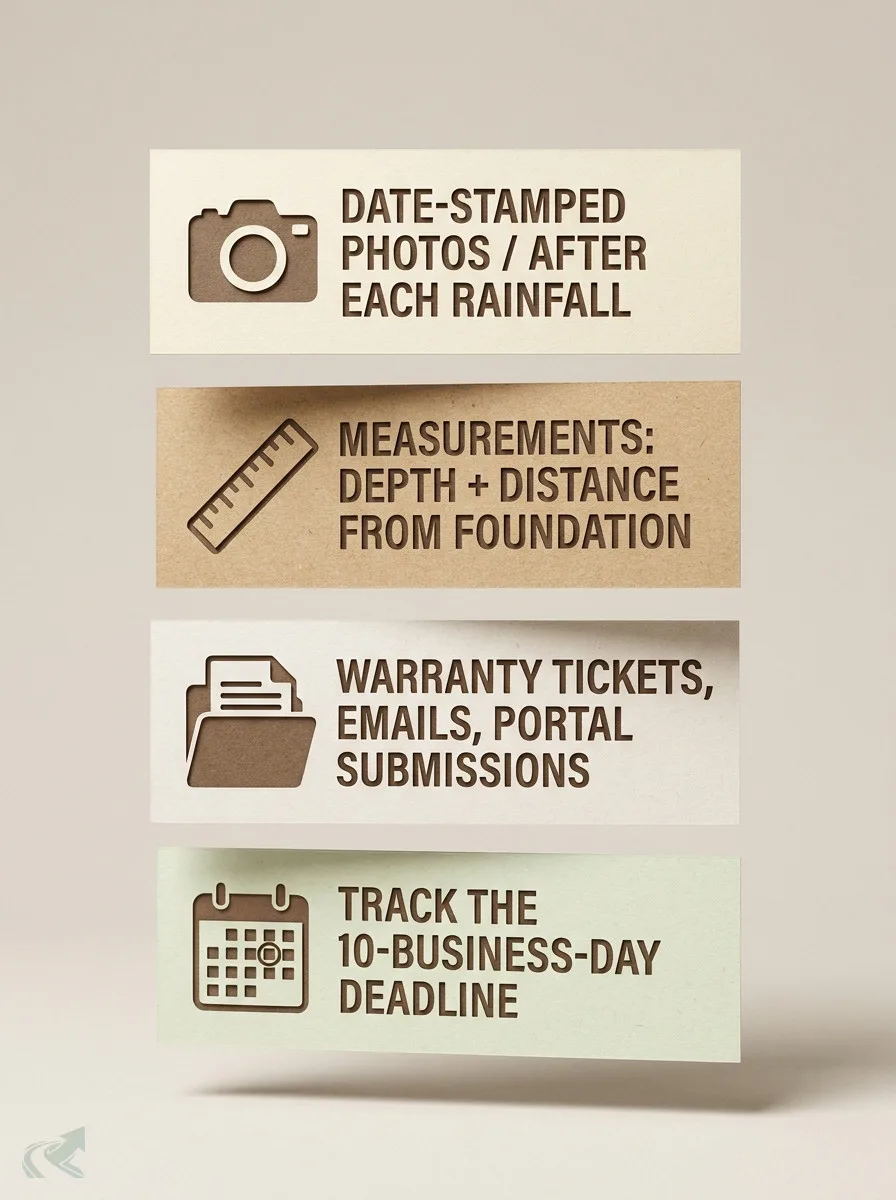
Simple documentation protocol:
Date-stamped photographs after each rainfall of approximately 0.5 inches or more — enough rain to trigger any existing drainage problem
Measurements: standing water depth, distance from foundation, and time elapsed before water drains completely
Save all warranty ticket numbers, emails, and portal submissions in a single folder
NC’s new home workmanship warranty typically runs one year from closing; structural warranty runs longer. Check your closing documents for the exact terms — warranty periods vary by builder and contract. The certification letter is most useful while you’re still inside the active workmanship window.
This documentation is Exhibit A if the county inspector route or a North Carolina Licensing Board for General Contractors ( North Carolina Licensing Board for General Contractors ) complaint follows.
The four-item documentation stack you build while waiting. Each piece reinforces the next — photos prove the condition, measurements prove the severity, the folder proves you asked, the deadline proves the clock.
Common Mistakes That Undermine the Letter
Most of these mistakes remove the paper trail before it does any work.
Sending the letter through the builder’s online warranty portal. Portals route to intake queues and often don’t create a document trail that’s useful later. Use certified mail and direct email.
Using emotional or adversarial language. “You ruined my yard” produces a defensive response and a generic denial. “Please certify your work meets the approved spec” produces a legal obligation.
Accepting a verbal response instead of a written one. Always request written confirmation of any verbal response — use the follow-up language above.
Not setting a response deadline. Without a stated deadline, there’s no documented non-response when the deadline passes.
Waiting too long after move-in. NC workmanship warranty periods are finite — check your contract. The certification letter loses its leverage once the warranty period has expired.
When to Bring In a Verified Grading Contractor
The certification letter is a pressure tool, not a diagnostic tool. While you’re waiting for the builder’s response, an independent contractor can document the current slope, identify where negative drainage exists, and give you a written assessment to accompany the letter if needed.
That assessment — from someone not employed by the builder — carries weight in a county inspector escalation.
You can hire a grading operator in North Carolina through the NC Grade and Haul directory. Look for contractors who can provide a written slope assessment and a itemized quote for any corrective work.